

Reviewed · SOWETO & TOWNSHIP TOURS
Soweto Walking Tour with Lunch
Soweto is best understood on foot, with someone who knows its streets and can explain how the 1976 student uprising changed South Africa. This four-hour walk follows that story from the Hector Pieterson memorial to Orlando Towers, with local guides such as Maweza and Mulalo Mphuma adding personal insight.
I like the clear route through major sites, and I like that the tour does not stop at famous names. You also walk through ordinary neighborhoods and an informal settlement, which gives the history a human scale. The main drawback is that the Mandela House entry fee is not included, and there is little time set aside for shopping or browsing local stalls.
Key points to know before you book

- The tour begins with the 1976 Soweto uprising: You start at the Hector Pieterson Museum and Memorial, the right place to understand why Soweto became a global symbol of resistance.
- Local guides shape the experience: Maweza, Mawesa, and Mulalo Mphuma are named guides associated with the tour, and the strongest part of the walk is their ability to connect national history with local life.
- Vilakazi Street links two Nobel Peace Prize winners: You see the street connected with Nelson Mandela and Archbishop Desmond Tutu.
- The route includes more than monuments: Baragwanath Road and an informal settlement show how daily life and social divisions remain part of Soweto’s story.
- Lunch is a kota sandwich: This large local burger is served at Orlando Towers, with bottled water included.
- Plan your own transport: Pickups and drop-offs are not included, but the meeting area is near public transportation.
Why walking makes Soweto easier to understand
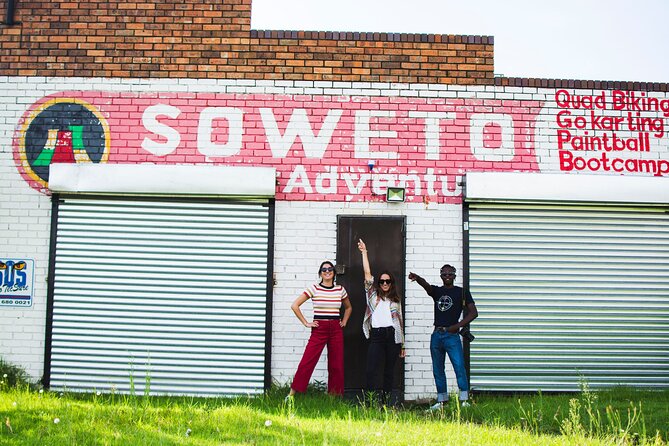
Soweto is not a single museum or memorial. It is a large township made up of neighborhoods with different histories, housing types, and economic conditions. A walking tour lets you see those changes block by block instead of passing them from a vehicle window.
That matters here. The major sites tell you what happened, but the walk between them helps explain how people lived with the effects of apartheid. You hear about the forced separation of communities, the youth-led uprising, and the long struggle for fair housing and opportunity.
I also like the human scale of this route. You are not simply driven to a famous house, photographed outside it, and moved on. You spend time on streets where historic events took place, then continue into areas where present-day challenges are still visible.
The tour lasts about four hours. That is enough time for a serious introduction without taking your entire day in Johannesburg. Morning and afternoon departures are available, so you can fit the walk around other plans.
More Township Tours in Johannesburg
- Johannesburg: Hop-On Hop-Off Bus with Optional Soweto Tour
★ 4.6 · 985 reviews - Soweto /Johannesburg and Apartheid Museum Guided Full Day Tour
★ 5.0 · 932 reviews - Johannesburg Hop-On Hop-Off City Tour with Soweto Option
★ 4.5 · 768 reviews
Starting at the Hector Pieterson Museum and Memorial
The tour begins at the Hector Pieterson Museum and Memorial. The first discussion centers on the Soweto uprising of 1976, when school students protested against the forced use of Afrikaans in education and faced violent police action.
Hector Pieterson became one of the best-known symbols of that day. A photograph of his body being carried after he was shot helped show the world what was happening in Soweto. The memorial gives the opening part of the tour a serious tone, and rightly so.
The scheduled time here is about 30 minutes. The museum entry is listed as free for this experience, though you should still follow the meeting instructions given at booking. Starting at this site gives you the basic facts before you walk through the streets tied to the uprising.
I find this a strong way to begin because the history is not presented as a distant political argument. You are standing near the places where young people organized, marched, and confronted the state. Your guide can then explain the wider setting, including living conditions and the consequences for families and communities.
Following the youth through Moema Street
From the museum, you walk along Moema Street and trace the footsteps of the young people involved in the 1976 protests. This section lasts about 20 minutes and focuses on the shooting, local living conditions, and what followed the uprising.
This is one of the parts where a local guide adds real value. Maweza is repeatedly praised for explaining apartheid in clear terms and for sharing his own family and personal connections to the past. That kind of account can help you understand that the uprising was not an isolated incident.
The walk also keeps the history tied to a real neighborhood. You see the setting rather than only hearing dates and names. The pace is described as comfortable, with enough time for questions and explanation rather than a rushed march from one stop to the next.
The subject matter is difficult. This is not a light sightseeing walk, and you should be ready for direct discussion of police violence, poverty, and discrimination. That seriousness is part of the value, but it may not suit someone looking for a purely casual city stroll.
Vilakazi Street and the homes of two Nobel winners
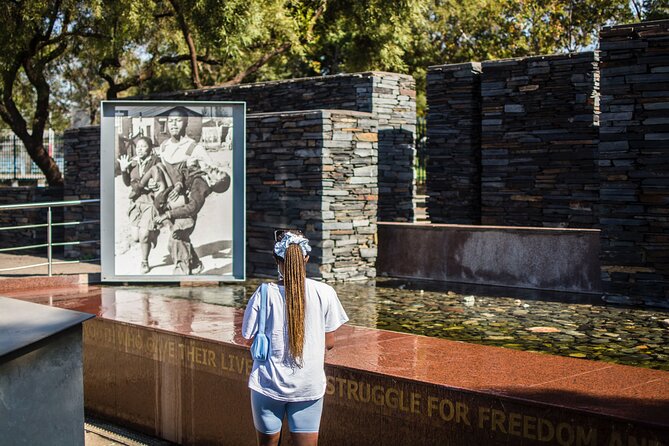
The route continues to Vilakazi Street, one of the best-known streets in Soweto. It is associated with two Nobel Peace Prize winners, Nelson Mandela and Archbishop Desmond Tutu.
The stop itself is listed at about 10 minutes, so do not expect a long neighborhood tour here. Instead, it works as a compact piece of context. You learn how one street became linked with two major figures in South Africa’s struggle and transition.
Vilakazi Street is also where the tour shifts from the 1976 student movement to the lives of people who helped shape the country’s political future. The change gives the route a useful rhythm. You move from collective protest to the homes and public work of individual leaders.
You will want to listen closely during this section. The stop is short, and much of its value comes from the guide’s explanation rather than from a long formal visit.
Other township visits from Johannesburg:
- Half-Day Tour of Soweto Tour
★ 4.5 · 712 reviews - Soweto: Walking Tour with a Local Guide and Lunch
★ 4.9 · 648 reviews - Jo’berg in 1 Day: Soweto, Apartheid Museum & City Tour
★ 4.8 · 524 reviews - Johannesburg: Full-Day Tour with Soweto and Apartheid Museum
★ 4.8 · 478 reviews
Mandela House and the cost of entry
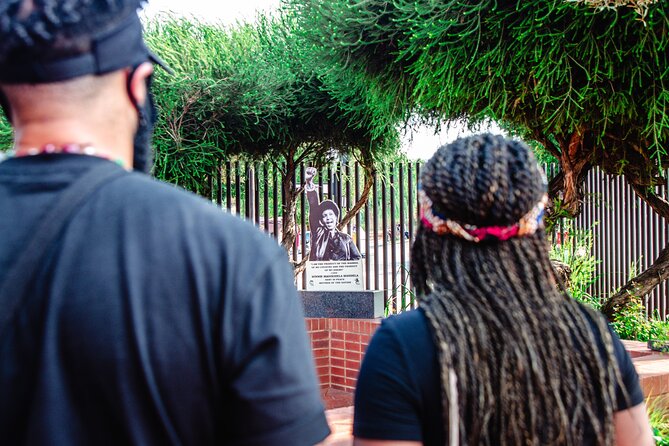
Mandela House is the best-known paid stop on the route. It was the home of Nelson Mandela and Winnie Mandela, and it offers a more personal setting for learning about Mandela’s life before and after apartheid.
The tour allows about 20 minutes here, but the admission charge is not included. That is an important detail when comparing the $40.26 tour price with other Soweto outings. The base price covers the walking experience, kota lunch, and bottled water, but you should budget separately if you want to enter the house.
You may decide that the extra cost is worthwhile, especially if you want a closer look at Mandela’s domestic life and the period he spent in Soweto. If you prefer to keep the tour focused on the streets and public history, you can still gain plenty from the guide’s explanation outside.
The time allocation also means you should not expect a long museum visit. This is a half-day introduction with several stops, not a full afternoon devoted to Mandela House.
Tutu House and the religious voice of resistance
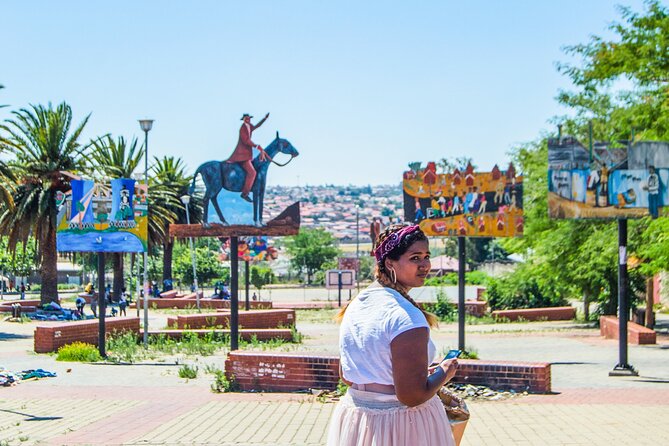
The next stop is the home associated with Archbishop Desmond Tutu. The visit lasts about 10 minutes and focuses on his opposition to apartheid through religion and public leadership.
This short stop helps broaden the story. Soweto’s political history was not shaped only by student activists or political parties. Religious leaders also challenged apartheid and spoke against the system’s treatment of Black South Africans.
I like the way this part complements the Mandela stop. Mandela represents one strand of the liberation story, while Tutu represents another. Together, the two homes on Vilakazi Street show how the neighborhood became linked with different forms of moral and political resistance.
Again, the visit is brief. Think of it as a guided street stop, not a full house tour. The guide’s explanation is the main attraction.
Baragwanath Road and Soweto’s changing neighborhoods
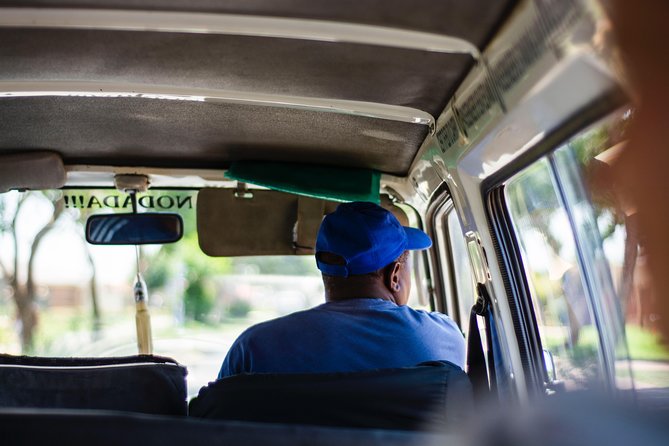
The walk then reaches Baragwanath Road, where you learn about the first formal houses that helped form Soweto. The scheduled time is about 30 minutes.
This stop is useful because it moves beyond famous leaders and monuments. Housing was central to apartheid’s design, and the shape of Soweto tells part of that story. Formal houses, crowded areas, and informal settlements reflect different periods and different levels of security and income.
The route may also take you through an informal settlement. This can be one of the most thought-provoking parts of the experience, since you see the continuing struggles faced by unemployed residents. Your guide should handle this with care, and the strongest accounts of the tour describe the walk as respectful and safe.
You should approach this section with humility. It is not a photo opportunity or a staged display of hardship. You are moving through a living community. Follow your guide’s instructions, ask before taking photographs, and keep your focus on listening rather than treating the area as a curiosity.
This is also where the tour becomes more than a history lesson. Soweto is presented as a place with different social classes, neighborhoods, and present-day pressures. That wider view makes the earlier discussion of apartheid easier to place in context.
Finishing at Orlando Towers with a kota lunch
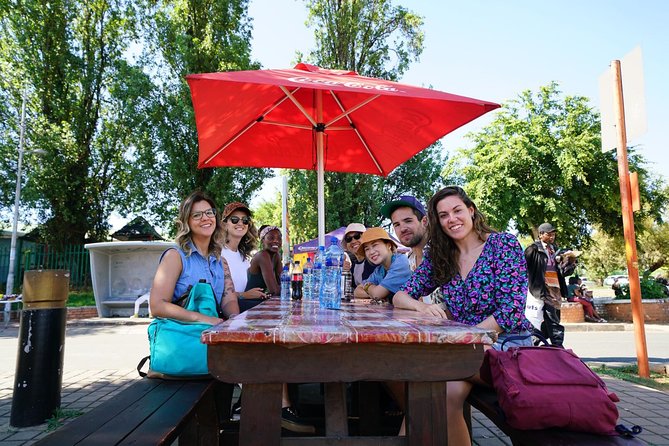
The final stop is Orlando Towers, where the tour ends with photographs and lunch. About an hour is set aside here, making it the longest stop of the day.
The towers are one of Soweto’s most recognizable sights. Their bold painted surfaces make a memorable backdrop, and the stop gives you a chance to pause after several hours of walking and serious discussion.
Lunch is a kota sandwich, a local burger made in a large hollowed-out loaf with fillings. The exact ingredients are not specified, so you should think of it as a substantial local meal rather than a carefully described tasting menu. Bottled water is included.
The kota is a smart choice for this kind of tour. It is filling, informal, and tied to everyday South African food culture. One practical tip is to arrive hungry, since lunch comes toward the end of the morning on the morning departure.
If you hoped to browse shops or buy crafts, set your expectations carefully. The tour is built around walking, history, and lunch, not extended market time. Bring cash if you wish to buy something from local vendors when an opportunity appears, but shopping is not a main feature.
What the guide adds to the route
The guide can make or break a history walk, and this tour depends heavily on that role. Maweza is the name most often associated with the experience, while Mawesa appears as a variant spelling in the supplied information. Mulalo Mphuma is also identified as a guide.
The most useful quality is the mix of local experience and historical study. Maweza is described as someone from Soweto who can explain apartheid, the township’s past, current social problems, and his own family experiences. That gives you more than a memorized sequence of dates.
The guide also helps manage the tone. The route includes painful subjects, but the strongest approach is direct without turning the walk into a lecture. Questions are welcomed, and the pace allows time for explanation.
A young guide may sometimes shadow the main guide. That can add another local perspective, but it also means the exact guide team may vary. The experience should still follow the same general route.
Price, group size, and practical value
At $40.26 per person, this is fairly priced for a four-hour guided walk that includes lunch and bottled water. You are paying mainly for local interpretation and access to a carefully planned route, not for transport or a long list of paid attractions.
The value is strongest if you want to understand Soweto rather than simply collect photographs. A self-guided visit could take you to some of the same famous streets, but it would be much harder to grasp the link between the 1976 uprising, housing policy, political leadership, and current life without a guide.
The price does not include pickup or drop-off. The meeting area is near public transportation, but you need to arrange your own way there and back. This matters if you are staying far from Soweto or have limited time between other Johannesburg plans.
The tour can accept up to 100 people, although the actual group size may vary. A large maximum is worth noting because a walking experience can feel very different with a small group than with a crowd. Confirm the meeting details carefully, especially if the booking system asks you to select from several meeting points. Clear communication about the correct starting point is important.
The tour is rated 4.9 from 288 ratings, with 98 percent recommending it. Those figures suggest a consistently strong experience, especially for the guide’s historical explanations, friendly manner, sense of safety, and personal connection to Soweto.
Who will get the most from this Soweto walk
I would choose this tour if you are visiting Johannesburg for a short time and want one focused half-day activity. It gives you an introduction to the township’s political history, key figures, housing story, and present-day life without requiring a full-day commitment.
It also suits families with older children. A 15-year-old has taken part and enjoyed the experience, and the route provides clear historical lessons tied to places rather than only abstract explanations.
You should be comfortable walking for several hours and discussing apartheid, police violence, unemployment, and poverty. The tour is not designed as a glossy sightseeing loop. Its strength is the honest presentation of difficult subjects.
Older adults can participate, but the route is on foot and includes several stops across Soweto. One guide has been praised for accommodating elderly relatives, though you should still judge the walking demands for your own group.
Bring comfortable shoes, water if you prefer more than the included bottle, and a respectful attitude toward residential areas. A small amount of cash may be useful for optional purchases or tips, though extra costs are not specified as part of the tour.
Should you book the Soweto Walking Tour with Lunch?
Book it if you want a serious, local-led introduction to Soweto and are willing to give the history your full attention. The strongest features are the guide’s personal connection to the township, the walk through places tied to the 1976 uprising, and the move from famous homes into ordinary neighborhoods.
Think twice if you need hotel transfers, want a relaxed shopping afternoon, or prefer a tour built around several formal museum admissions. Mandela House costs extra, and the route gives only short visits to some stops.
For most first-time visitors to Johannesburg, I would put this near the top of the list. It offers clear value at $40.26, includes a filling kota lunch, and leaves you with a better sense of Soweto as a living community rather than a set of historic names.
FAQ
How long does the Soweto Walking Tour with Lunch last?
The tour lasts approximately four hours.
What food is included?
A local kota burger and bottled water are included.
Is admission to Mandela House included?
No. Entry to Mandela House is not included in the tour price.
Are pickup and drop-off included?
No. You must arrange your own pickup and drop-off. The meeting area is near public transportation.
Can I choose a morning or afternoon departure?
Yes. Morning and afternoon tours are available.
Where does the tour begin?
The tour meets at the Hector Pieterson Museum and Memorial.
Can most people participate?
The activity information says most people can participate. The tour has a maximum capacity of 100 people.
More walking tours in Johannesburg
- Johannesburg: Local Food Tasting Guided Walking Tour
★ 4.7 · 192 reviews - Johannesburg: City Centre Walking Tour
★ 4.8 · 152 reviews - Johannesburg City Centre Walking Tour
★ 5.0 · 80 reviews - Johannesburg: Guided Walk with Lions in the African Bush
★ 4.7 · 45 reviews
Just added in Johannesburg
- Soweto Tuk-Tuk Food & Beer Tour★ 5.0 · 9 reviews
- Soweto: Sip & Paint Walking Tour & Take Home a Canvas★ 4.8 · 7 reviews
- Soweto Tour; Mandela House; Vilakazi Street; Market Culture★ 5.0 · 6 reviews
- Soweto & Johannesburg and Apartheid Museum★ 4.7 · 41 reviews
- Soweto Township Tour★ 4.4 · 4 reviews
- Private Soweto,Mandela House,Apartheid Museum,Constitution★ 4.6 · 15 reviews
- Soweto Food & Beer Bike Tour★ 4.9 · 40 reviews
- Soweto and apartheid museum tour(Half-day)★ 5.0 · 4 reviews
Soweto & Township Tours, compared.

Johannesburg Hop-On Hop-Off City Tour with Soweto Option
Read our review →


Jo’berg in 1 Day: Soweto, Apartheid Museum & City Tour
Read our review →
Full-Day Tour with Soweto and Apartheid Museum
Read our review →Browse the lists this tour appears in