
Reviewed · CITY TOURS
Johannesburg: City Centre Walking Tour
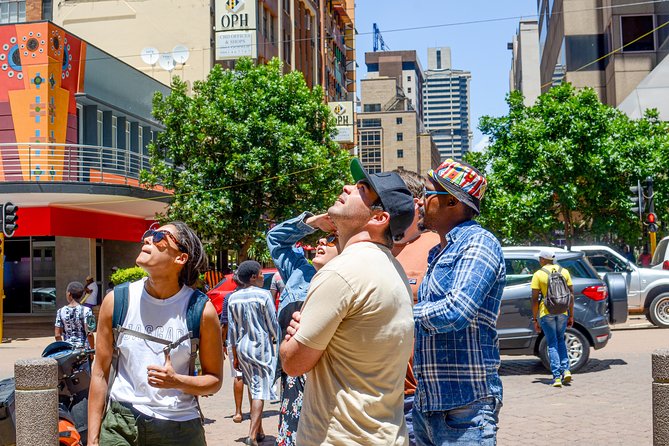
Johannesburg’s city centre is not a polished postcard. It is a working part of the city, shaped by gold, migrant labour, apartheid, business, art, and present-day urban problems. This walking tour gives you a useful way into that complicated story, beginning at Gandhi Square and ending near Nelson Mandela Bridge.
I like the route for two reasons. First, it connects major events to actual streets and buildings, from the early gold diggings in Ferreirasdorp to Mandela and Oliver Tambo’s first black-owned law firm. Second, guides such as Refiloe, Thabo, Mulalo, and Mathapelo bring local perspective to the architecture and politics. The main consideration is that some stops may not be open, and the city centre requires alertness and comfortable shoes.
Key points at a glance
- Gold-mining beginnings: Trace Johannesburg’s early story through Main Street, Ferreirasdorp, and Marshalltown.
- Mandela and Tambo’s law office: Visit Chancellor House, tied to two major figures in South African history.
- Working-city history: The Workers Museum explains migrant labour and the lives of people who helped build Johannesburg.
- Newtown’s arts scene: See Mary Fitzgerald Square, the Market Theatre, street art, galleries, and creative spaces.
- Big city views: Walk across or alongside Nelson Mandela Bridge for a memorable photo stop.
- Useful price point: At $40, the tour offers three hours of guiding, entrance fees, bottled water, and a route difficult to piece together alone.
Why Johannesburg’s CBD deserves a closer look

Many first-time visitors stay in Sandton, where hotels, malls, and offices make an easy base. That can be comfortable, but it tells you little about how Johannesburg became Johannesburg. This tour takes you into the CBD, where the city’s gold rush, legal battles, labour system, political change, and current pressures meet.
I like the honesty of the route. You are not shown only restored buildings or cheerful art walls. The guide also discusses the condition of the city centre, local politics, and problems such as informal occupation and neglected areas. That balance matters. You get a clearer sense of a living city, not a staged attraction.
The CBD can feel intense, and conditions can change from one block to the next. The tour’s value is partly practical: an experienced local guide knows which streets are useful, which buildings are worth stopping for, and how to keep the group moving. Several people who booked private or very small tours found that guides spent extra time answering questions and extending the walk.
Other walks around Johannesburg:
- Soweto: Walking Tour with a Local Guide and Lunch
★ 4.9 · 648 reviews - Soweto Walking Tour with Lunch
★ 5.0 · 288 reviews - Johannesburg: Local Food Tasting Guided Walking Tour
★ 4.7 · 192 reviews
Starting at Gandhi Square and following the gold
Meet your English-speaking guide outside Nando’s at Gandhi Square, near the Metropolitan Building. This is a practical meeting point in the centre, but allow enough time to find the exact restaurant entrance and identify your guide.
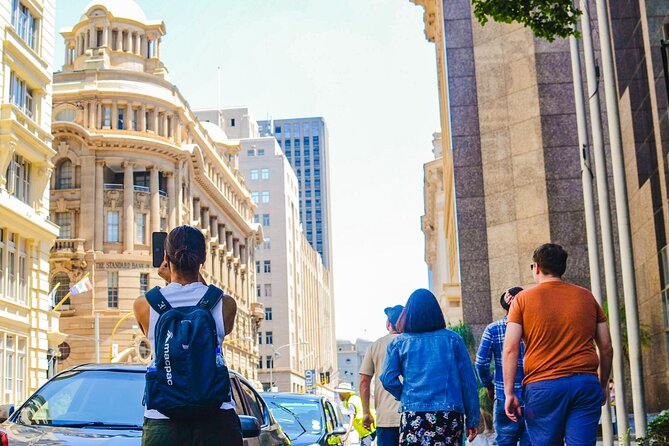
The early part of the route introduces Johannesburg as a mining city. Main Street provides the visual evidence: older commercial buildings, financial architecture, and the urban form created by gold wealth. Your guide explains how the mining industry drew people into the city and shaped its rapid growth.
The route continues through Marshalltown and toward Ferreirasdorp, often called the cradle of Johannesburg. This is where the first gold diggings began and where early diggers settled. That detail gives the walk a strong sense of place. You are not hearing a general lecture about South Africa. You are standing in the area where the city first took shape.
The Carlton Centre is another early stop, scheduled for about 20 minutes. Its height and position make it an important part of Johannesburg’s skyline story. The exact access deserves a check before booking: the city’s former 360-degree viewing experience has not always been available, even though the building remains part of the route. If you are expecting a rooftop panorama, confirm what is open on your date.
Courts, post offices, and the architecture of power
The walk passes several buildings that help explain how Johannesburg functions as a seat of law and government. At the High Court of South Africa, Gauteng Local Division, you have time for photographs and a guided look at the building and its role.
The Marshalltown Post Office and Johannesburg Central Magistrate’s Court may sound less exciting than a famous monument, but they help make the tour feel grounded. These are places connected to everyday administration, legal disputes, and public life. Your guide can use them to explain how the city worked under earlier systems and how it operates now.
Beyers Naude Square offers another pause for photographs and city views. The Anglo American corporate office adds a reminder of the mining companies that shaped Johannesburg’s economy. I appreciate this part of the tour because it links attractive façades to less comfortable questions about who gained wealth, who supplied labour, and how that unequal system affected South Africa.
Expect plenty of walking and standing during these stops. The schedule includes several short visits of 10 to 20 minutes, so the tour moves at a steady pace rather than lingering inside every building.
Chancellor House and the lawyers who challenged the system
One of the most meaningful stops is Chancellor House, the former office connected with Nelson Mandela and Oliver Tambo. Here they established their first black-owned law firm, giving legal help to people living under apartheid laws.
The building is more than a Mandela photo opportunity. It connects political history with ordinary legal work. Mandela and Tambo were not only public figures; they were lawyers dealing with the real consequences of discriminatory laws. A good guide can explain that link in a way a quick monument visit cannot.
This is also where Refiloe’s style, praised by many people who took the tour, becomes especially useful. He is known for explaining South African history in plain language, adding humour, and taking time for questions. Other guides, including Mathapelo, Clement, Tebogo, and Mulalo, have also led the walk. The provider may assign different guides, so do not book based on one name alone. The important point is the local, conversational format.
A few more things to do in Johannesburg worth a look
- Johannesburg Hop-On Hop-Off City Tour with Soweto Option
★ 4.5 · 768 reviews - Jo’berg in 1 Day: Soweto, Apartheid Museum & City Tour
★ 4.8 · 524 reviews - Soweto: Hop-On Hop-Off Bus, City Tour and Apartheid Museum
★ 4.5 · 250 reviews - Half Day Pretoria City Tour from Johannesburg or Pretoria
★ 5.0 · 150 reviews
The Workers Museum and Johannesburg’s migrant labour story
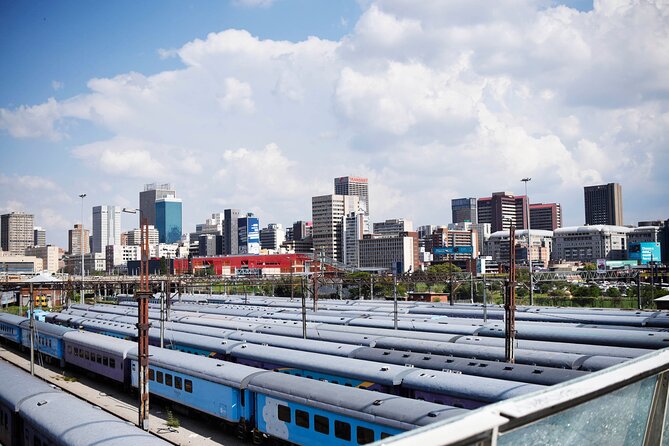
The Workers Museum in Newtown shifts the focus from famous leaders and corporate buildings to labour. The museum helps explain the migrant labour system, under which workers came to Johannesburg from rural areas and neighbouring countries, often living apart from their families while working in the mines and industries.
This stop gives the gold story a human centre. Gold made the city wealthy, but workers paid much of the physical and social cost. The museum helps you understand accommodation, movement, work, and the separation of families that shaped urban South Africa.
Opening status is worth checking. The museum has sometimes been closed, including on Mondays. When that happens, the guide can still explain the site and the working conditions connected with it, but you will miss the interior displays. If the museum matters greatly to you, ask about its schedule before reserving.
The visit itself is listed at about 15 minutes, so this is an introduction rather than a full museum afternoon. You will get more from it if you already have some interest in apartheid, labour history, or the development of Johannesburg.
Newtown, Mary Fitzgerald Square, and the Market Theatre
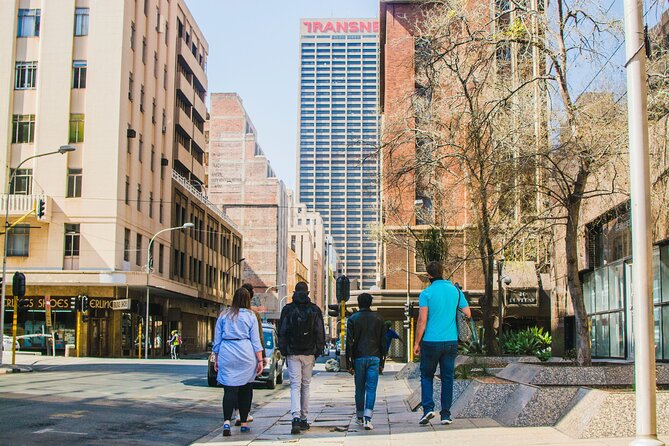
Newtown is one of Johannesburg’s creative districts, and the tour uses it to show another side of the CBD. At Mary Fitzgerald Square, you can pause for photographs and hear how the area connects public gatherings, labour, music, performance, and city renewal.
The Market Theatre is passed with a short guided stop. Its importance lies in the role theatre and performance played in challenging apartheid-era restrictions and giving artists a public voice. Today, the surrounding area includes cultural spaces, galleries, street art, and places tied to Johannesburg’s creative life.
Do not expect a long theatre visit. The schedule allows about five minutes at the Market Theatre, and the building may be viewed from outside. That makes this a useful orientation stop, not a substitute for attending a performance or spending half a day in Newtown.
I like the change of mood here. Earlier stops focus on courts, mining, offices, and labour. Newtown shows how artists and communities have used the city centre to express ideas and reshape its image. You see that Johannesburg is not only a business district or a place of historical pain.
Nelson Mandela Bridge and the walk into Braamfontein
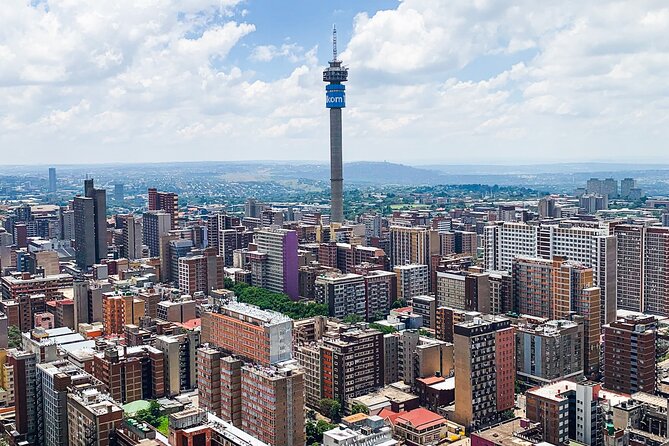
The route reaches Nelson Mandela Bridge for a scenic stop and photographs. The bridge connects different parts of the inner city and gives you a strong visual ending to the central section of the walk. It is one of the easiest places on the route to appreciate Johannesburg as a large, layered city.
The guide may point out how neighbourhoods connect and how the CBD changes as you move toward Braamfontein. The bridge is especially useful for photographs because it gives you a clear sense of roads, buildings, and the city’s scale.
The advertised finish is at Sha’p Braai, a shisanyama restaurant, in the Braamfontein area. Braamfontein is presented as a youthful arts and culture district, with a different feel from the older financial core. The food is not included, but the final stop gives you the option of continuing your afternoon with a meal at your own cost.
One past booking included food that was described as delicious, but do not treat lunch as part of the package. The official inclusions are the guide, walking tour, bottled water, and entrance fees. Bring extra money if you want to eat at the finish.
Safety, pace, and what the walk feels like
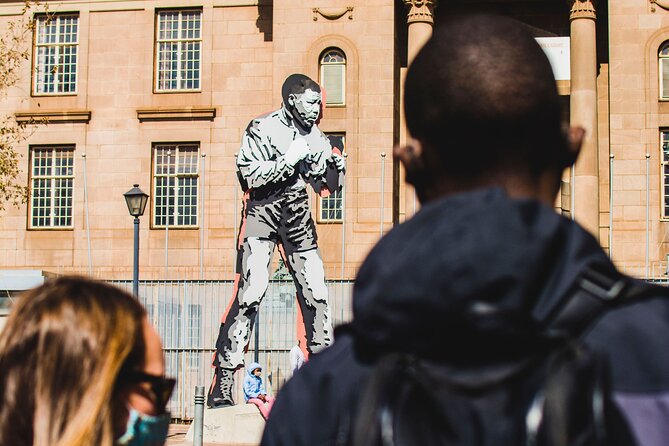
Safety is a central concern for many people considering a CBD walking tour. Guides such as Refiloe and Clement have been praised for helping people feel secure and for choosing routes carefully. That does not mean you should switch off. Keep valuables out of sight, stay with the guide, and follow local advice about where to walk and where to stop.
The route is three hours, though a private or lightly booked tour can run longer. One guest received a four-hour walk because the guide had time to cover more of the city and answer extra questions. Treat that as a possible bonus, not a guarantee.
Wear proper walking shoes. You will cover several neighbourhoods on foot, stop at streets and squares, and spend time outdoors. Bottled water is included, but bring sun protection and dress for the weather. The route has short pauses, but it is not a seated sightseeing tour.
The information about mobility needs is mixed. The activity details describe the experience as wheelchair accessible, while the restrictions also say it is not suitable for wheelchair users. Because the route includes city streets, walking between many stops, and possible building-access limits, contact the provider before booking if you use a wheelchair or have limited mobility. Pregnant people are also listed as unsuitable for this experience.
Is $40 a fair price?
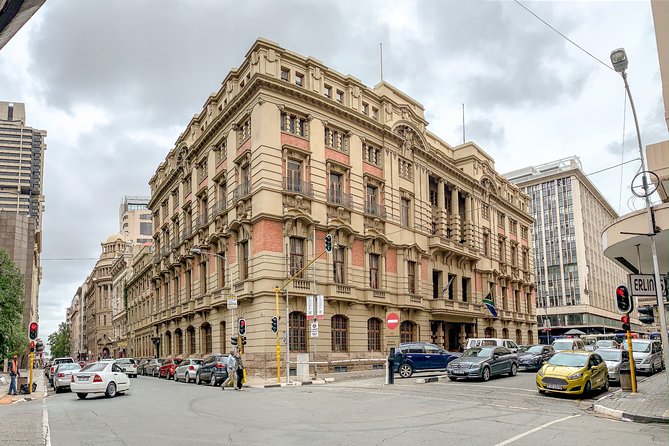
At $40 per person, this is not the cheapest way to see Johannesburg’s centre, but it offers more than a simple landmark walk. The fee includes a live English-speaking guide, bottled water, entrance fees, and three hours of interpretation across several neighbourhoods.
The strongest value comes from the guide’s local context. You could photograph Gandhi Square, the courts, Newtown, and Nelson Mandela Bridge on your own. It would be much harder to understand how gold mining, migrant labour, apartheid law, cultural resistance, and today’s city problems fit together without someone explaining the links.
The price is especially fair if you are travelling alone or in a small group. Several bookings became private tours when no one else reserved a place, giving people more time for questions. That cannot be promised, but the small-group format may offer more conversation than a large coach tour.
The value is weaker if you want extensive indoor visits, a guaranteed Carlton Centre viewpoint, or a full meal. The Workers Museum may be closed, the Market Theatre stop is brief, and lunch costs extra. Think of this as a guided city reading lesson with a long walk, not a museum package.
Who should book this Johannesburg walking tour?
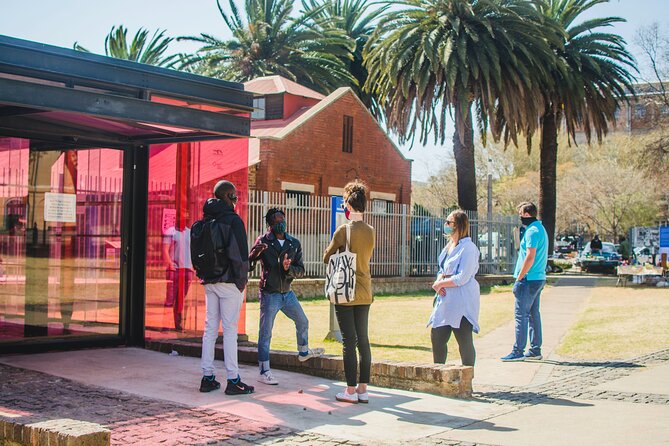
I would choose this tour if you want to understand Johannesburg rather than simply photograph it. It suits first-time visitors who are curious about mining, apartheid, Mandela, architecture, labour, politics, and the creative life of the inner city.
It is also a good choice if you are nervous about exploring the CBD independently. A local guide gives you structure and helps you see parts of the centre that might otherwise feel difficult to approach.
You may prefer another activity if you dislike walking, want a relaxed sightseeing pace, or need guaranteed access to every listed building. The route covers serious subjects and present-day problems, so it is not a lightweight city stroll. That is its strength, but it will not suit everyone.
Should you book it?
Book it if you want a candid, well-organized introduction to Johannesburg’s CBD and value explanation over polished scenery. The best parts are the links between places: gold mining to corporate power, migrant labour to the Workers Museum, Mandela’s legal work to South Africa’s political struggle, and Newtown’s theatres and art spaces to the city’s ongoing reinvention.
Before paying, confirm the Carlton Centre access and the Workers Museum opening hours. Wear comfortable shoes, keep your belongings secure, and leave room for the possibility that a private tour may run beyond three hours. If you want Johannesburg’s story in streets, buildings, and conversation, this $40 walk is a strong choice.
FAQ
Where does the Johannesburg city centre walking tour begin?
The meeting point is outside Nando’s Restaurant at Gandhi Square, near the Metropolitan Building area.
Where does the tour finish?
The walk finishes at Sha’p Braai, a shisanyama restaurant in the Braamfontein area.
How long does the walking tour last?
The scheduled duration is three hours. A private or lightly booked tour may last longer if the guide has time to show more and answer additional questions.
What language is the tour offered in?
The live guided tour is offered in English.
Are entrance fees and bottled water included?
Yes. The price includes entrance fees, bottled water, the guide, and the walking tour. Lunch is not included.
Is the tour suitable for wheelchair users?
The activity information describes it as wheelchair accessible but also lists wheelchair users among those for whom it is not suitable. Contact the provider before booking to confirm whether the current route and access arrangements meet your needs.
Just added in Johannesburg
- Soweto Tuk-Tuk Food & Beer Tour★ 5.0 · 9 reviews
- Soweto: Sip & Paint Walking Tour & Take Home a Canvas★ 4.8 · 7 reviews
- Soweto Tour; Mandela House; Vilakazi Street; Market Culture★ 5.0 · 6 reviews
- Soweto & Johannesburg and Apartheid Museum★ 4.7 · 41 reviews
- Soweto Township Tour★ 4.4 · 4 reviews
- Private Soweto,Mandela House,Apartheid Museum,Constitution★ 4.6 · 15 reviews
- Soweto Food & Beer Bike Tour★ 4.9 · 40 reviews
- Soweto and apartheid museum tour(Half-day)★ 5.0 · 4 reviews
City Tours, compared.

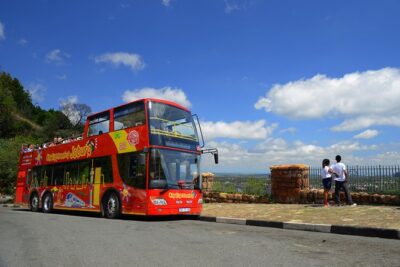
Johannesburg Hop-On Hop-Off City Tour with Soweto Option
Read our review →
Jo’berg in 1 Day: Soweto, Apartheid Museum & City Tour
Read our review →
Cape Town City Pass: Save Over 50% on 80+ Top Attractions
Read our review →
Hop-On Hop-Off Bus, City Tour and Apartheid Museum
Read our review →

From Sun City: Pilanesberg National Park 3-Hour Game Drive
Read our review →
Browse the lists this tour appears in