
Reviewed · CITY TOURS
Johannesburg City Centre Walking Tour
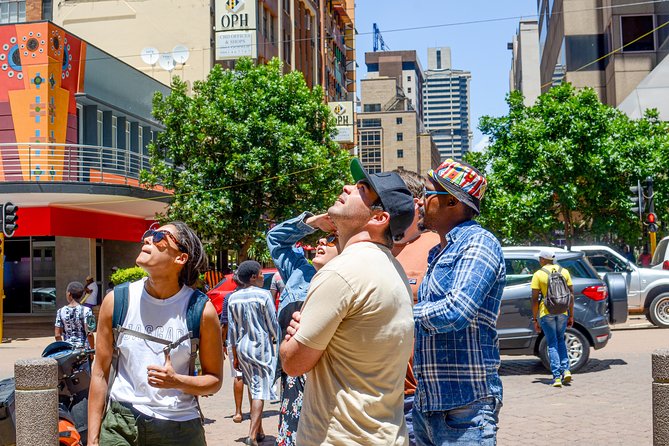
Johannesburg’s city centre makes the most sense on foot, but it is not the easiest place for an independent stroll. This three-hour tour brings you through Main Street, Chancellor House, the Workers Museum, and Gandhi Square, then adds a traditional braai in the Maboneng Precinct. Guides such as Mathapelo, Tebogo, and Sibongile help you read the streets and make sensible choices about where to walk.
I like the mix of serious South African history and ordinary city life. I also like that lunch is part of the outing, with plant-based choices available. The main consideration is that downtown Johannesburg can look worn and feel unpredictable in places, so this is not a polished sightseeing route. You are seeing the real city, including its problems.
Key points to know before you book

- Walk central Johannesburg with local guidance: The route covers Main Street, the Workers Museum, Chancellor House, Mary Fitzgerald Square, Gandhi Square, and other parts of the central business district.
- Learn about Mandela and Tambo at Chancellor House: The building was home to South Africa’s first Black-owned law firm.
- See the city from above: The tour highlights views from the Top of Africa skyscraper, although the supplied timing does not specify exactly when this stop takes place.
- Finish with a South African braai: The meal is served in or around the arts-focused Maboneng Precinct, with plant-based food available.
- Keep the group small: A maximum of 10 people makes it easier to ask questions and stay together.
- Plan for practical city movement: Some groups have used a taxi or Uber between central Johannesburg and Maboneng, so the day is not necessarily one continuous walk.
Why this walking tour helps you understand Johannesburg
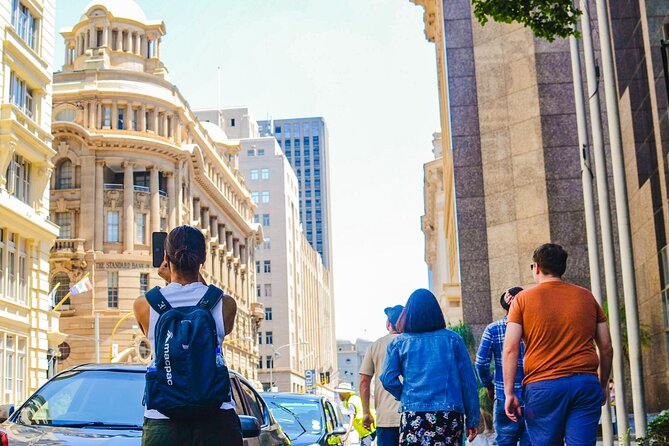
Johannesburg is often approached from a distance. You see the skyline from a hotel window, visit the Apartheid Museum by car, and leave with a few broad ideas about the city. This tour offers something different. You spend time at street level, where old commercial buildings, public squares, transport routes, local businesses, and signs of neglect all sit beside one another.
That mixture can be uncomfortable, but it is useful. You get a clearer sense of how Johannesburg changed from a mining town into South Africa’s largest and wealthiest city, and how parts of the centre later lost investment and residents. The tour does not present an airbrushed version of Jozi.
The guides are a major part of the value. Mathapelo is described as warm, candid, and good at explaining difficult parts of South African history. Tebogo has led groups through the city centre, Newtown, Jewel City, and Maboneng, while also helping people choose safer routes. Sibongile has helped visitors arrange an Uber and checked that they reached their hotel safely. Other named guides include Mulalo, Clement, Kutlwano, and Deboro.
Guide assignments can change, of course. What you should expect is a host who does more than point at buildings. The best part of this format is being able to ask why a street feels quiet, what a public square is used for, or how a local resident views the city’s changes.
Other walks around Johannesburg:
- Soweto: Walking Tour with a Local Guide and Lunch
★ 4.9 · 648 reviews - Soweto Walking Tour with Lunch
★ 5.0 · 288 reviews - Johannesburg: Local Food Tasting Guided Walking Tour
★ 4.7 · 192 reviews
Starting at Gandhi Square and Main Street
The meeting point is outside Nando’s at Gandhi Square, at Shop 180 in the Metropolitan Building on Rissik Street. This gives you a clear landmark in a central location, and the area is near public transportation.
Gandhi Square is not just a place to gather. It is tied to Johannesburg’s civic and political story, and it gives you an early look at the scale and pace of the city centre. From here, the walk heads into streets lined with older commercial architecture.
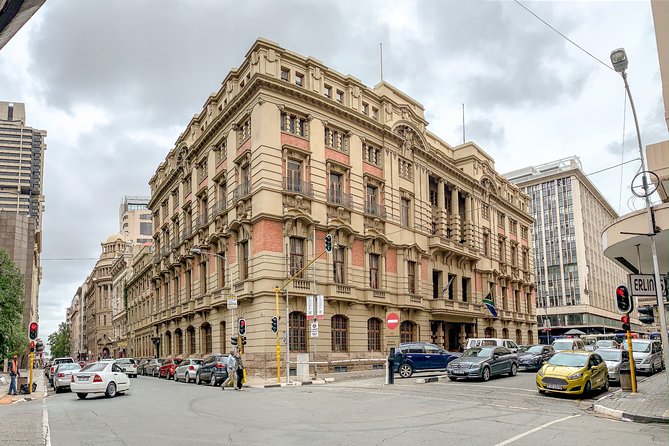
Main Street is allotted about 30 minutes. That is enough time to look carefully rather than simply pass through. You can expect the guide to discuss the city’s mining origins, older office buildings, and the way central Johannesburg has changed over time. It is also a good place for photographs, especially if you enjoy urban details more than postcard views.
Do not expect a preserved historic district. The appeal comes from contrast: heritage facades beside modern businesses, busy sidewalks beside empty upper floors, and signs of a major financial centre sharing space with visible urban decline. The guide’s comments are important here, because the buildings alone cannot explain what you are seeing.
The Workers Museum and the lives behind the mines

The Workers Museum is one of the most worthwhile stops. The former compound helps explain the lives of migrant laborers who came to Johannesburg’s mines and were housed under a system that separated workers from their families and communities.
The stop is planned for about 20 minutes. That is a short visit, but enough to establish the human side of the city’s industrial past. I would pay close attention here, since this is one of the places where the tour moves beyond architecture and connects Johannesburg’s wealth to the people whose labor helped create it.
The museum also gives useful context for later stops. The central business district can otherwise seem like a collection of old buildings and busy streets. After the Workers Museum, you have a better sense of the social forces that shaped the city.
The schedule does not say that admission to the museum is separately charged. The tour information lists the stops as free admission, but additional costs are not included in the overall price. It is sensible to confirm any entry arrangements before setting out.
Chancellor House and the legal fight against apartheid
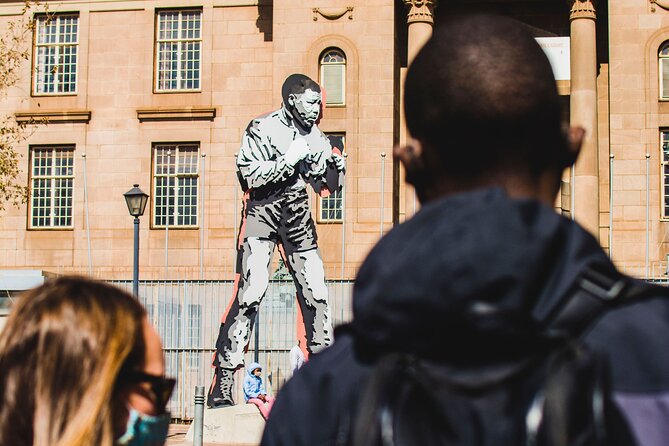
Chancellor House is a compact but powerful stop. This is where Nelson Mandela and Oliver Tambo worked and founded South Africa’s first Black-owned law firm. The building connects the city centre to the legal and political struggle against apartheid.
Only about 15 minutes are assigned here, so the visit is likely to focus on the building and its meaning rather than a long museum session. That suits the walking-tour format. You are moving through the city where events took place, not just viewing objects behind glass.
I like this stop because it links a familiar name, Mandela, to a specific workplace. It also gives the guide a chance to explain how legal work could support people facing discriminatory laws. Ask questions if you have them. The named guides are praised for giving direct answers and adding local context rather than reciting a short script.
A few more things to do in Johannesburg worth a look
- Johannesburg Hop-On Hop-Off City Tour with Soweto Option
★ 4.5 · 768 reviews - Jo’berg in 1 Day: Soweto, Apartheid Museum & City Tour
★ 4.8 · 524 reviews - Soweto: Hop-On Hop-Off Bus, City Tour and Apartheid Museum
★ 4.5 · 250 reviews - Johannesburg: City Centre Walking Tour
★ 4.8 · 152 reviews
Mary Fitzgerald Square and the city’s public voice
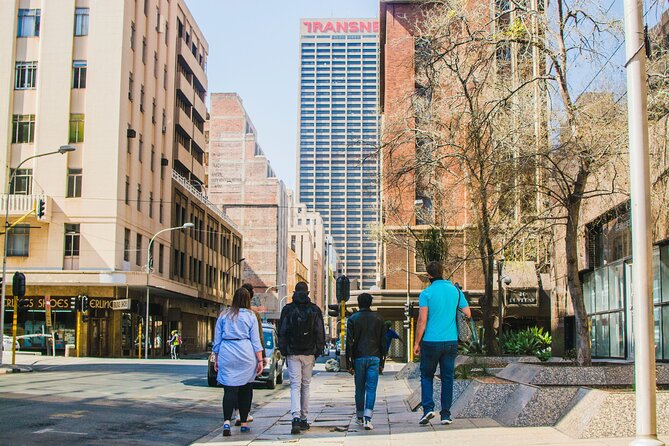
Mary Fitzgerald Square is planned as a brief, roughly 10-minute stop. The square is often used for meetings and public gatherings, so it helps you think about Johannesburg as a civic space, not only a business district.
A short pause here may feel less dramatic than Chancellor House or a high-rise viewpoint. Its value is in the setting. Public squares reveal how a city gathers, protests, celebrates, and conducts everyday business. Your guide can also help explain why this particular space matters.
The walk through this part of Johannesburg is described as a chance to interact with local people and see daily routines. That does not mean a staged cultural show. You are simply moving through the centre with someone who can help you understand what is happening around you.
City views from the Top of Africa
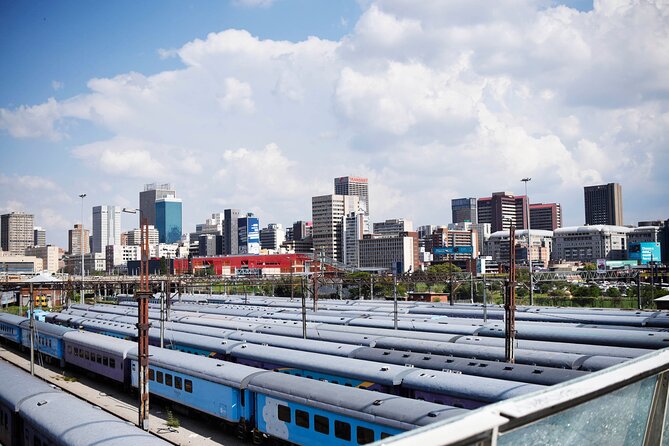
The tour highlights the Top of Africa as a place for wide views over Johannesburg. From a skyscraper, the scale of the city becomes easier to grasp. After walking through individual streets, you can look across the broader urban area and see how large and spread out Jozi really is.
This is a useful counterpoint to the ground-level route. On foot, you notice storefronts, pavements, people, and old facades. From above, you see the city’s size and the relationship between its commercial core and surrounding districts.
One practical note matters here: the supplied schedule does not give a duration or a clear position for the Top of Africa stop. The detailed itinerary lists Main Street, the Workers Museum, Chancellor House, Mary Fitzgerald Square, and the general city walk, while the advertised highlights include the viewpoint. I would confirm the exact access and timing before booking if the panorama is your main reason for going.
The move toward Maboneng and the braai lunch
The tour ends with lunch, described as a South African braai in the Maboneng Precinct. A braai is a barbecue and an important part of social life in South Africa. This meal gives the tour a relaxed finish after several stops dealing with difficult political and social subjects.
Maboneng is known in the tour description as an artsy precinct, and the route may include music, arts, crafts, and local activity. The area provides a change of mood from the older central streets. You can expect a more social setting, with time to eat and talk rather than listen continuously.
The meal is one of the strongest reasons to consider the tour. It turns the outing into more than a history lecture and gives you a chance to try a local style of food. Plant-based options are available, which is helpful if you do not eat meat. Water is included, but other additional items and costs are not.
There is some uncertainty about the transport between the walking route and lunch. Several tour accounts describe a taxi or Uber from Gandhi Square, Jewel City, or the city centre to Maboneng. The stated end point is Constitution Hill Human Rights Precinct, but the tour also says to end with lunch, and the lunch is associated with Maboneng. These details suggest that the exact final sequence can vary. Ask the operator where lunch will take place and where the tour will finish on your date.
Safety without pretending the city is risk-free
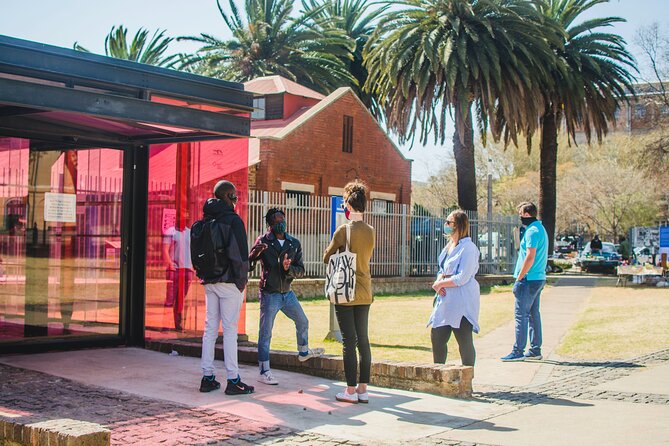
This tour is designed for people who do not feel comfortable exploring Johannesburg’s centre alone. That is a sensible reason to join. The guide knows which streets to use, when to keep the group together, and when a taxi is wiser than walking.
Several named guides are praised for taking safety seriously. Sibongile helped arrange transport back to a hotel, while Tebogo directed a group through areas he considered safer and used a taxi for a less comfortable section. Those practical decisions are exactly what you want from a city-centre guide.
Still, a guided walk is not a guarantee that nothing can happen. Keep your phone and valuables out of sight when you are not using them, stay with the group, and follow the guide’s instructions. Wear comfortable shoes and bring water, even though water is included.
The tour is capped at 10 people. That is small enough for the guide to keep track of everyone and answer questions. It also means the pace may be more personal than on a large coach excursion.
What the $45.19 price is really buying
At $45.19 per person, this is not the cheapest way to see Johannesburg. You are paying for a guide, a structured route, local judgment about safety, water, and a meal rather than simply paying for entry to a museum.
The value is strongest if you would not otherwise visit the city centre. A private taxi between sites, separate museum visits, and a meal in Maboneng could easily make a self-planned day less simple, even if the basic walking itself costs nothing. The guide also saves you the work of deciding which streets to use and how to connect the different areas.
The price is less compelling if you only want major attractions, a long museum visit, or a sightseeing drive. This tour spends time in ordinary streets and allows for conversation. Some of what you see will be visually rough, and the schedule is not packed with formal attractions.
The tour is commonly booked about three weeks ahead, with an average lead time of 21 days. That suggests you should reserve early if your Johannesburg dates are fixed, especially because the group maximum is 10.
Who will get the most from this tour
I would choose this walk if you want an introduction to Johannesburg that includes difficult realities as well as famous names. It suits first-time visitors who want local guidance, solo visitors who would rather not walk the centre alone, and people interested in apartheid history, urban change, architecture, and everyday life.
It also works well for visitors who enjoy asking questions. The best moments are likely to come from the guide’s explanations and personal perspective, not from a long list of monuments.
You may want a different outing if you have limited mobility, since the experience is a walking tour and the itinerary does not provide a detailed accessibility statement. You should also think twice if you want a fully predictable route. The transfer to Maboneng, the Top of Africa timing, and the final location are not laid out in exact detail.
Confirmation arrives at booking, and free cancellation is available up to 24 hours before the start time. Changes or cancellations inside that 24-hour window are not accepted for a refund.
Should you book the Johannesburg City Centre Walking Tour?
Book it if you want to see the city centre at street level, learn why places such as Chancellor House and the Workers Museum matter, and finish with a local braai. The strongest part is the human guidance: Mathapelo, Tebogo, Sibongile, and the other listed guides are described as friendly, candid, and careful with safety.
Before paying, confirm two details: the exact timing of the Top of Africa visit and how the group travels to Maboneng or Constitution Hill. If those points are clear, the $45.19 price is fair for a small guided walk with lunch and local insight.
If you want a glossy version of Johannesburg, choose a different tour. If you want a direct, grounded introduction to Jozi, this is a sensible place to start.
FAQ
How long does the Johannesburg City Centre Walking Tour last?
The tour lasts approximately three hours.
Where does the tour begin?
It begins outside Nando’s at Gandhi Square, Shop 180, Metropolitan Building, Rissik Street, Marshalltown, Johannesburg.
Where does the tour end?
The stated end point is Constitution Hill Human Rights Precinct at 11 Kotze Street, Braamfontein. The tour also ends with lunch, associated with the Maboneng Precinct, so confirm the final sequence when booking.
What places are visited?
The route includes Main Street, the Workers Museum, Chancellor House, Mary Fitzgerald Square, Gandhi Square, and other parts of central Johannesburg. The tour also highlights views from the Top of Africa.
Is lunch included?
The tour ends with a South African braai lunch. Plant-based options are available. Water is included, while additional items and costs are not.
Is transportation included?
The activity is primarily a walking tour. Some tour arrangements described in the supplied information include a taxi or Uber transfer to Maboneng, so you should confirm the transport details for your date.
How large is the group?
The tour has a maximum of 10 travelers.
Can I cancel for a full refund?
Yes. You can cancel at least 24 hours before the local start time for a full refund. Cancellations or changes made less than 24 hours before the start time are not accepted for a refund.
Just added in Johannesburg
- Soweto Tuk-Tuk Food & Beer Tour★ 5.0 · 9 reviews
- Soweto: Sip & Paint Walking Tour & Take Home a Canvas★ 4.8 · 7 reviews
- Soweto Tour; Mandela House; Vilakazi Street; Market Culture★ 5.0 · 6 reviews
- Soweto & Johannesburg and Apartheid Museum★ 4.7 · 41 reviews
- Soweto Township Tour★ 4.4 · 4 reviews
- Private Soweto,Mandela House,Apartheid Museum,Constitution★ 4.6 · 15 reviews
- Soweto Food & Beer Bike Tour★ 4.9 · 40 reviews
- Soweto: Hector Pieterson Memorial, to Orlando Towers Tour★ 4.0 · 31 reviews
City Tours, compared.

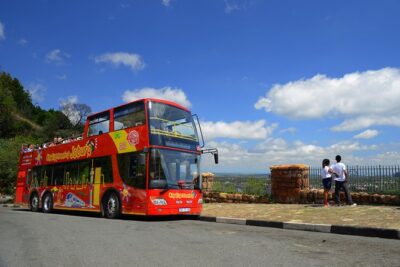
Johannesburg Hop-On Hop-Off City Tour with Soweto Option
Read our review →
Jo’berg in 1 Day: Soweto, Apartheid Museum & City Tour
Read our review →
Cape Town City Pass: Save Over 50% on 80+ Top Attractions
Read our review →
Hop-On Hop-Off Bus, City Tour and Apartheid Museum
Read our review →

From Sun City: Pilanesberg National Park 3-Hour Game Drive
Read our review →
Browse the lists this tour appears in