
Reviewed · SOWETO & TOWNSHIP TOURS
Johannesburg: Street Art and Culture in Maboneng!
Maboneng is best understood on foot, one mural and one street corner at a time. This two-hour walk links street art with Johannesburg’s past, from mining and industry to apartheid-era stories and the district’s more recent redevelopment. Guides such as Ayanda bring local experience, explaining not only what you are looking at but why the area changed.
I like the personal feel of the tour and the way it moves beyond photo stops. I also like the mix of art, cafés, small shops, local traders, and the alleged activist hideout at Curiocity Backpackers. The main consideration is pace: two hours goes quickly, and some explanations may feel repetitive if you already know Maboneng or Johannesburg well.
Key points to know before you book
- Meet at Home of the Bean: Start with a coffee shop briefing at Fox and Berea streets, under the bridge.
- Art with context: See work linked to artists including ESPO Powers and DBongz, with explanations of themes and technique.
- A changing district: Learn how Maboneng shifted from an industrial area into a creative precinct after 2009.
- History beyond murals: Visit the Hideout Bar, an alleged meeting place for Nelson Mandela and other anti-apartheid activists.
- Small details matter: Bring cash or a card if you want to buy from artists, informal traders, or local shops.
- English only: The tour is wheelchair accessible and includes entry to the places visited.
Why Maboneng works best as a walking tour
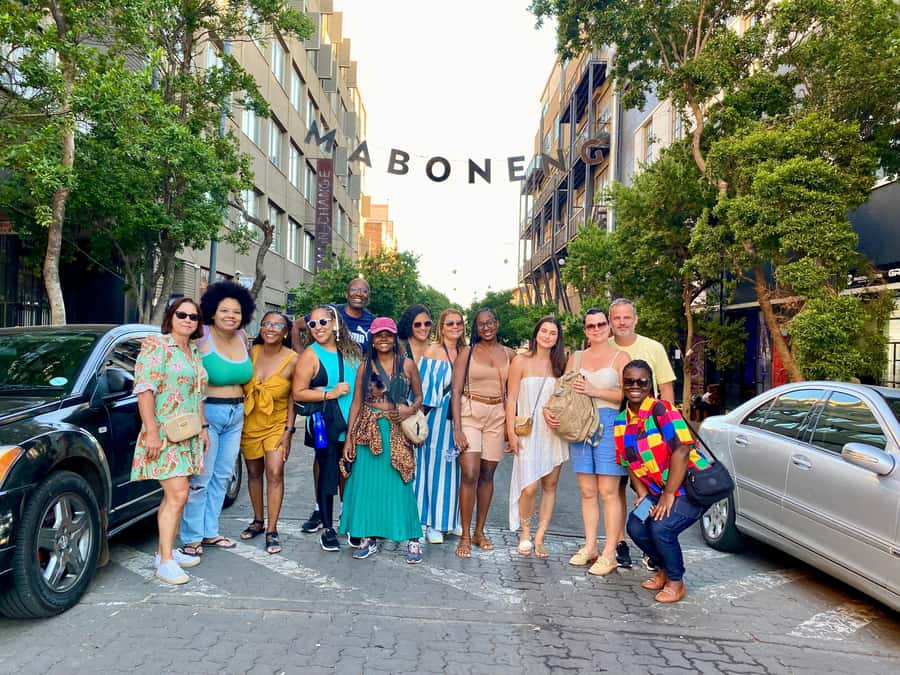
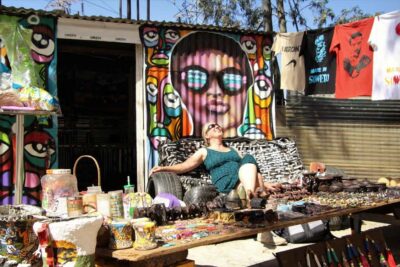
Maboneng means Place of Light, and the name fits its role as a district built around creativity, food, art, and public life. But this is not simply a polished arts quarter. The streets show several versions of Johannesburg at once: old industrial buildings, new cafés, painted walls, informal trade, galleries, backpacker accommodation, and residents going about everyday business.
That mixture is the point. You are not walking through a museum with neat labels and fixed boundaries. You are moving through a living neighborhood where redevelopment has brought new money and new attention, while older communities and working street life remain part of the picture.
A guide makes a big difference here. On your own, you might notice a striking mural and take a photograph. With Ayanda, Bonny, Kaiser, or Michael, you get the story behind the work, the artist’s place in the local scene, and a clearer idea of how Maboneng fits into Johannesburg. Ayanda is especially associated with this experience and is described as having personal ties to the area, strong local connections, and a clear passion for its art and culture.
The tour is also a useful introduction to inner-city Johannesburg. It does not try to cover the whole city, but it gives you a grounded starting point before you visit other districts or museums.
More Township Tours in Johannesburg
- Johannesburg: Hop-On Hop-Off Bus with Optional Soweto Tour
★ 4.6 · 985 reviews - Soweto /Johannesburg and Apartheid Museum Guided Full Day Tour
★ 5.0 · 932 reviews - Johannesburg Hop-On Hop-Off City Tour with Soweto Option
★ 4.5 · 768 reviews
Starting at Home of the Bean
The meeting point is Home of the Bean, a coffee shop on the corner of Fox and Berea Street, beneath the bridge. The building looks industrial from the outside, so go inside the café if you arrive early rather than waiting on the pavement.
You have time to buy a coffee before the walk begins. The first part includes a safety briefing of about 15 minutes, which is useful in a city area where you should stay alert and follow the guide’s directions. The operator sends a WhatsApp message or other message around 30 minutes before the start, and you can use that contact line if you need help finding the meeting point.
This relaxed opening also sets the tone. You are not rushed straight into a history lecture. You get your bearings, meet the guide, and begin with practical advice before heading into the streets.
Food and drinks are not included, so budget separately for the coffee or anything else you buy. The $40 price covers the two-hour guided walk and entry to the places visited. For a small group, that is a fair price if you value explanation and local access rather than simply wandering from mural to mural.
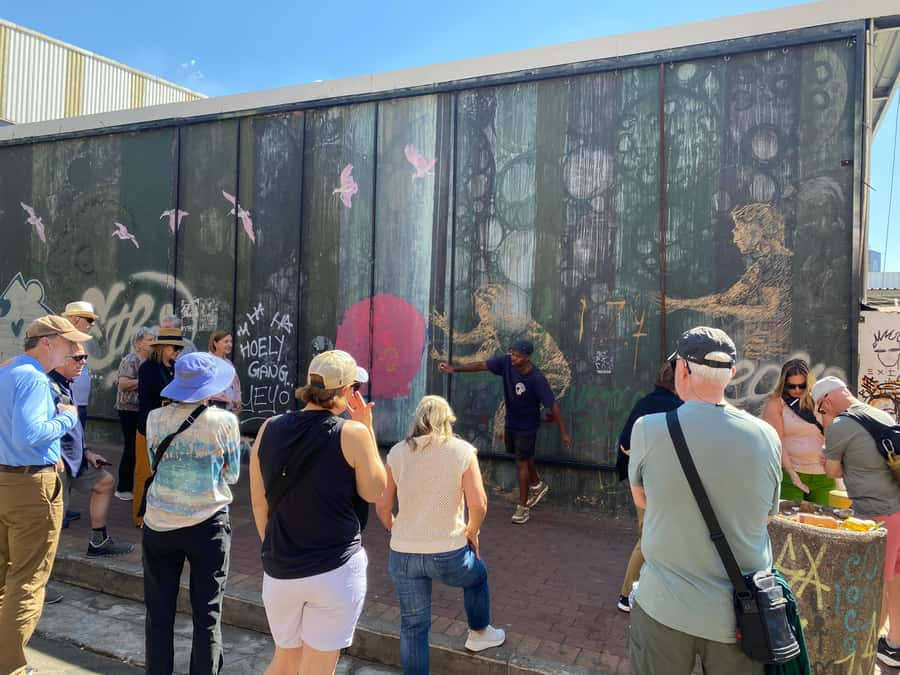
Following murals by local and international artists
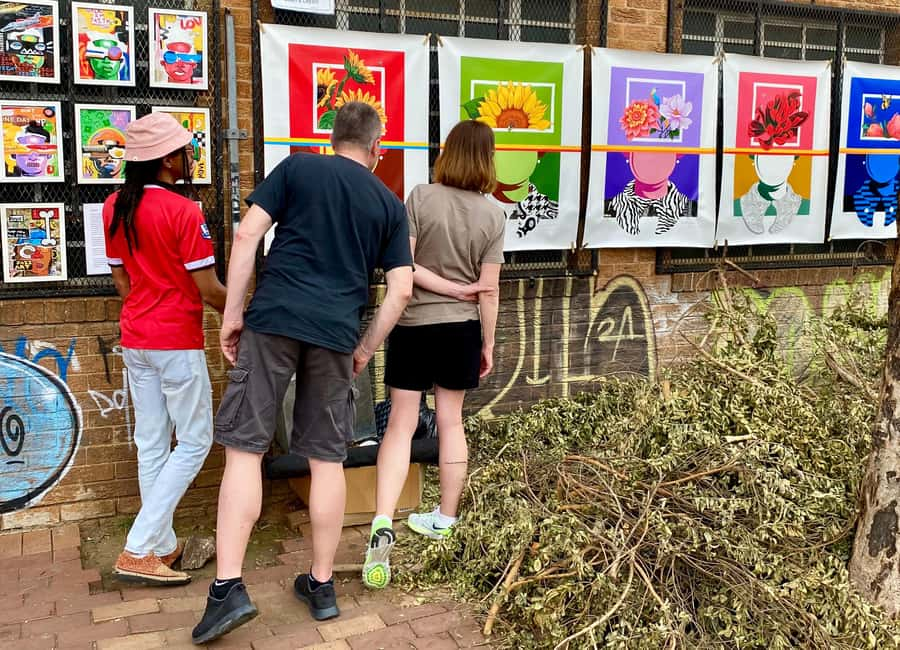
The main part of the walk is the street art. You may see work connected with artists such as ESPO Powers and DBongz, along with other local artists whose names and styles help explain Johannesburg’s place in the wider street-art world.
The guide does more than point at painted walls. You learn about the people behind the images, the meaning of selected pieces, and the difference between commissioned public art and the wider graffiti culture. That extra context is what turns the walk into a cultural tour rather than a photography outing.
Look closely at the walls and surrounding buildings. Street art can be large and obvious, but its setting matters just as much. Industrial structures, shopfronts, balconies, signs, and passing foot traffic all become part of the scene. The art reflects both local pride and the tensions of a district in transition.
I would bring a phone or camera, but do not spend the whole walk looking through a screen. The most useful moments come when the guide links a piece to local politics, community life, or the story of the neighborhood. You will see more on this guided route than you likely would alone, particularly if you do not know where to look.
The art also gives you a way into present-day South Africa. Some pieces may speak to identity, inequality, memory, hope, or city life. The point is not that every mural has one fixed meaning. Rather, the guide helps you ask better questions about what public art is doing in this part of Johannesburg.
Maboneng Arts Village and the creative economy
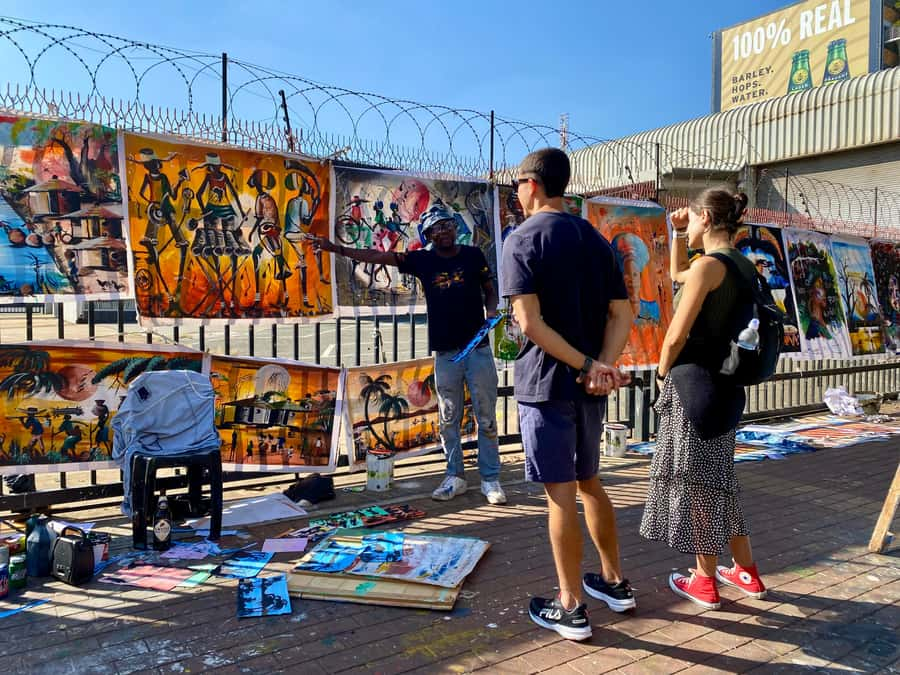
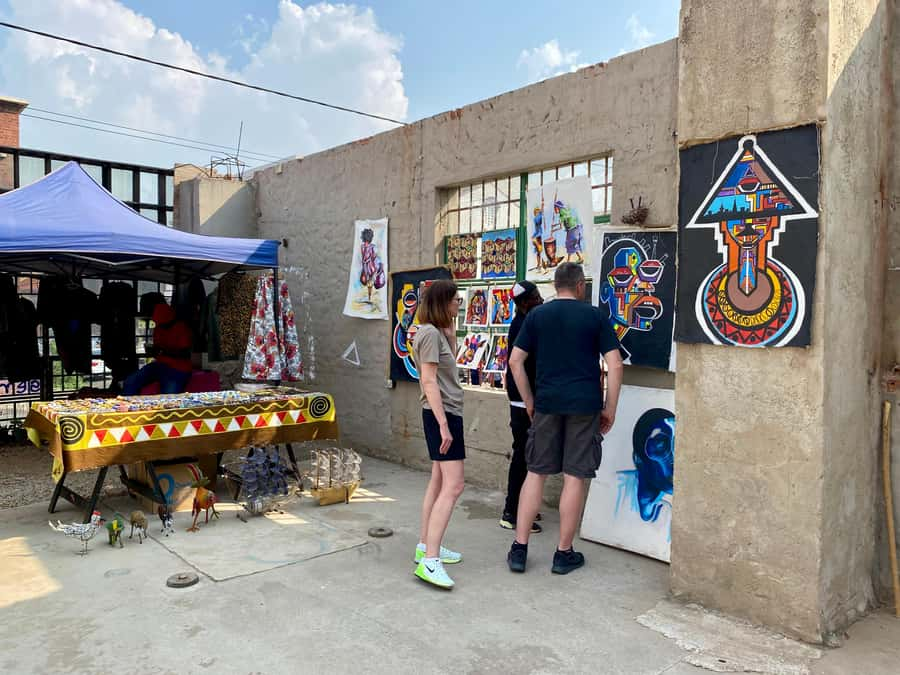
Maboneng Arts Village adds a more hands-on stop to the street walk. It is a space where artists and other creatives can sell their work, making it easier to see the people and small businesses behind the district’s artistic reputation.
This stop matters because it shows art as work, not only decoration. Galleries and painted walls may attract visitors, but shops, studios, restaurants, and independent sellers help keep the area active. You can browse and, if something catches your eye, buy directly from local artists or traders.
Bring some South African rand or a card if you want to purchase something. The tour does not include shopping, and you should not feel pressured to buy. Still, having a little spending money gives you more freedom to support the people whose work you have just learned about.
Maboneng’s mix of formal businesses and informal traders is part of its character. It can also make the district feel less tidy and predictable than a planned cultural center. I see that as a strength, but it may surprise you if you expect a quiet gallery district.
Other township visits from Johannesburg:
- Half-Day Tour of Soweto Tour
★ 4.5 · 712 reviews - Soweto: Walking Tour with a Local Guide and Lunch
★ 4.9 · 648 reviews - Jo’berg in 1 Day: Soweto, Apartheid Museum & City Tour
★ 4.8 · 524 reviews - Johannesburg: Full-Day Tour with Soweto and Apartheid Museum
★ 4.8 · 478 reviews
The Hideout Bar and apartheid-era stories
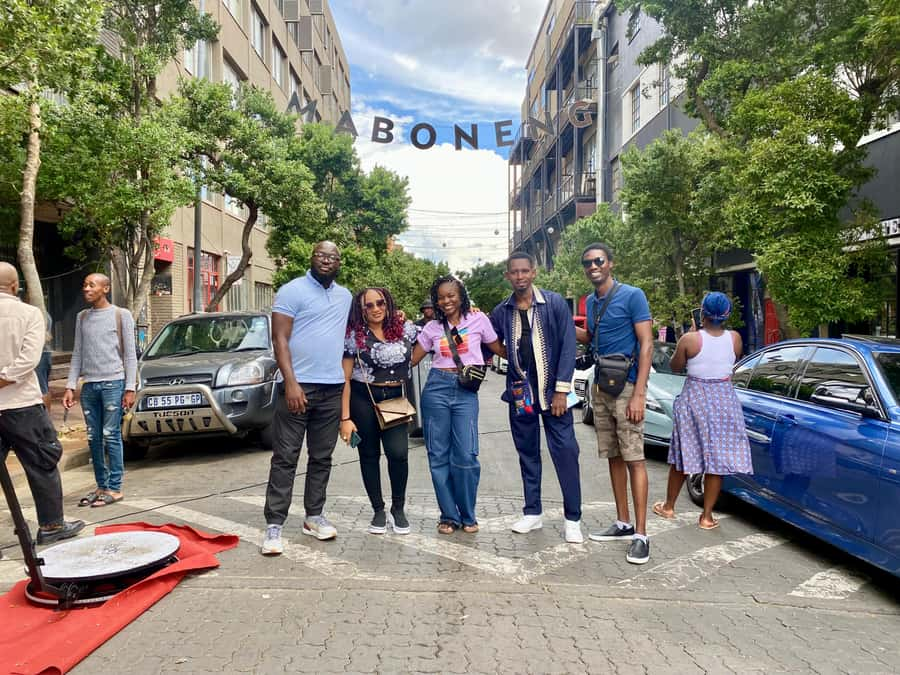
One of the more unusual stops is the Hideout Bar at Curiocity Backpackers. It is described as an alleged hideout for Nelson Mandela and other anti-apartheid activists. The word alleged matters. Treat this as a local historical story rather than a formally verified museum display.
The stop gives the walk a useful shift in mood. Street art tells you about the city today, while the bar connects Maboneng to the political past that shaped South Africa. You may learn how spaces in Johannesburg were used for meetings, refuge, or organizing during apartheid, though the exact story is best heard directly from the guide.
This is also a reminder that history here is not confined to grand monuments. It can sit inside an ordinary-looking bar or old building. That makes the stop memorable, but you should keep your expectations realistic. It is not presented as a full apartheid history tour or a major museum visit.
From industrial district to creative precinct
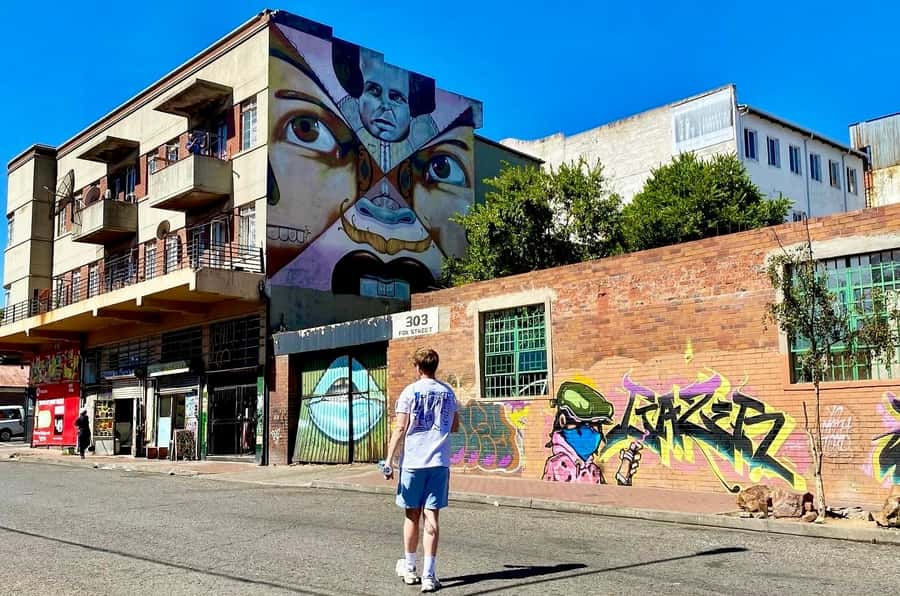
The tour explains Maboneng’s change from 2009 to the present. The area once had strong links to Johannesburg’s industrial and mining economy. Later redevelopment brought restaurants, art spaces, accommodation, and new investment.
That transformation is easy to admire and worth questioning. New businesses and public art can make an old industrial area more attractive, walkable, and economically active. At the same time, redevelopment can affect rents, local businesses, and the people who already live in the area.
A useful guide will help you see both sides. The strongest part of this experience is not simply hearing that Maboneng is cool. It is learning how funding, design, art, food, and real estate helped create its current identity. You also get a sense of what Johannesburg might become in other inner-city districts.
Several people who took the walk appreciated this redevelopment discussion, especially the link between art and food, investment, and the area’s changing social life. That makes the tour a better choice for anyone interested in urban change, not just murals.
The viewpoint and the changing rhythm of the walk
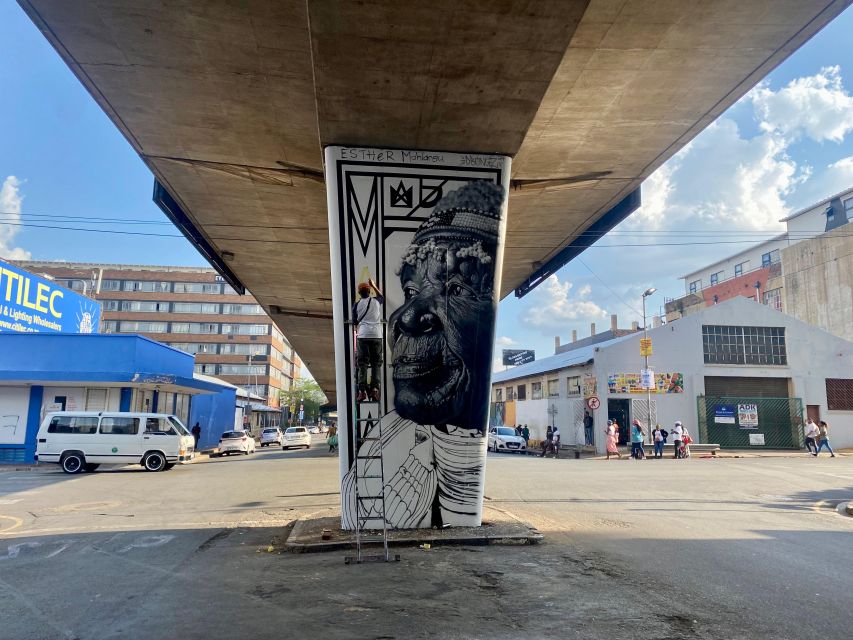
The route includes a viewpoint with scenic views along the way. The exact outlook may depend on the day’s route and access, but it gives you a chance to step back from street level and see how the precinct fits together.
After focusing on walls, shops, and people, a wider view helps you read the city physically. You can connect the old industrial buildings with newer developments and see how compact the district is. The short viewpoint stop also breaks up the walking and gives you a natural place to take photographs.
The itinerary includes several walking sections of roughly 15 to 30 minutes. This is not a strenuous hike, but you are on your feet and outdoors for most of the two hours. Wear comfortable shoes and carry water, especially if you are joining during warm weather.
The tour returns to Home of the Bean at the end. Because the route stays within Maboneng, it works well as a short introduction before lunch, an afternoon activity, or part of a longer Johannesburg day.
Safety, comfort, and the feel of the group
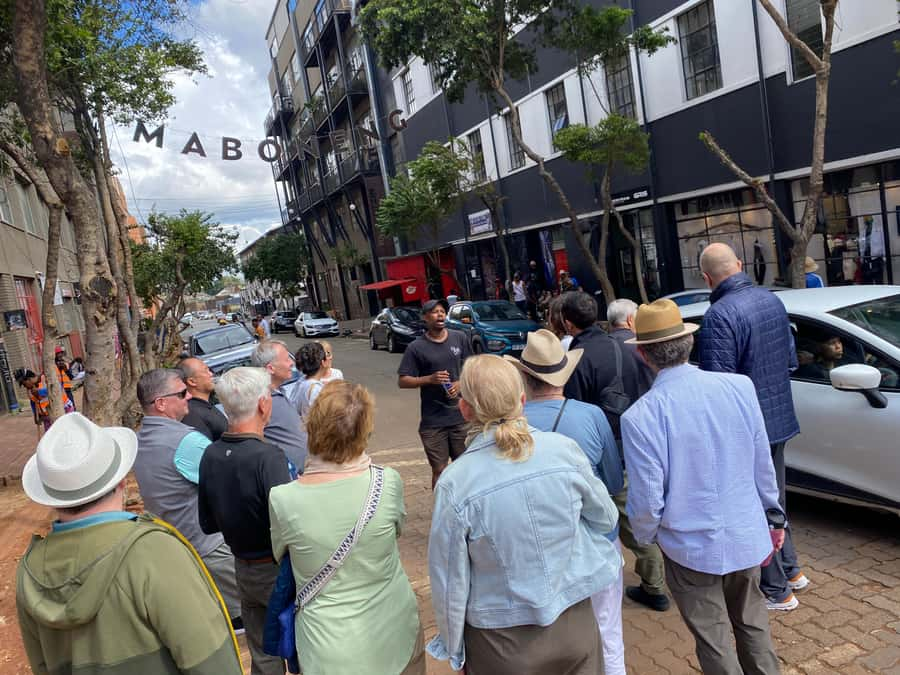
Safety is a sensible concern when visiting inner-city Johannesburg. The guide begins with a briefing, stays with the group, and leads you through the district rather than leaving you to work out the route yourself. Several people who took the tour felt comfortable walking with a local guide, and one guide helped arrange a parking spot near the meeting point.
That does not mean you should switch off your common sense. Keep valuables secure, avoid displaying large amounts of cash, and follow the guide’s advice. The streets include local informal traders and many different kinds of public activity, so pay attention to your surroundings.
Group size can be small, sometimes around two to four people, though the exact size is not guaranteed. A small group makes it easier to ask questions and hear the guide. It also gives the walk a more personal feel than a large sightseeing circuit.
The tour is wheelchair accessible. Still, you may want to confirm current route details if you have specific mobility needs, since this is an outdoor walking experience through streets and buildings rather than a single purpose-built venue.
What the $40 price really buys you
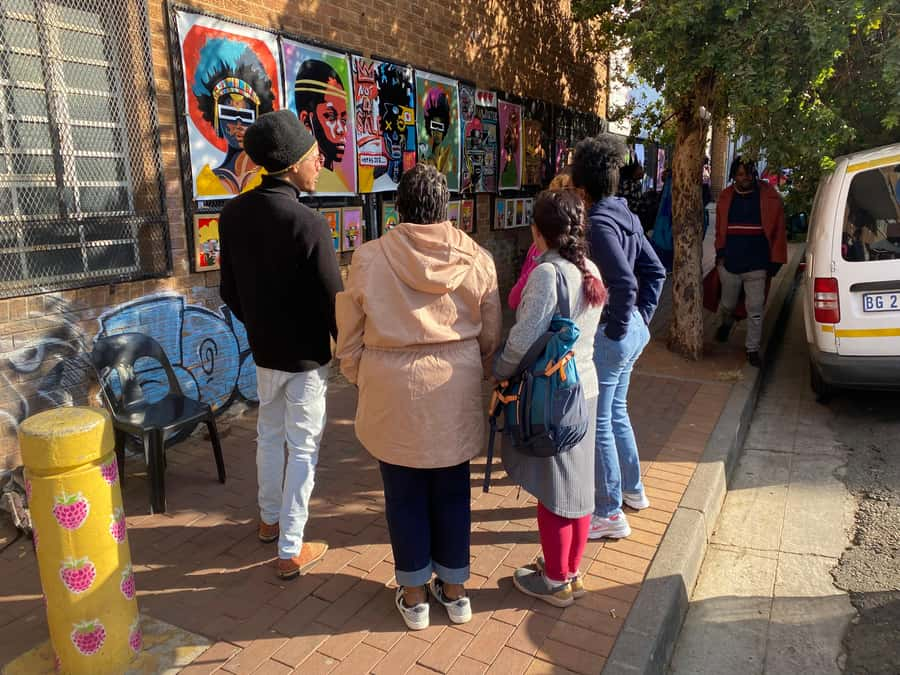
At $40 per person, this is not the cheapest way to see public art. You can walk through parts of Maboneng without paying for a guide. The value comes from the interpretation, local stories, and the chance to enter places you might otherwise pass without understanding.
I would consider it good value if you are new to Johannesburg, interested in street art, or uneasy about exploring the inner city alone. The guide can point out artists, explain the district’s redevelopment, answer questions, and help you read the neighborhood as more than a collection of attractive walls.
It is less compelling if you have already spent a lot of time in Maboneng or prefer to explore at your own pace. Two hours also limits how much ground and history the tour can cover. One person found some of the information repetitive, so visitors who already know the area may want a more specialized art or architecture tour instead.
Free cancellation up to 24 hours before the start and the option to reserve now and pay later make booking less risky. The tour runs in English only, so you need to be comfortable following a live explanation in English.
Who should book this Maboneng walk?
I would choose this tour for a first visit to Johannesburg, especially if you want an introduction to the city that feels connected to everyday life. It suits adults, older children, art students, photographers, and anyone curious about how cities change.
It is also a good option if you have only a short window in Johannesburg. One participant had limited time before going to the airport and still managed to see the main sights and hear the area’s story. You should not treat that as a guarantee for your own transport schedule, but the compact format is useful.
The tour is less suited to someone seeking a full apartheid history lesson, a long gallery visit, or an extensive city tour. It also will not satisfy you if you want a purely commercial sightseeing experience with no discussion of redevelopment or local life.
Should you book it?
Book this Maboneng walk if you want street art explained in its social setting, not just photographed. The guides bring personal knowledge, local contacts, and a clear affection for Johannesburg, with Ayanda receiving especially strong praise for his warmth, humor, and ability to connect Maboneng with wider South African history.
The best reason to go is the combination of murals, industrial history, political stories, shops, traders, and current city life. The main drawbacks are the short two-hour format, English-only guiding, and the possibility of repeated points if you already know the neighborhood.
For most first-time visitors, the $40 cost is justified by the guide and the added context. Meet inside Home of the Bean, arrive ready to walk, bring water and spending money, and keep your eyes on both the artwork and the people who make Maboneng a living part of Johannesburg.
FAQ
Where does the Maboneng street-art tour begin?
It begins at Home of the Bean coffee shop on the corner of Fox and Berea Street, under the bridge. If you arrive early, wait inside the coffee shop.
How long does the tour last?
The tour lasts two hours, including the café briefing, walking sections, art stops, visits to local spaces, and the return to Home of the Bean.
What language is the tour offered in?
The tour is offered in English only and includes a live English-speaking guide.
Who are the guides?
Guides associated with the experience include Ayanda, Bonny, Kaiser, and Michael. Ayanda is especially noted for his local experience and knowledge of Maboneng and Johannesburg.
Is coffee included in the price?
No. You can buy coffee at Home of the Bean, but food and drinks are at your own expense.
Can I buy art or goods during the walk?
Yes. Maboneng includes artists, informal traders, curio shops, and gift stores. Bring cash or a card if you may want to buy something.
Does the tour visit Maboneng Arts Village?
Yes. The route includes Maboneng Arts Village, a space where artists and creatives sell their work.
What is the Hideout Bar?
The Hideout Bar is at Curiocity Backpackers and is presented as an alleged hideout for Nelson Mandela and other anti-apartheid activists.
Is the tour wheelchair accessible?
Yes, the activity is listed as wheelchair accessible.
Can I cancel the booking?
You can cancel up to 24 hours in advance for a full refund. You can also reserve the tour and pay later, keeping your plans flexible.
More street art in Johannesburg
- Johannesburg: Maboneng Street Art & Culture Tour
★ 4.9 · 257 reviews - Johannesburg: Maboneng Street Art & Culture Tour
★ 5.0 · 140 reviews - Colours of Johannesburg: A Graffiti & Street Art Tour
★ 5.0 · 21 reviews - Cape Town: Street Art Walking Tour in Woodstock
★ 4.8 · 293 reviews
Just added in Johannesburg
- Soweto Tuk-Tuk Food & Beer Tour★ 5.0 · 9 reviews
- Soweto: Sip & Paint Walking Tour & Take Home a Canvas★ 4.8 · 7 reviews
- Soweto Tour; Mandela House; Vilakazi Street; Market Culture★ 5.0 · 6 reviews
- Soweto & Johannesburg and Apartheid Museum★ 4.7 · 41 reviews
- Soweto Township Tour★ 4.4 · 4 reviews
- Soweto Food & Beer Bike Tour★ 4.9 · 40 reviews
- Private Soweto,Mandela House,Apartheid Museum,Constitution★ 4.6 · 15 reviews
- Soweto and apartheid museum tour(Half-day)★ 5.0 · 4 reviews
Soweto & Township Tours, compared.

Johannesburg Hop-On Hop-Off City Tour with Soweto Option
Read our review →

Jo’berg in 1 Day: Soweto, Apartheid Museum & City Tour
Read our review →
Full-Day Tour with Soweto and Apartheid Museum
Read our review →Browse the lists this tour appears in