Reviewed · APARTHEID & MANDELA HISTORY TOURS
Half Day Soweto and Apartheid Museum Guided Tour
The most powerful part of this tour is its clear link between major museums and everyday Soweto. You move from FNB Stadium and Orlando Towers to a walk through Motsoaledi informal settlement, then on to Mandela’s former home and the site of the 1976 student uprising. It is history you can see in buildings, streets, photographs, and memorials.
I like the strong guide-led storytelling, especially when your guide can share personal knowledge of the community. I also like the efficient mix of Soweto landmarks and the Apartheid Museum, which saves you the trouble of arranging separate visits. The main drawback is the tight half-day schedule. Lunch takes an hour, the Hector Pieterson Museum fee is extra, and there is little spare time if a stop runs long.
Key points to know
- Soweto is shown through both famous landmarks and local streets, including Motsoaledi informal settlement.
- Vilakazi Street links two Nobel Peace Prize laureates, Nelson Mandela and Archbishop Desmond Tutu.
- The Apartheid Museum gets two hours, enough for a serious visit rather than a quick glance.
- Guides Nor and Neo received especially warm praise for their local insight, energy, and personal stories.
- Hector Pieterson Museum admission costs an additional 160 ZAR, while Mandela House and the Apartheid Museum are included.
- The $117 price reflects transport, guiding, and two major admissions, but lunch and one museum entry remain extra.
A short route through Johannesburg and Soweto

This 4.5-hour outing is built for you if you want an introduction to Johannesburg’s political history without spending a full day in the city. An air-conditioned vehicle collects you from your Johannesburg hotel, and the English-speaking driver-guide stays with you for the main sightseeing stops.
The route covers a lot of ground. You see major public landmarks, walk through a local settlement, visit two Soweto museums, and finish at the Apartheid Museum. That makes the tour useful for a first visit, especially if you want context before exploring Johannesburg on your own.
I would not book it expecting a slow, open-ended neighborhood walk. The schedule is practical rather than leisurely. Several stops are brief, and the tour’s value depends heavily on how well your guide connects the places you see.
The guides named in the strongest feedback were Nor and Neo. Nor was praised for courteous service and first-hand community knowledge, while Neo was noted for his energy, charm, and strong sense of local history. Guide quality matters here because many of the sites need explanation. A street or tower can look like a simple photo stop until someone explains why it matters.
More Apartheid History Tours in Johannesburg
- Soweto /Johannesburg and Apartheid Museum Guided Full Day Tour
★ 5.0 · 932 reviews - Jo’berg in 1 Day: Soweto, Apartheid Museum & City Tour
★ 4.8 · 524 reviews - Johannesburg: Full-Day Tour with Soweto and Apartheid Museum
★ 4.8 · 478 reviews
FNB Stadium and the first view of Soweto
Your tour begins with Johannesburg pickup and an initial sightseeing period of about 15 minutes. One of the first major sights is FNB Stadium, also called Soccer City.
The stadium hosted the opening ceremony and final match of the 2010 FIFA World Cup. Even if football is not your main interest, the building gives you a useful starting point. It represents a modern South Africa presenting itself to the world, a sharp contrast to the older political struggles explored later in the day.
The stadium is primarily a sightseeing stop rather than a full stadium visit. You should expect to see it from the vehicle or during a short pause, not take a long behind-the-scenes tour. That is a sensible use of time on a half-day route, though sports fans may wish they had longer.
You then pass Chris Hani Baragwanath Academic Hospital. The tour does not include a visit inside, but your guide explains its importance as one of the world’s largest hospitals and a major healthcare provider for South Africa. This is a useful reminder that Soweto is not only a historic township visited for monuments. It is also a large, working community with essential institutions.
Walking through Motsoaledi informal settlement
One of the more unusual stops is Motsoaledi informal settlement. Here you leave the vehicle and walk through sandy streets with your guide, passing homes and a typical day care center.
This part requires a respectful attitude. You are not visiting a staged attraction. You are entering a residential area, meeting residents, greeting people, and hearing about daily life and the difficulties faced by the community. Follow your guide’s lead, ask before taking photographs, and remember that people’s homes are not scenery.
I like this stop because it adds human scale to the political history. Museums can explain laws and dates. A walk through a settlement shows how housing and living conditions remain part of South Africa’s social story. It also gives you a chance to meet people rather than only looking at monuments.
At the same time, this may be the most sensitive part of the experience. Some people will find it uncomfortable to visit a community as part of a paid tour. The quality of the guide’s approach matters greatly. A respectful, locally grounded explanation can make the visit thoughtful. A rushed or overly dramatic presentation would feel out of place. The feedback about Nor’s first-hand community experience is encouraging, but you should still behave with care and humility.
Orlando Towers and Soweto’s changing identity

The route continues past the Orlando Towers, two former cooling towers from a power station. Their colorful murals and extreme-sports use have given them a new identity, including bungee jumping.
You should expect a viewing stop rather than a jump or tower activity. The point is to hear how an industrial site became a recognizable part of Soweto’s modern image. The towers connect old infrastructure with newer forms of recreation, public art, and township culture.
This stop is relatively short, listed at about 15 minutes. It works well as a visual break between the settlement walk and the historic sites. If you hope to take part in an extreme sport, this tour does not promise that. You are there to see the towers and learn their story.
More Township Tours in Johannesburg
- Johannesburg: Hop-On Hop-Off Bus with Optional Soweto Tour
★ 4.6 · 985 reviews - Johannesburg Hop-On Hop-Off City Tour with Soweto Option
★ 4.5 · 768 reviews - Half-Day Tour of Soweto Tour
★ 4.5 · 712 reviews - Soweto: Walking Tour with a Local Guide and Lunch
★ 4.9 · 648 reviews
Vilakazi Street and Mandela House
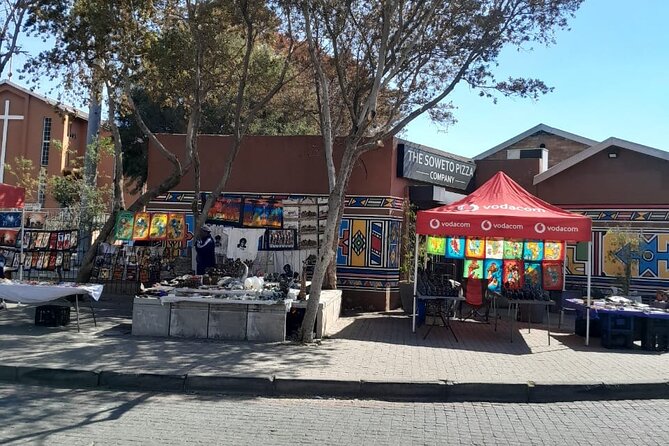
Vilakazi Street is one of the tour’s essential stops. It is known as the only street to have been home to two Nobel Peace Prize laureates, Nelson Mandela and Archbishop Desmond Tutu.
You walk along the street before entering Mandela House, where admission is included. The former home is now a museum with photographs, artifacts, and personal belongings connected to Mandela’s life. The visit is scheduled for about 20 minutes, so expect a focused look rather than a long museum session.
The short timing is both useful and limiting. It lets you see the house within a half-day route, but it will not allow you to study every display at length. I would pay attention to the guide’s introduction, then use your time inside for the objects and images that help you picture Mandela as a person, not only as a national symbol.
Vilakazi Street also gives you a chance to understand how personal stories and national history meet in Soweto. Mandela’s home is not an isolated monument. It sits on an active street connected to shops, restaurants, and daily community life. That setting makes the visit feel less like a remote memorial and more like a place woven into the neighborhood.
The 1976 uprising at Hector Pieterson Museum
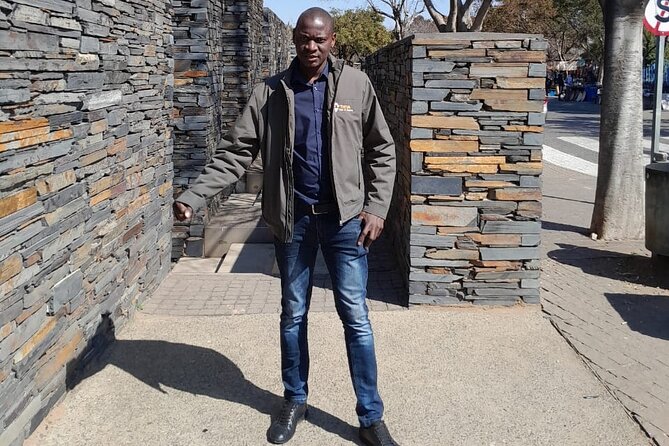
The Hector Pieterson Museum and Memorial addresses one of the most painful episodes in South African history: the 1976 Soweto Uprising.
Students protested against the apartheid government’s Bantu Education policy, including the forced use of Afrikaans in schools. The museum focuses on the courage of the young protesters, the violence they faced, and the effect of the uprising on the country’s political future.
Your guided visit is listed at about 20 minutes. That is enough for an introduction to the museum’s main story, but not enough for an unhurried study of every exhibit. I would treat this as an important first visit and return for longer if you have additional time in Johannesburg.
Admission is not included and costs 160 ZAR. That extra charge is small compared with the total tour price, but you should budget for it. The museum can be emotionally difficult, so a quick pause afterward may be useful, though the schedule moves on to lunch.
The strongest feedback about this tour specifically noted the emotional effect of learning about the uprising. That makes sense. The museum turns a broad political subject into a story about young people, schools, families, and a community’s response to state power.
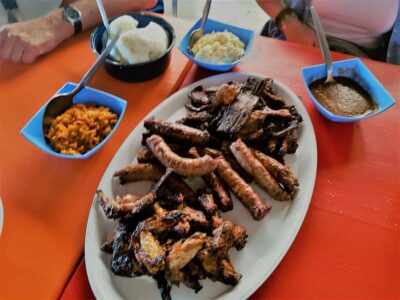
Lunch at Sakhumzi Restaurant

Lunch is scheduled for one hour, with Sakhumzi Restaurant offered as an optional choice. Alcoholic drinks are not included.
An hour gives you time for a proper meal, but it also takes a sizeable portion of a 4.5-hour tour. If your main goal is the museums, you may wish to keep lunch efficient. If you want a social break and a taste of local dining, this is one of the more relaxed moments in the schedule.
Because lunch is optional, check the cost before ordering. The tour price does not cover it. This is also a good point to carry some South African rand, since the Hector Pieterson admission and personal purchases are separate expenses.
Two hours at the Apartheid Museum
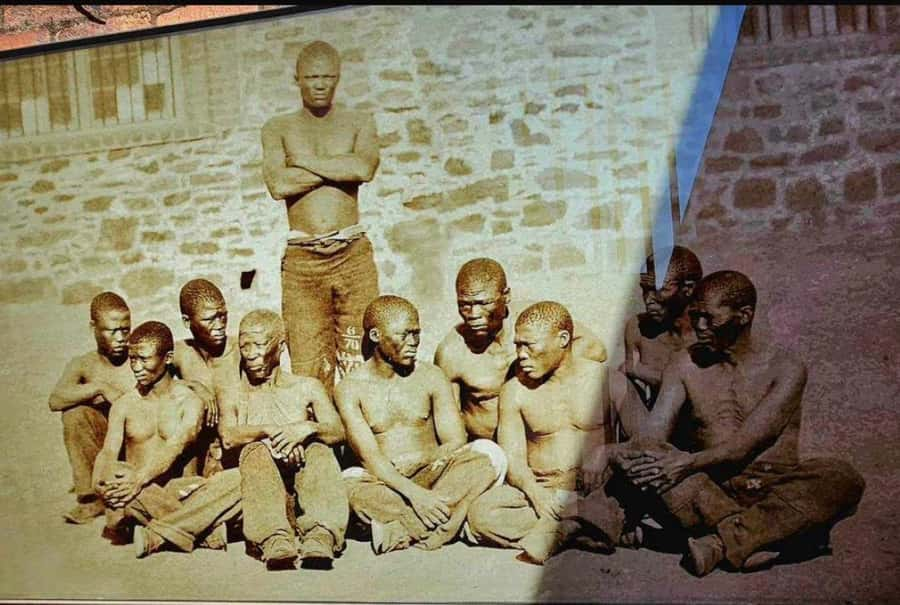
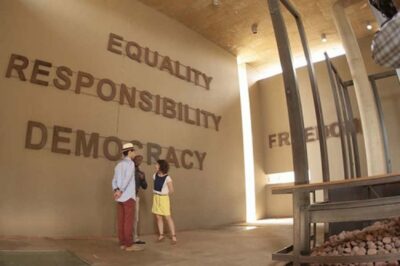
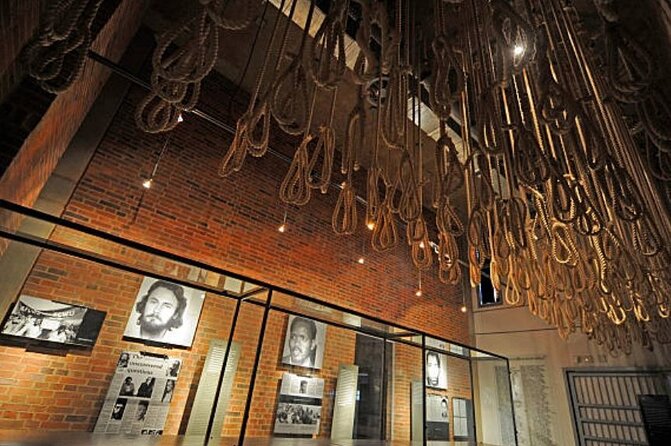
The final major stop is the Apartheid Museum, with about two hours for a self-guided visit. Entry is included, which is important because this museum is the intellectual center of the tour.
Its exhibits cover the rise and fall of apartheid through photographs, artifacts, documents, and interactive displays. You learn about the system of racial separation and control, the people affected by it, resistance to the government, and the country’s move toward democracy.
The museum is best approached slowly. Two hours is a useful amount of time, but you may still need to choose what to read closely. Do not expect to absorb every panel. I suggest paying attention to the structure of the exhibits and saving time for the sections that most interest you.
The self-guided format gives you freedom after the more tightly directed Soweto stops. You can move at your own pace, but you are responsible for managing your time. If you read every caption, you may find the return departure arrives sooner than you expect.
The contrast between this museum and Mandela House is valuable. Mandela House gives you a personal and domestic setting. The Apartheid Museum gives you a much wider account of laws, institutions, resistance, and political change. Together, they make the tour more useful than visiting either one alone.
What $117 gets you

At $117 per person, this is not the cheapest way to see Soweto. The value comes from the amount packed into a short period.
Your price includes hotel pickup in Johannesburg, an air-conditioned vehicle, an English-speaking driver-guide, bottled water, onboard WiFi, admission to the Apartheid Museum, and admission to Mandela House. You also get the route planning, which links sites that would be difficult to combine efficiently without local transport.
You still pay separately for Hector Pieterson Museum, lunch, and alcoholic drinks. The extra museum charge is 160 ZAR. Since lunch takes an hour, the final cost depends partly on where and what you eat.
I see the price as reasonable for someone who values convenience and interpretation. If you only want transport from one landmark to another, it may feel high. If you want a guide who can explain the connection between Soweto’s streets, institutions, museums, and political history, the package makes better sense.
Free cancellation up to 24 hours before the tour and reserve-now-pay-later booking add flexibility. Pickup is from your hotel lobby, so you should be ready at the agreed time rather than expecting a city-center meeting point.
Timing, comfort, and practical limits
Wear comfortable shoes. The settlement walk and Vilakazi Street require time on foot, while museum visits involve standing and walking. A sun hat is sensible, and the tour specifically recommends bringing a camera.
The air-conditioned vehicle, bottled water, and onboard WiFi are useful comforts in a compact sightseeing day. The tour is conducted in English, and pets and smoking are not allowed.
The experience is not suitable for wheelchair users. This is important because the route includes sandy streets and walking through a settlement, as well as several museum visits. The tour also has fixed timing, so it may not suit you if you need long breaks or a slower pace.
The schedule adds up to roughly the advertised 4.5 hours, with some stops described in approximate terms. Traffic, museum pace, or lunch timing could affect how long you spend at each place. I would avoid booking another fixed appointment immediately afterward.
Who should book this Soweto tour?
I recommend it most for first-time visitors to Johannesburg who want a strong historical introduction in half a day. It suits history enthusiasts, cultural explorers, and anyone who wants more than a drive past famous sites.
It is also a good choice if you are staying in Johannesburg without a rental car. The combination of vehicle, hotel pickup, guide, and admissions removes much of the planning work.
Families with older children may find the subject meaningful, though the apartheid and 1976 uprising sections are serious. Children need enough maturity to engage with difficult history respectfully.
I would hesitate if you want a slow photography tour, a long meal, extensive shopping, or a full day in Soweto. I would also think carefully about the Motsoaledi visit if community tourism makes you uncomfortable. Your conduct and the guide’s tone are central to making that stop appropriate.
Should you book it?
Book this tour if you want a tightly planned introduction to Soweto and apartheid-era South Africa, with a guide connecting the major sites. The best reasons are the combination of the Apartheid Museum, Mandela House, and Hector Pieterson Museum, plus the chance to see a real residential community rather than only famous landmarks.
Before booking, budget for the 160 ZAR museum entry and lunch, wear shoes suited to walking, and keep your afternoon free in case the schedule runs a little over. If you prefer a slower, more personal tour, ask about the guide when confirming, since Nor and Neo have both been praised for local insight and engaging storytelling.
For a first look at Johannesburg’s past and present, I think the tour earns its price. Just come prepared for serious subject matter, a brisk pace, and a respectful visit to places where history is still part of daily life.
FAQ
How long does the Soweto and Apartheid Museum tour last?
The tour lasts 4.5 hours, including Johannesburg pickup and return.
Where does pickup take place?
Pickup is included from the lobby of your hotel in Johannesburg.
What language is the tour conducted in?
The live tour guide and driver-guide provide the experience in English.
Is admission to the Apartheid Museum included?
Yes. Apartheid Museum admission is included in the tour price.
Is Mandela House admission included?
Yes. Entry to Mandela House is included.
Do I need to pay separately for Hector Pieterson Museum?
Yes. Admission to Hector Pieterson Museum and Memorial costs 160 ZAR and is not included.
Is lunch included?
No. Lunch at Sakhumzi Restaurant is optional and paid separately. Alcoholic beverages are also not included.
More museums and galleries in Johannesburg
- Full-Day Soweto, Apartheid Museum and Lunch Tour
★ 5.0 · 410 reviews - Half Guided Day Tour of Soweto And Apartheid Museum
★ 5.0 · 356 reviews - Ultimate Johannesburg Soweto Experience with Apartheid Museum
★ 5.0 · 313 reviews - Soweto: Hop-On Hop-Off Bus, City Tour and Apartheid Museum
★ 4.5 · 250 reviews
Just added in Johannesburg
- Soweto Tuk-Tuk Food & Beer Tour★ 5.0 · 9 reviews
- Soweto: Sip & Paint Walking Tour & Take Home a Canvas★ 4.8 · 7 reviews
- Soweto Tour; Mandela House; Vilakazi Street; Market Culture★ 5.0 · 6 reviews
- Soweto & Johannesburg and Apartheid Museum★ 4.7 · 41 reviews
- Soweto Township Tour★ 4.4 · 4 reviews
- Private Soweto,Mandela House,Apartheid Museum,Constitution★ 4.6 · 15 reviews
- Soweto Food & Beer Bike Tour★ 4.9 · 40 reviews
- Soweto and apartheid museum tour(Half-day)★ 5.0 · 4 reviews
Apartheid & Mandela History Tours, compared.
Jo’berg in 1 Day: Soweto, Apartheid Museum & City Tour
Read our review →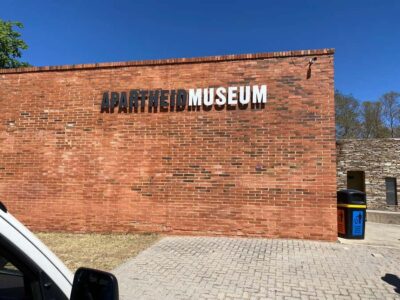
Full-Day Tour with Soweto and Apartheid Museum
Read our review →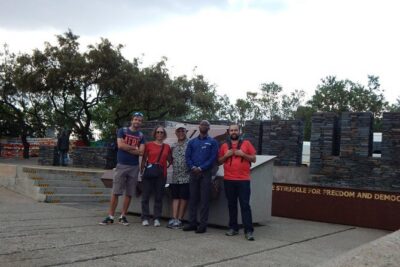
Half Guided Day Tour of Soweto And Apartheid Museum
Read our review →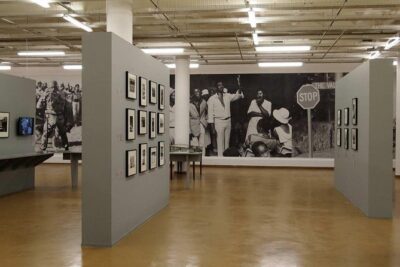
Ultimate Johannesburg Soweto Experience with Apartheid Museum
Read our review →
Hop-On Hop-Off Bus, City Tour and Apartheid Museum
Read our review →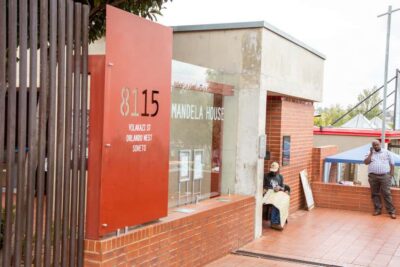
Johannesburg and Soweto Apartheid Full Day Tour w/Lunch
Read our review →