
Reviewed · APARTHEID & MANDELA HISTORY TOURS
Johannesburg: Half-Day Apartheid Museum Tour
The Apartheid Museum does not soften South Africa’s past. Its 22 exhibition areas use film, photographs, documents, and personal objects to show how apartheid worked and how ordinary people fought it. The visit ends with Nelson Mandela’s election in 1994, but the road there is painful and clear-eyed.
I like the convenient hotel pickup and the small group limit of 13 people. I also like that guides such as Bongani and Tshepo have added context on the drive, while guides such as Guy stayed with visitors through the museum and allowed time for questions. The main drawback is simple: three hours can feel short, and the $49 price may seem high if you prefer to explore museums alone.
Key points to know before you book
- The museum visit takes about three hours, with 22 exhibition areas covering apartheid, resistance, and the 1994 election.
- Hotel pickup and drop-off are included across Johannesburg, with about 45 minutes of transport each way.
- A small group of up to 13 people makes it easier to ask questions and keep the visit personal.
- English-speaking guides add local context, both inside the museum and during the drive.
- The experience is wheelchair accessible, and one guide helped a visitor’s mother around every exhibit.
- Free cancellation up to 24 hours ahead and reserve-now, pay-later terms give you some flexibility.
Why the Apartheid Museum deserves three hours
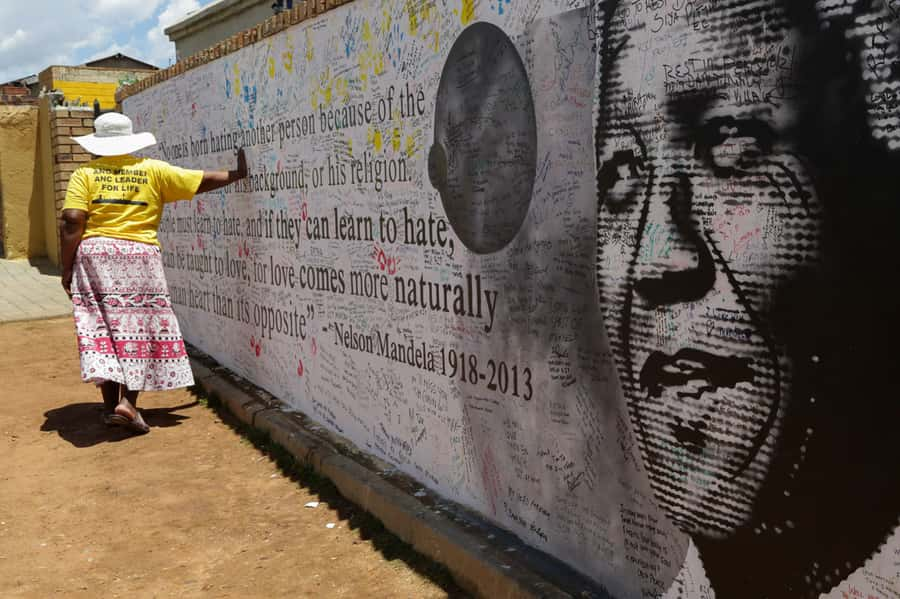
The Apartheid Museum is not a quick stop for a few photographs. It is built as a chronological and emotional account of a political system that classified people by race, restricted where they could live and work, and reduced the majority of South Africans to second-class status.
The museum was the first of its kind when it opened. Its material comes through several forms: film footage, photographs, text panels, and objects connected with the period. That variety matters. You are not just reading dates on a wall. You are seeing the machinery of apartheid and the human cost behind it.
The story begins with the policy introduced in 1948 by the white elected National Party government. From there, the displays follow the ways apartheid controlled daily life and the way opposition grew. The experience also gives space to the long struggle that eventually brought about the 1994 election of Nelson Mandela.
I would allow the full three hours. The museum has enough material to reward a slow pace, and rushing through it would undercut the point of the visit. You might finish the main route sooner, but the displays invite you to stop, read, and think.
This is not a light sightseeing attraction. You will encounter painful accounts of discrimination, humiliation, violence, and resistance. That is precisely why the museum is important, but you should plan your day with some emotional space afterward.
More Apartheid History Tours in Johannesburg
- Soweto /Johannesburg and Apartheid Museum Guided Full Day Tour
★ 5.0 · 932 reviews - Jo’berg in 1 Day: Soweto, Apartheid Museum & City Tour
★ 4.8 · 524 reviews - Johannesburg: Full-Day Tour with Soweto and Apartheid Museum
★ 4.8 · 478 reviews
The 45-minute ride from Johannesburg
Your guide collects you from your hotel or accommodation in Johannesburg, then drives you to the museum in a comfortable vehicle. The stated transfer time is about 45 minutes each way, so transport takes roughly 90 minutes of the five-hour outing.
That travel time is useful when your guide treats it as part of the experience rather than just a shuttle. Guides such as Mark, Tshepo, and Bongani have given background on Johannesburg, its landmarks, and the country’s past during the drive. Bongani was also able to point out places along the route and answer questions about South Africa.
The quality of this part can depend on your assigned guide. Some guides offer a running introduction before you arrive. Others focus more on driving and let the museum provide the main commentary. If you want a guided visit inside, it is sensible to confirm the plan when you are picked up.
You get free uncapped Wi-Fi in the vehicle, which is a practical touch during the longer transfers. The small group size also helps here. With no more than 13 people, the ride should feel less impersonal than a large coach excursion.
Entering the museum and following apartheid’s rise
The museum experience begins with a striking reminder that apartheid was a system of law and government, not just a collection of personal prejudices. The exhibits explain how the National Party’s 1948 victory led to formal racial separation and unequal rights.
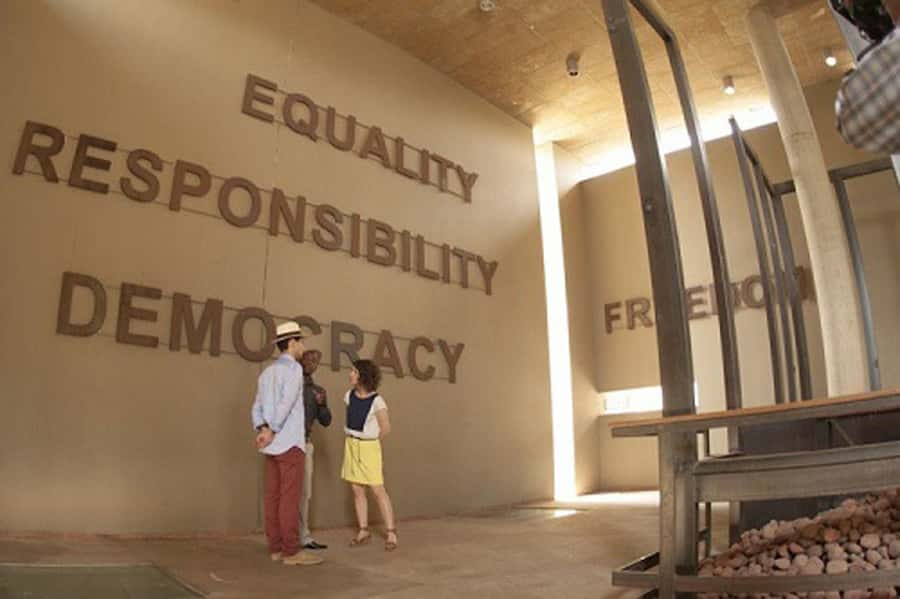
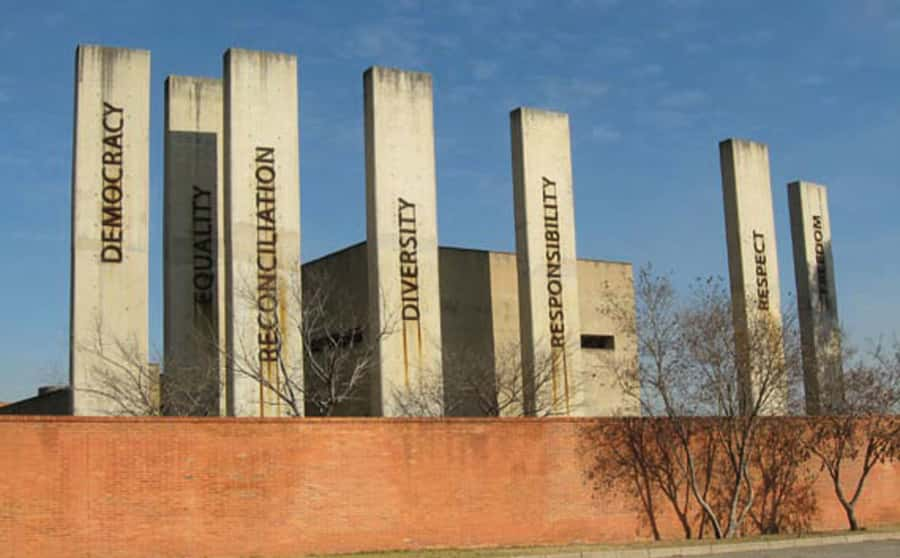
You will move through 22 individual exhibition areas assembled by curators, filmmakers, historians, and designers. The material is arranged to show how the system developed, how it affected the majority of the population, and how resistance gathered force.
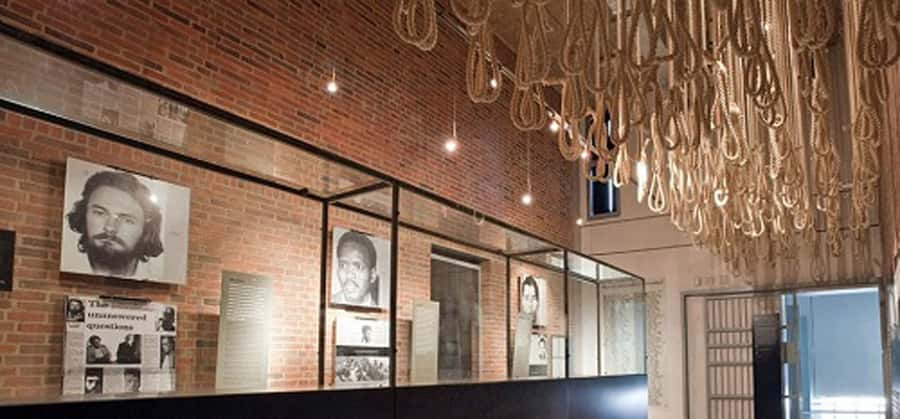
The museum’s strength is its use of several kinds of evidence. Text panels provide the political framework. Photographs show people and places. Film footage brings public events closer to life. Artifacts give the displays a physical connection to the period.
I find this mix more effective than a museum made entirely of written panels. You can read at your own pace, then pause over an image or piece of film that gives the story a human scale. A guide can help connect those separate pieces, especially if you are visiting South Africa for the first time.
The entry process is arranged to avoid the regular ticket line, and museum admission is included in the $49 price. That saves time, though the real value comes from the added transport and guidance rather than from the ticket alone.
Resistance, courage, and the road to 1994
The museum’s story is difficult, but it is not only a record of oppression. The later sections follow the resistance movement and the determination of people who challenged apartheid over many years.
The final point is the 1994 election, when Nelson Mandela, once a political prisoner, became president. That moment provides a clear ending to the museum’s main story, and it gives the visit a sense of movement from state control toward national liberation.
Still, the museum does not turn the ending into a simple happy finish. The displays show that democracy came after years of sacrifice, protest, imprisonment, and suffering. You leave with a stronger sense of what the election meant because you have seen the system it replaced.
This is also where a guide can be especially useful. A good guide can explain the links between political events and daily life without hurrying you from room to room. Elena’s guide James, for example, was able to balance the country’s past, present, and future while keeping the timing under control. That kind of framing helps you understand the museum rather than simply collect facts.
Other places that tell the same story:
- Full-Day Soweto, Apartheid Museum and Lunch Tour
★ 5.0 · 410 reviews - Half Guided Day Tour of Soweto And Apartheid Museum
★ 5.0 · 356 reviews - Ultimate Johannesburg Soweto Experience with Apartheid Museum
★ 5.0 · 313 reviews - Soweto: Hop-On Hop-Off Bus, City Tour and Apartheid Museum
★ 4.5 · 250 reviews
Guided visit or time on your own?
The experience is advertised with a three-hour guided museum visit, but the exact amount of guide involvement can vary. Some guides remain with you throughout the museum and lead you through the main displays. Others provide transport and an introduction, leaving you to follow the exhibits at your own speed.
That difference is important. If you want a structured explanation and someone to answer questions as you go, tell your guide at the start. Guy, for example, stayed with his group and allowed time for independent viewing. Another guide, Gaza, filled in gaps with personal experience while the museum itself supplied much of the presentation.
There is no wrong approach. A self-directed visit lets you pause wherever you like and take the museum at your own pace. A guided visit is more efficient and can add local context that the panels cannot provide.
You may also need more than three hours. The schedule allows the guide to adjust the timing if the museum requires extra attention, but the total tour length is listed as five hours. Ask early if you want to stay longer, since the return transfer still needs to fit the day’s plan.
Wheelchair access and practical comfort
The activity is wheelchair accessible, and one particularly helpful guide, Bongani, pushed a visitor’s mother around all the exhibits. That suggests the assistance can be hands-on when needed, though you should still mention your requirements during booking.
Transport is in a comfortable vehicle, and the small group format makes boarding and questions less awkward than they can be on a large bus. Free Wi-Fi is available in the vehicle, though you will likely want your attention on the museum once you arrive.
Food and souvenirs are not included. Plan to eat before or after the tour rather than expecting a meal during the outing. The five-hour duration takes up a large part of an afternoon or morning, so avoid scheduling another fixed activity too close to the return time.
The service also has reserve-now, pay-later terms and free cancellation up to 24 hours before departure. Those details are useful if your Johannesburg plans may shift.
Is $49 a fair price?
At $49 per person, this is not the cheapest way to see the Apartheid Museum. If you are already staying close by, have your own transport, and prefer to read everything alone, buying museum entry separately may cost less.
The price becomes easier to justify if you value door-to-door transport. You are paying for museum admission, a return vehicle journey of about 90 minutes, an English-speaking guide, and the convenience of not arranging a taxi or navigating the route yourself.
The guide can also make a real difference. Mark offered useful commentary on the journey. Tshepo added historical context and extra details inside the museum. Another guide, Cosmos, was praised for safe driving and for answering questions during the trip. These contributions turn the ride into part of the education rather than dead time.
The small group limit of 13 is another part of the value. It is not a private tour, but it gives you a better chance to ask questions than a full coach group would. In one case, a transport problem was handled by sending a replacement guide and driver, who then provided an almost private experience. That sort of recovery is reassuring, though no tour can promise that every day will run perfectly.
Who should book this Johannesburg tour?
I would recommend it to first-time visitors who want a clear introduction to apartheid and do not want to handle Johannesburg transport themselves. It also suits anyone who prefers a guide to explain the links between museum displays, the city, and the country’s political story.
Families with older children and teenagers may find it meaningful, though the subject matter is serious. Anyone with a strong interest in modern African history will probably want longer than the basic three-hour visit.
This is less suitable if you want a relaxed sightseeing outing, a short museum stop, or a fully private tour. The subject is emotionally demanding, and the fixed transport window can feel tight if you like to read every panel.
I would also choose this option if you have limited time in Johannesburg. It gives you a substantial museum visit without requiring you to arrange a car, and the guide can help you understand what you are seeing from the moment you leave your accommodation.
My recommendation
Book this tour if you want the Apartheid Museum explained in context and need easy transport from Johannesburg. The museum itself is the reason to go, but the guide can add useful detail, answer questions, and help you follow the story in the right order.
The main caution is time. Three hours may not cover every display at a slow pace, and the visit can leave you with a lot to think about. For many people, that is a sign of a worthwhile museum rather than a flaw.
At $49, I see this as a convenience-focused tour with strong educational value. Choose it for the pickup, small group, and guide support. Choose an independent visit instead if saving money and setting your own pace matter more than transport and interpretation.
FAQ
How long does the Johannesburg Apartheid Museum tour take?
The full activity lasts five hours. About 45 minutes is set aside for the trip to the museum, three hours for the guided museum visit, and about 45 minutes for the return journey.
What is included in the price?
The $49 price includes Apartheid Museum admission, a three-hour guided visit, hotel or accommodation pickup and drop-off in Johannesburg, transport in a comfortable vehicle, and free uncapped Wi-Fi aboard the vehicle.
Is the tour conducted in English?
Yes. The live tour guide service is in English.
How many people are in the group?
The activity is a small-group tour with a maximum of 13 participants.
Is the tour wheelchair accessible?
Yes, the activity is listed as wheelchair accessible. Tell the provider about your needs when booking so the arrangements are clear.
Are food and souvenirs included?
No. Food and souvenirs are not included in the tour price.
Can I cancel or pay later?
You can cancel up to 24 hours before the activity for a full refund. You can also reserve your place and pay later, which keeps your plans more flexible.
More museums and galleries in Johannesburg
- Maropeng Cradle of Humankind Museum &Sterkfontein Cave Experience
★ 4.5 · 155 reviews - Johannesburg: Soweto & Apartheid Museum Half-Day Tour
★ 4.9 · 99 reviews - From Johannesburg: Pretoria, Soweto & Apartheid Museum Tour
★ 4.8 · 48 reviews - Soweto & Johannesburg and Apartheid Museum
★ 4.7 · 41 reviews
Just added in Johannesburg
- Soweto Tuk-Tuk Food & Beer Tour★ 5.0 · 9 reviews
- Soweto Township Tour★ 4.4 · 4 reviews
- Soweto: Sip & Paint Walking Tour & Take Home a Canvas★ 4.8 · 7 reviews
- Soweto Tour; Mandela House; Vilakazi Street; Market Culture★ 5.0 · 6 reviews
- Soweto & Johannesburg and Apartheid Museum★ 4.7 · 41 reviews
- Private Soweto,Mandela House,Apartheid Museum,Constitution★ 4.6 · 15 reviews
- Soweto Food & Beer Bike Tour★ 4.9 · 40 reviews
- Soweto and apartheid museum tour(Half-day)★ 5.0 · 4 reviews
Apartheid & Mandela History Tours, compared.
Jo’berg in 1 Day: Soweto, Apartheid Museum & City Tour
Read our review →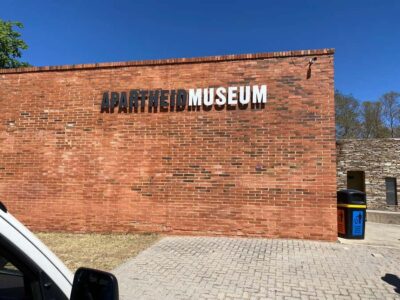
Full-Day Tour with Soweto and Apartheid Museum
Read our review →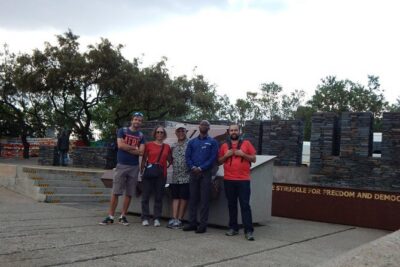
Half Guided Day Tour of Soweto And Apartheid Museum
Read our review →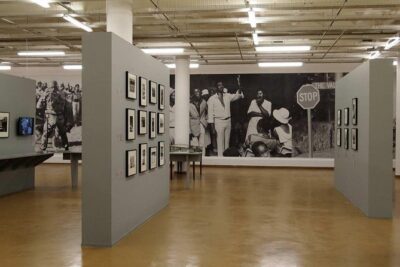
Ultimate Johannesburg Soweto Experience with Apartheid Museum
Read our review →
Hop-On Hop-Off Bus, City Tour and Apartheid Museum
Read our review →
Johannesburg and Soweto Apartheid Full Day Tour w/Lunch
Read our review →
Browse the lists this tour appears in