
Reviewed · APARTHEID & MANDELA HISTORY TOURS
Soweto Tour; Mandela House; Vilakazi Street; Market Culture
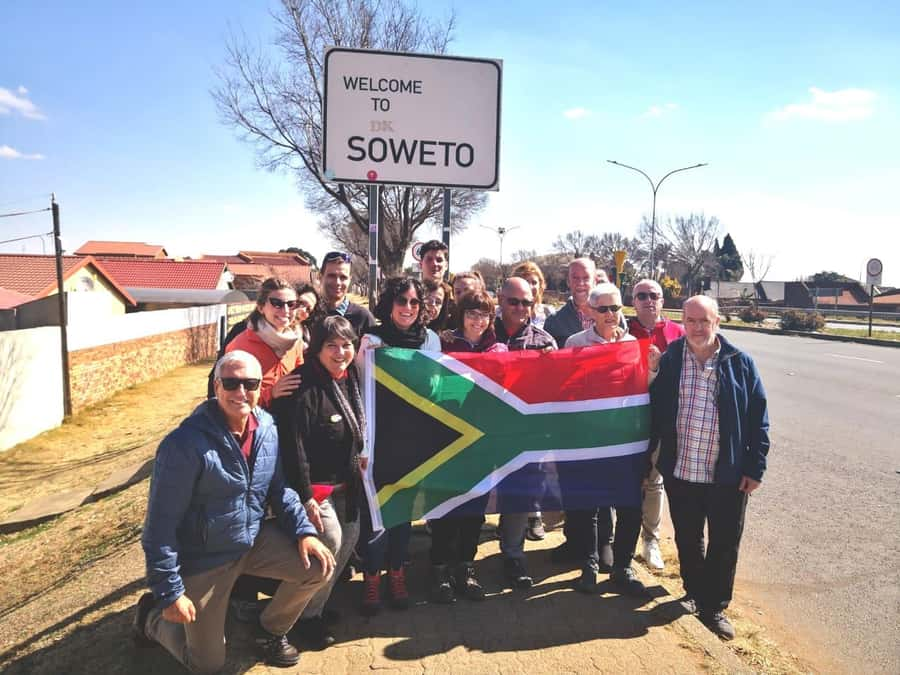
Soweto is not a quick Johannesburg photo stop. It is a living township shaped by apartheid, protest, music, football, family life, and democratic change. This tour brings those layers together, from the Orlando Towers and Soccer City to Mandela House and the Hector Pietersen Memorial.
I like the small group, limited to seven, because it gives you room to ask questions. I also like the mix of major history and everyday culture, especially the taxi market, local food, and walk along Vilakazi Street. The main drawback is time: four hours covers a lot, so some stops will feel more like an introduction than a long visit.
Key points at a glance
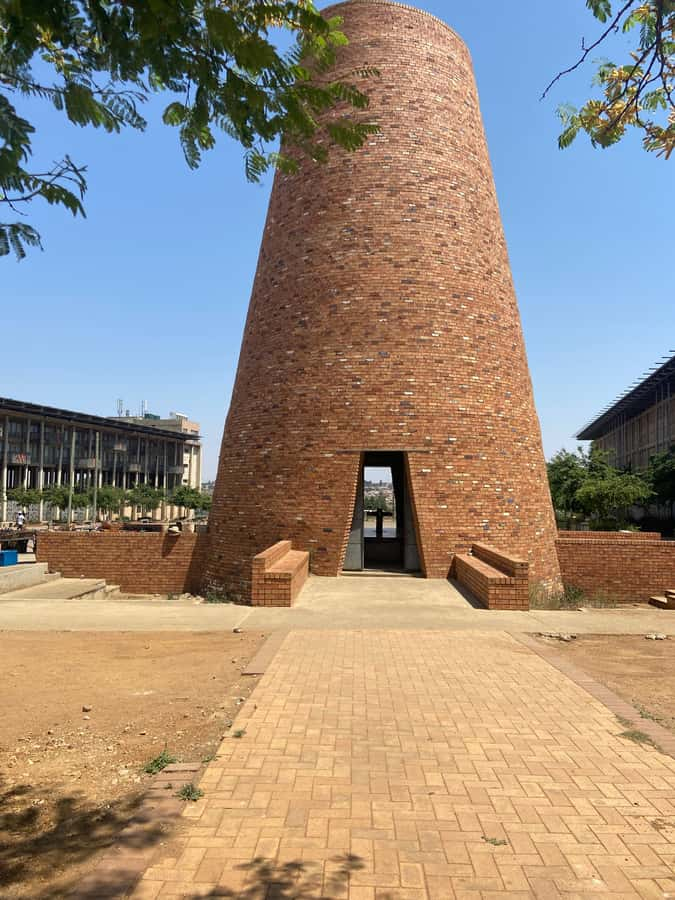
- Mandela House entry is included, with a guided visit to the former Mandela family home.
- Vilakazi Street links two major South African stories, the homes of Nelson Mandela and Bishop Desmond Tutu.
- Freedom Square, Regina Mundi, and Hector Pietersen Memorial give the tour its strongest historical focus.
- Orlando Towers and Soccer City add modern Soweto, football, and broad city views.
- Small groups of up to seven make it easier to discuss sensitive subjects with your guide.
- Hotel pickup, transport, and drop-off are included, while lunch in Soweto is optional and paid separately.
Why this four-hour Soweto route works
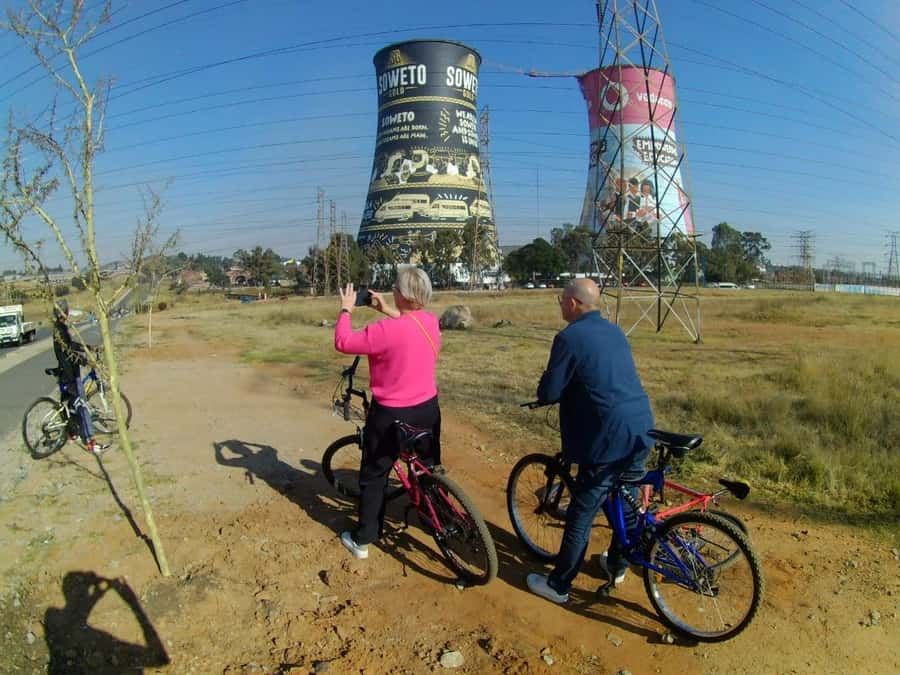
Soweto is often treated as a single attraction, but it is a huge township with many neighborhoods and stories. This route gives you a useful cross-section in a short morning or afternoon: political history, religious life, markets, sport, architecture, and the Mandela family story.
You will travel by vehicle between sites, then walk in the Vilakazi Street area and at other stops. That matters because the distances between Soweto’s landmarks are too great for a simple walking tour. The vehicle also lets you see areas such as Diepkloof Extension and the road toward Bara Hospital and the taxi market.
Your English-speaking guide is the key to making sense of the route. Guides such as Ismail have been praised for making the day feel safe, clear, and personal, while another guide, Malose, is associated with warm and attentive service. Guide assignments can vary, so book this for the local explanation and small-group format rather than for a guaranteed named guide.
The tour costs $93 per person. That is not the cheapest way to see Soweto, but the price includes hotel pickup and return, transportation, a live guide, and entry to Mandela House. For a first visit to Johannesburg, those inclusions make the cost easier to justify, especially if you prefer a planned route over arranging several rides yourself.
More Apartheid History Tours in Johannesburg
- Soweto /Johannesburg and Apartheid Museum Guided Full Day Tour
★ 5.0 · 932 reviews - Jo’berg in 1 Day: Soweto, Apartheid Museum & City Tour
★ 4.8 · 524 reviews - Johannesburg: Full-Day Tour with Soweto and Apartheid Museum
★ 4.8 · 478 reviews
From Soccer City to Diepkloof
The route begins with Soccer City, the stadium linked to the 2010 World Cup. You will revisit the excitement of that event while seeing how sport fits into Soweto’s public identity. The stop is more of a visual and historical introduction than a full stadium tour, so do not expect a long stadium visit unless your guide’s timing allows it.
The drive continues toward Bara Hospital and the taxi market. This is where the tour shifts from headline history to daily movement and commerce. Taxi markets are practical places first, but they also show how people connect across the township and Johannesburg.
You then pass through Diepkloof Extension. The route gives you a sense of Soweto as a large, self-sufficient urban area rather than a small museum district. Because the tour is only four hours, the vehicle views are important. They add scale that you would miss if you spent the entire visit around Vilakazi Street.
Orlando Towers and the city from above
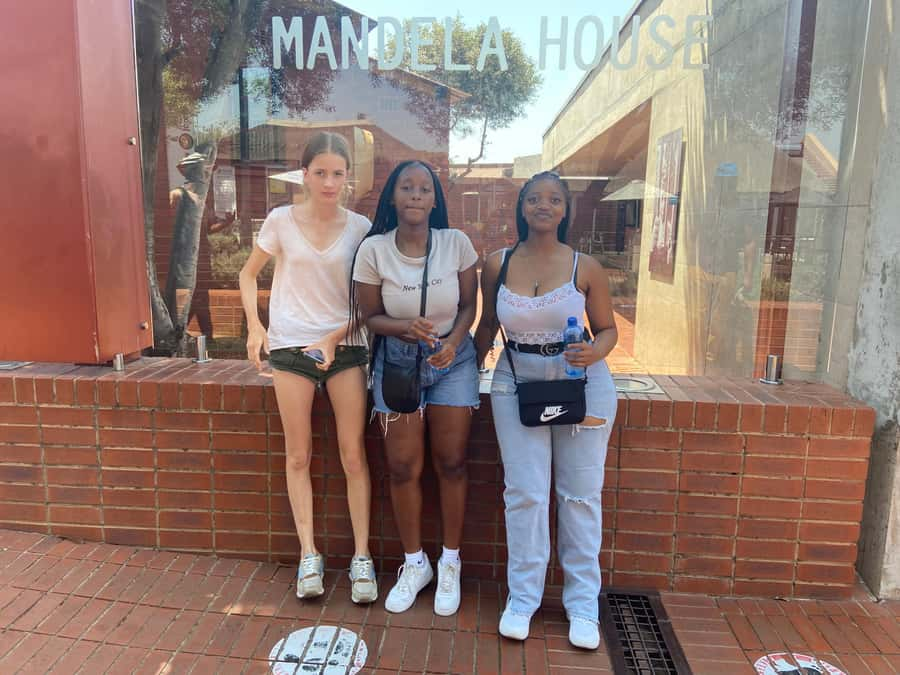
The Orlando Towers are one of Soweto’s most recognizable sights. Their painted surfaces and industrial form make a strong photo stop, and the tour provides panoramic views from the towers area. You get a quick look at the changing face of Soweto, where old infrastructure and new tourism sit side by side.
This part is especially useful early in the tour. It gives you a visual map before the more serious history begins. The towers are also a good reminder that Soweto is not defined only by apartheid-era memorials. Music, art, sport, business, and local style are part of the place too.
Keep your expectations measured. The schedule is tight, and the details of how long you spend at the towers are not fixed. If wide views and photographs matter most to you, tell your guide early so you can make good use of the available time.
Freedom Square and the meaning of Kliptown
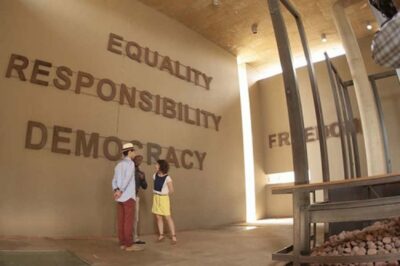
Freedom Square in Kliptown is one of the tour’s most important stops. It connects directly to the Freedom Charter, a document that expressed a vision of a democratic South Africa. Your guide can help explain why this ordinary-looking public space carries such political weight.
This is a place where context matters more than decoration. You may not find a polished attraction with a long sequence of displays. Instead, the value comes from understanding what happened here and why the ideas associated with the square still matter.
I would give this stop your full attention. It is easy to focus on taking photographs, but the words, people, and political demands connected with Freedom Square are the real point. The tour is strongest when your guide pauses to explain the local setting instead of rushing from one landmark to the next.
More Township Tours in Johannesburg
- Johannesburg: Hop-On Hop-Off Bus with Optional Soweto Tour
★ 4.6 · 985 reviews - Johannesburg Hop-On Hop-Off City Tour with Soweto Option
★ 4.5 · 768 reviews - Half-Day Tour of Soweto Tour
★ 4.5 · 712 reviews - Soweto: Walking Tour with a Local Guide and Lunch
★ 4.9 · 648 reviews
Regina Mundi and the 1976 uprising
Regina Mundi Cathedral adds a different voice to the story. It is known for its role during the struggle against apartheid and is closely linked with the 1976 student uprisings. Churches and other religious spaces could offer shelter, meeting places, and moral support when open political action was dangerous.
The cathedral is often described as a game-changing place because of that role. Your guide will help connect the building to the people who used it and to the wider resistance movement. This is one of the stops where a local guide’s explanation makes a major difference.
The route also passes Morris Isaacson High School, another important name in the 1976 uprising. You will not spend the day inside a school museum, but seeing the setting helps place the student protests in a real neighborhood rather than in an abstract textbook story.
These are serious subjects, and a tactful guide is essential. A guide who answers questions carefully can help you understand the human side without turning painful events into a simple sightseeing script.
Vilakazi Street and the Mandela family home
The tour then reaches the Vilakazi precinct, the most recognizable part of the visit. You walk along Vilakazi Street, associated with both Nelson Mandela and Bishop Desmond Tutu. That unusual connection makes the street a compact symbol of South Africa’s political and religious story.
The walk is short enough for most visitors, but comfortable shoes are still a good idea. High heels are not allowed, and practical footwear will serve you better on the street and at the memorial stops.
Mandela House entry is included. The former family home gives the tour a personal scale after the larger political sites. Instead of hearing only about presidents, protests, and national change, you see the place linked to family life and Mandela’s years in Soweto.
The visit is guided, so you are not left to read your way through without context. Ask questions if you want to understand how the house fits into Mandela’s wider life. Four hours does not allow endless time at each room, but the included entry makes this portion a clear part of the tour’s value.
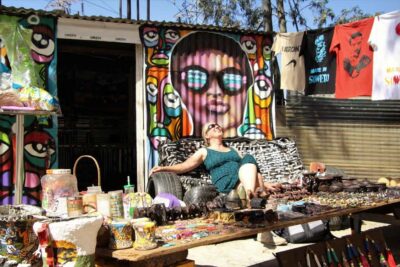
Vilakazi Street also has a market and food culture. You may see local crafts, clothing, souvenirs, and places serving Sowetan dishes. Lunch is optional and costs extra, so budget separately if you want to eat during the outing. The food stop can add a welcome social side to the history, but it is not part of the $93 price.
Hector Pietersen Memorial
The Hector Pietersen Memorial is the final major historical stop listed on the route. It commemorates the 1976 student uprising and the death of Hector Pieterson, whose story became one of the best-known images of that period.
This memorial deserves a quiet pause. It can be tempting to treat it as another quick photograph, especially after several stops, but the subject is central to understanding Soweto. The earlier visit to Morris Isaacson High School and Regina Mundi helps prepare you for this part of the story.
You will have the chance to take photographs, but keep them respectful. A good guide will help you understand what the memorial represents and how the uprising affected Soweto and South Africa as a whole.
For anyone with a strong interest in twentieth-century political history, this may be the most meaningful part of the route. For children or visitors who prefer lighter sightseeing, it may feel intense. That is not a flaw in the memorial, but it is worth knowing before you book.
What the small group changes
A group limit of seven is a real advantage here. In a large coach, you can easily lose the thread of a guide’s explanation or feel awkward asking about apartheid, race, religion, and local life. A small group leaves more space for conversation.
Past guide feedback points to the personal quality of the experience. Ismail has been singled out for making the outing safe and enjoyable while explaining the history clearly. Other guide feedback highlights detailed answers, personal stories, humor, and a tactful approach.
That does not mean every guide will use the same style. Your experience depends on who is assigned, traffic, timing, and the questions you bring. Still, the format supports a more direct exchange than a standard hop-on, hop-off outing.
Pickup is included from hotels. You should wait in the hotel lobby at least ten minutes before the scheduled time. If you are staying in a private home, be somewhere the vehicle can be seen as it arrives. Those simple steps matter because a four-hour tour has little spare time for a delayed departure.
Accessibility, clothing, and practical comfort
The activity is listed as wheelchair accessible, which makes it worth considering if you need that feature. Since the tour includes vehicle transfers and walking at several sites, mention your needs when booking so the operator can handle the day properly.
Wear comfortable shoes. You will walk along Vilakazi Street and move around memorials, markets, and other stops. High heels are not allowed, and they would be a poor match for this route in any case.
Bring curiosity as much as a camera. The most useful questions often concern how people lived through apartheid, how Soweto changed after democracy, and how the historic sites relate to modern daily life. A small group gives you a better chance to ask them.
The tour operates in English. If you need another language, this experience is not presented as a multilingual option.
Who will get the most from this tour?
I would recommend it to first-time Johannesburg visitors who want a clear introduction to Soweto without spending a full day on a single neighborhood. It also suits anyone interested in Mandela, the 1976 uprising, the 2010 World Cup, and the mix of public history and local market life.
Families can use the tour as a structured way to introduce South African history, though younger children may find the memorial stops difficult. Photography fans will enjoy Orlando Towers, Soccer City, Vilakazi Street, and the public spaces around the route.
This may not suit you if you want a slow food tour, a long market visit, or extended time inside every site. The itinerary covers many places in four hours. You get breadth, useful explanations, and transport, but not an unhurried study of one neighborhood.
Is $93 a fair price?
At $93, the tour is priced as a guided half-day experience rather than a basic transfer. You are paying for a compact route, local interpretation, small-group attention, transport, hotel pickup and return, and Mandela House entry.
The value is strongest if you are staying in Johannesburg and want the day organized for you. It is less attractive if you already have a vehicle, know Soweto well, or want to choose your own stops and spend as long as you like at each one.
Lunch is not included, and neither are items not specifically listed. Keep a little extra money for food or market purchases. The reserve-now-and-pay-later option and free cancellation up to 24 hours before the tour also make the booking less rigid.
Should you book this Soweto tour?
Book it if you want a well-rounded first look at Soweto with a local English-speaking guide, included Mandela House entry, and a group no larger than seven. The strongest parts are the serious historical route through Freedom Square, Regina Mundi, Morris Isaacson High School, and the Hector Pietersen Memorial, balanced by Orlando Towers, markets, food, and Vilakazi Street.
Skip it if you want a slow, highly specialized visit or a full meal-focused experience. For most first-time visitors to Johannesburg, though, the $93 price is reasonable because it joins the major sites into one practical four-hour outing. Wear good shoes, arrive early for pickup, and give the history the attention it deserves.
FAQ
How long is the Soweto tour?
The tour lasts four hours. Starting times depend on availability when you book.
What language is the tour offered in?
The live tour guide speaks English.
Is hotel pickup included?
Yes. Pickup and drop-off are included. Wait in your hotel lobby at least ten minutes before the scheduled pickup time.
How large is the group?
The tour is limited to seven participants.
Is entry to Mandela House included?
Yes. Entry tickets and a guided visit to Mandela House are included in the price.
Is lunch included?
No. Lunch in Soweto is optional and paid for separately.
Is the tour wheelchair accessible?
Yes. The activity is listed as wheelchair accessible.
What should I wear?
Wear comfortable shoes. High-heeled shoes are not allowed.
Can I cancel for a refund?
Yes. You can cancel up to 24 hours in advance for a full refund. You can also reserve now and pay later.
More markets in Johannesburg
- Steam Train to Elgin Railway Market
★ 5.0 · 375 reviews
Just added in Johannesburg
- Soweto Tuk-Tuk Food & Beer Tour★ 5.0 · 9 reviews
- Soweto: Sip & Paint Walking Tour & Take Home a Canvas★ 4.8 · 7 reviews
- Soweto & Johannesburg and Apartheid Museum★ 4.7 · 41 reviews
- Soweto Township Tour★ 4.4 · 4 reviews
- Private Soweto,Mandela House,Apartheid Museum,Constitution★ 4.6 · 15 reviews
- Soweto Food & Beer Bike Tour★ 4.9 · 40 reviews
- Soweto and apartheid museum tour(Half-day)★ 5.0 · 4 reviews
- Soweto: Hector Pieterson Memorial, to Orlando Towers Tour★ 4.0 · 31 reviews
Apartheid & Mandela History Tours, compared.
Jo’berg in 1 Day: Soweto, Apartheid Museum & City Tour
Read our review →
Full-Day Tour with Soweto and Apartheid Museum
Read our review →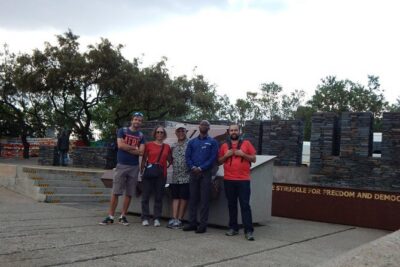
Half Guided Day Tour of Soweto And Apartheid Museum
Read our review →
Ultimate Johannesburg Soweto Experience with Apartheid Museum
Read our review →
Hop-On Hop-Off Bus, City Tour and Apartheid Museum
Read our review →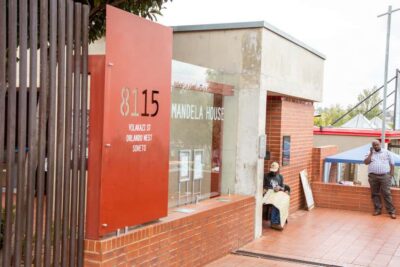
Johannesburg and Soweto Apartheid Full Day Tour w/Lunch
Read our review →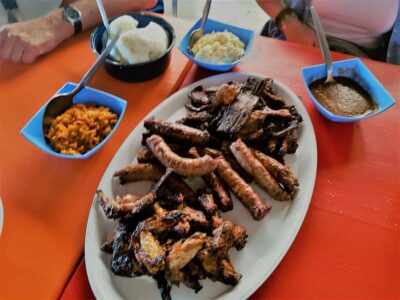
Browse the lists this tour appears in