
Reviewed · SOWETO & TOWNSHIP TOURS
Johannesburg and Soweto: Half-Day Tour
Johannesburg’s story comes into sharp focus when you move from polished freeways and high-rise offices into Soweto, where the past is not tucked away in a museum. This tour connects the city’s gold-era center with the township’s role in the fight against apartheid, then brings both together at Mandela’s House and the Hector Pieterson Memorial.
I like the efficient route and the guides. In five hours, you see central Johannesburg, Soweto, Vilakazi Street, the cooling towers, Baragwanath Hospital, and Soccer City. Guides such as James, Pascal, Samuel, Vincent, and Laureen have been praised for clear storytelling, patience, and care with safety.
The main drawback is the pace. This is a driving tour with several brief sightseeing stops, not a slow walking day. You may also want more time at the Hector Pieterson site, and lunch is not included.
Key points at a glance
- Mandela’s House on Vilakazi Street: Enter the former home of Nelson Mandela and learn about his life in the house museum.
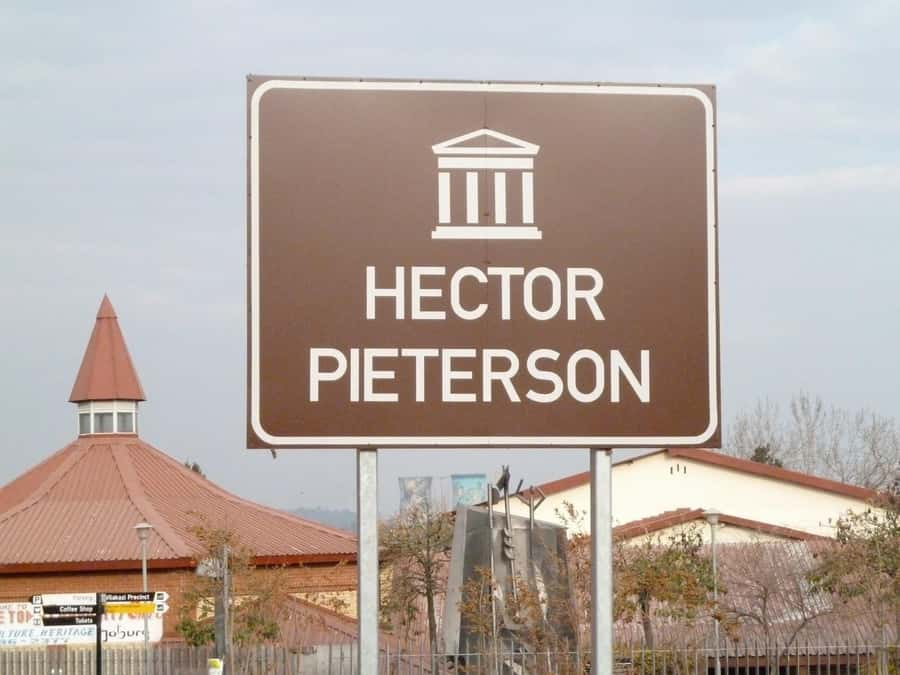
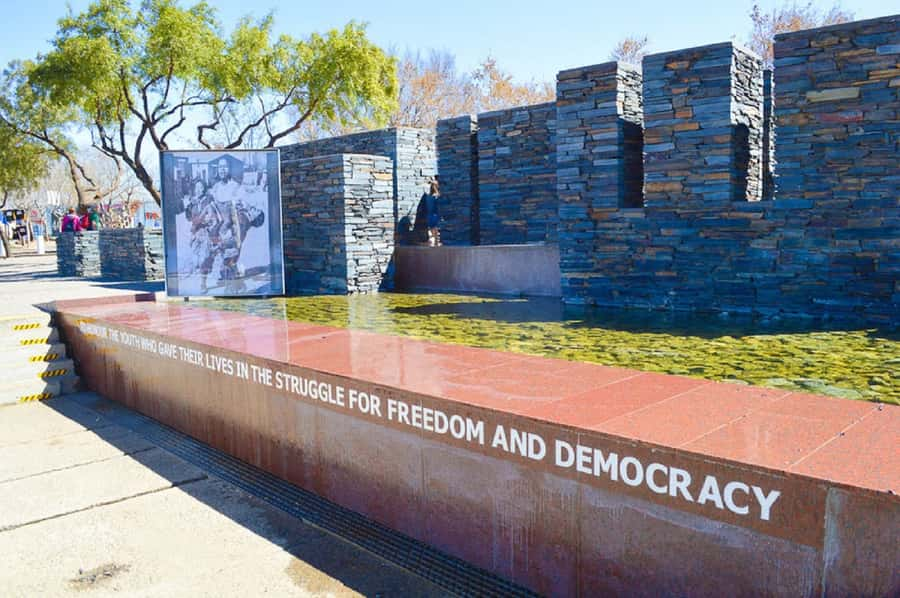
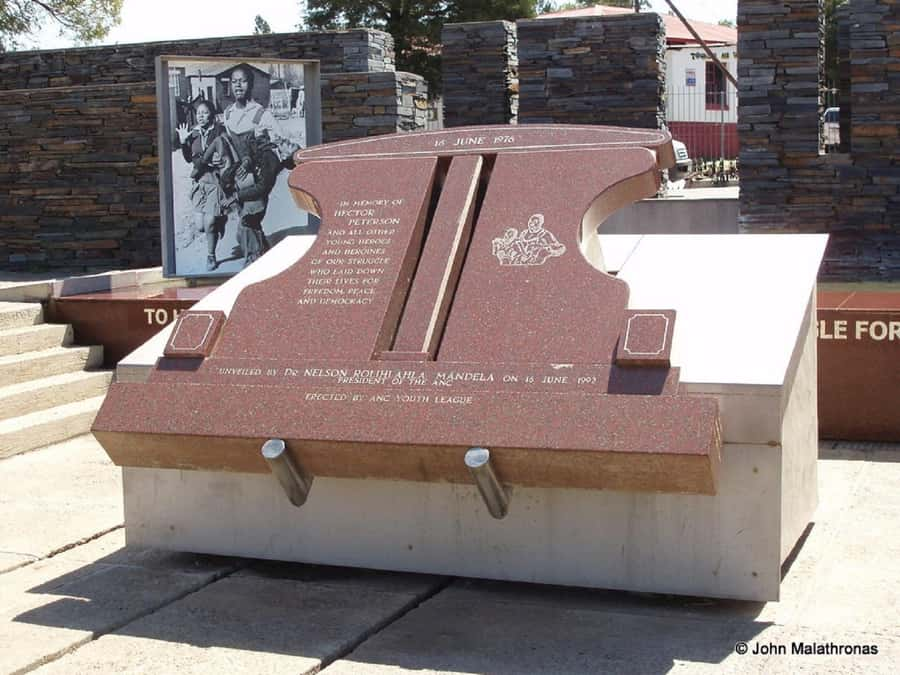
- Hector Pieterson Memorial: Visit a moving site connected with the 1976 Soweto youth uprising.
- A sharp change in scenery: See Johannesburg’s freeways and towers give way to Soweto’s streets, homes, informal settlement, and public landmarks.
- The Soweto cooling towers: Pass the two former power station towers, now used for bungee jumping.
- Guide-led context: The strongest part of the tour is the explanation linking apartheid, resistance, present-day inequality, and modern Johannesburg.
- Useful for a short stay: Hotel pickup, transport, and a five-hour route make this a practical first look at the city.
From Johannesburg’s freeways to Soweto’s streets
The tour begins with pickup from your Johannesburg hotel or a nearby area. You ride in a comfortable vehicle with a driver-guide, and bottled water and a map are included.
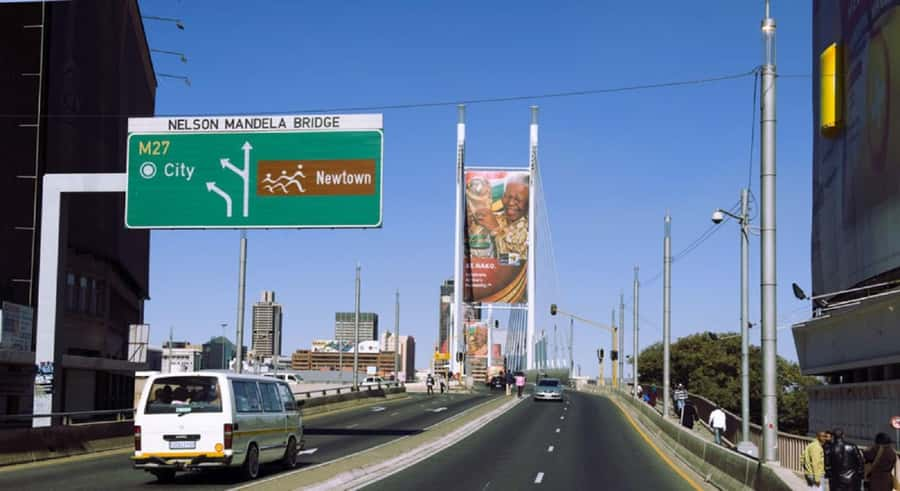
The opening drive takes you through southern suburbs and along broad freeways. You see sleek cars, spacious roads, and the more polished face of Johannesburg. This first section matters because it gives you a visual reference point before the tour turns toward Soweto.
Johannesburg can feel hard to read from a visitor’s window. Modern commercial areas, old office blocks, guarded compounds, crowded roads, and poorer neighborhoods sit within the same large city. A good guide helps explain what you are seeing rather than simply pointing at buildings.
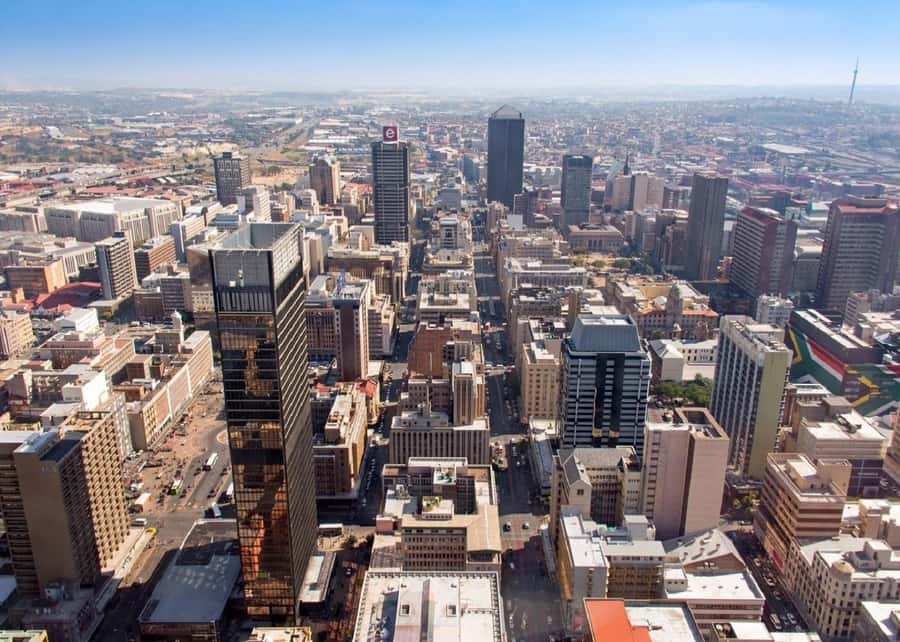
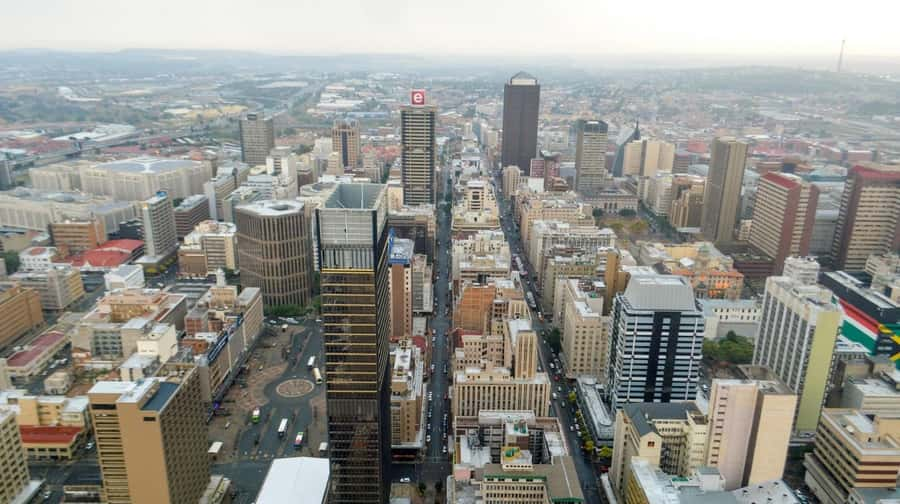
The route then reaches the city center, where tall buildings rise above the streets. Many of these towers were built during the apartheid era, when Johannesburg was expanding as a major business center and mining city.
The architectural contrast is useful. The geometry and concentration of the central district may remind you of Manhattan, but the political story is very different. These buildings represent money, administration, mining, and segregation. Your guide puts the skyline into the wider story of South Africa.
You will not spend the entire tour walking through the center. This is mainly a vehicle-based overview, so the value comes from the commentary and the changing view outside the windows. If you want a detailed architectural tour or extended time in central Johannesburg, this half-day route may feel too quick.
More Township Tours in Johannesburg
- Johannesburg: Hop-On Hop-Off Bus with Optional Soweto Tour
★ 4.6 · 985 reviews - Soweto /Johannesburg and Apartheid Museum Guided Full Day Tour
★ 5.0 · 932 reviews - Johannesburg Hop-On Hop-Off City Tour with Soweto Option
★ 4.5 · 768 reviews
Entering Soweto and seeing the township in context
The shift into Soweto is one of the most important moments of the day. The scenery changes as the tour leaves the city center, and your guide explains how Soweto developed and why it became such an important symbol of resistance and freedom.
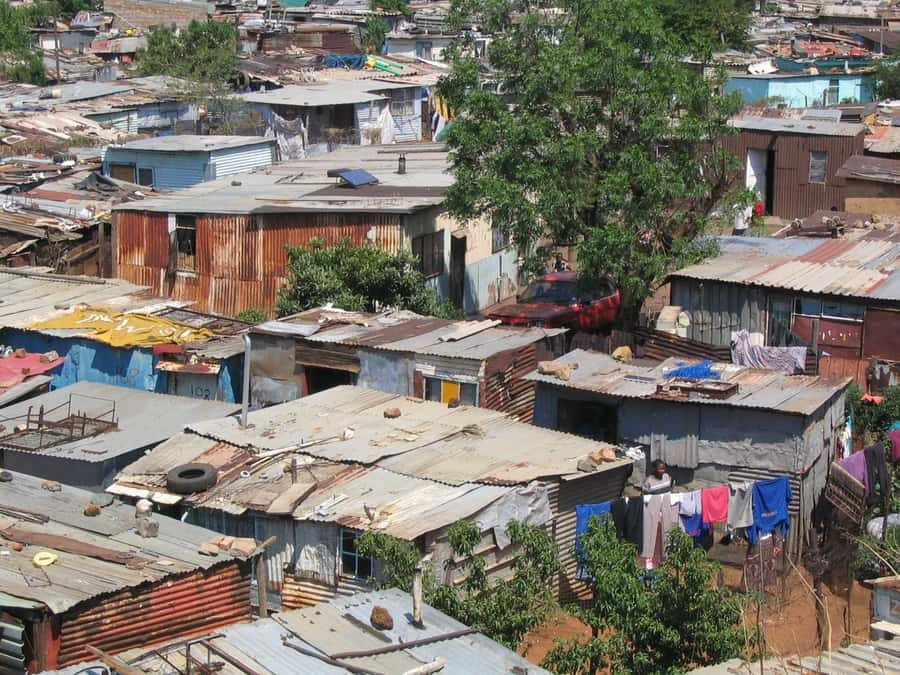
You pass through areas with very different levels of housing and income. The route includes views of an informal settlement, more established parts of Soweto, and the wider township streets. This contrast can be uncomfortable, but it is also one of the tour’s most useful features. You are not shown only a simplified picture of Soweto.
You also pass Baragwanath Hospital, one of the area’s major landmarks. The tour does not present it as a separate museum visit, but seeing it from the vehicle adds to your understanding of the scale and importance of the township.
The guide’s role is especially important here. You are not left to interpret poverty or crowded streets on your own. The better guides explain the effects of apartheid, unemployment, crime, and unequal access to opportunity while also talking about community life and the strength of the people who live here.
That balance matters. Soweto is not simply a place to look at from a tour vehicle. It is a home, a political center, and a place with ordinary neighborhood life. The tour offers a short but meaningful glimpse without pretending that five hours can explain everything.
The cooling towers and Soweto’s changing identity
Two large cooling towers are among Soweto’s most recognizable sights. They once belonged to power stations that generated electricity for the township. Today, they are generally used for bungee jumping and have become a symbol of reuse and recreation.
You see the towers from the tour vehicle rather than spending a long period at the site. Even so, they make a memorable photograph and offer a useful example of how old industrial structures can take on a new public role.
This stop also breaks up the heavier historical sections. The tour moves between political history, everyday streets, and modern attractions. That mix keeps the day from becoming a sequence of solemn memorials.
If you want to bungee jump, this experience does not include it. The towers are a sightseeing stop only.
Hector Pieterson and the events of 1976
The visit to the Hector Pieterson Memorial is the emotional center of the route. The site recalls the Soweto youth uprising of 1976, when students protested against the apartheid government’s education policies and the use of Afrikaans in schools.
The memorial is tied to Hector Pieterson, a schoolboy whose death became an enduring image of the uprising. The subject is painful, and the stop deserves attention rather than a quick photograph.
The tour includes a visit to the memorial, but the amount of time available can vary with traffic and the rest of the route. If you want extended time with exhibits, ask your guide early in the day how the schedule is working. One practical criticism of this kind of half-day route is that the memorial can feel rushed when there is a great deal to cover.
Still, the stop gives the rest of Soweto greater meaning. You begin to see the streets not only as a township but as the setting for a major turning point in South African history. The guides often spend considerable time explaining the causes and consequences of the uprising, which is one reason the tour works better with a strong guide than with a simple sightseeing bus.
Bring a respectful attitude. This is a place of mourning and political memory, not just another attraction.
Other township visits from Johannesburg:
- Half-Day Tour of Soweto Tour
★ 4.5 · 712 reviews - Soweto: Walking Tour with a Local Guide and Lunch
★ 4.9 · 648 reviews - Jo’berg in 1 Day: Soweto, Apartheid Museum & City Tour
★ 4.8 · 524 reviews - Johannesburg: Full-Day Tour with Soweto and Apartheid Museum
★ 4.8 · 478 reviews
Mandela’s House on Vilakazi Street
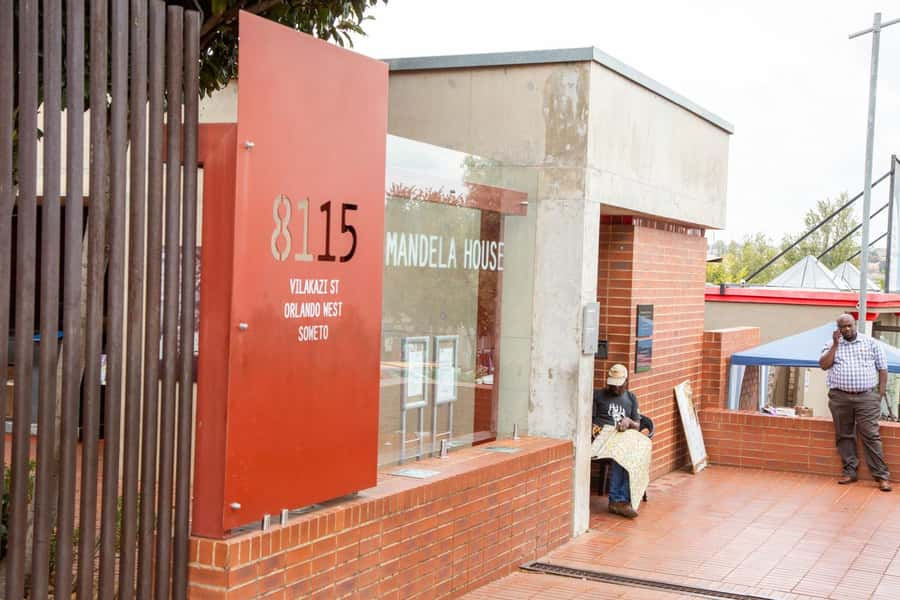
Mandela’s House is the only listed entrance included in the tour. It sits on Vilakazi Street, one of Soweto’s best-known streets and a place closely linked with South Africa’s political past.
Inside the museum, you learn about Nelson Rolihlahla Mandela, his family, and the years connected with the house. The building gives a personal scale to a national story. Instead of meeting Mandela only through statues, speeches, or textbook dates, you see the domestic setting associated with his life.
The museum has its own guide, separate from your main driver-guide. Several guides on the tour have been praised for preparing visitors well and connecting the museum visit to the broader history of Soweto.
Allow room in your expectations. Mandela’s House is not a huge museum, and the visit is more focused on place, memory, and personal objects than on a full account of every part of Mandela’s life. That focus is a strength if you want something direct and human.
Vilakazi Street also gives you a sense of how history and daily commerce meet. The street has a public, active feel, with people moving through the area and performers sometimes present. Entrance is covered, but carrying some cash is sensible because tips may be welcomed by the student guide or street performers.
Views of important homes and public places
The route includes views of Desmond Tutu’s house and Winnie Mandela’s house. These are sightseeing views rather than extended interior visits, so do not expect a private house tour.
Even from outside, the locations help show why Vilakazi Street and Soweto matter. Few residential streets are so strongly tied to South Africa’s political transformation. Your guide can connect these places to the larger story of opposition, leadership, imprisonment, negotiation, and democracy.
The experience is best understood as a guided overview. You will see many locations, but the vehicle will keep moving. If your priority is entering several museums, this tour will not provide that depth. If your priority is understanding how the people and places fit together, the route is effective.
Soccer City and the return to Johannesburg
On the way back, the tour passes FNB Stadium, also known as Soccer City or The Calabash. It hosted the opening and closing matches of the 2010 World Cup finals.
The stadium adds a modern chapter to the day. After spending hours with apartheid-era history and the struggle for freedom, you see a major international venue linked with South Africa’s place on the world stage.
Again, this is a pass-by sight rather than a stadium tour. You will not receive entry or a match experience. Its value is as a final landmark on the drive back to your hotel.
The return route may also include additional views of Johannesburg’s changing districts. One longer tour experience included parts of Maboneng, the central business district, and Sandton, but you should not assume every departure follows that exact route. The listed itinerary focuses on Johannesburg city center, Soweto, and the return past Soccer City.
Guides make the difference
The strongest feature of this experience is the human explanation. A vehicle can show you a tower, stadium, or street. A good guide explains why it matters.
Guides named in bookings include James, Pascal, Samuel, Vincent, Marc, Patrick, Laureen, Adama, Lilo, and Sam. You cannot choose a particular guide unless the operator confirms it, but the repeated pattern is clear: the tour depends heavily on the driver-guide’s command of Johannesburg’s history and neighborhoods.
James is frequently singled out for answering detailed questions, adapting the route, and helping people feel comfortable. Pascal is described as warm and well informed about both the city and South African history. Vincent and Samuel are also praised for clear explanations and a friendly approach.
Safety is another repeated strength. The guide remains with you, manages the stops, and helps you understand where you are. That does not mean you should ignore normal city precautions. Follow the guide’s directions, do not carry luggage, and avoid wandering away from the group.
French and Portuguese tours are available as well as English. Confirm the language when booking, since the quality of the explanation depends on receiving history in a language you follow easily.
Is $71 a fair price?
At $71 per person, the tour is not the cheapest way to look at Johannesburg from a car. Its value comes from what is bundled into the five hours: hotel pickup and drop-off, a comfortable vehicle, a driver-guide, bottled water, a map, and entry to Mandela’s House.
You also avoid arranging separate transport between central Johannesburg, Soweto, Vilakazi Street, Hector Pieterson, and the cooling towers. For a first visit, that convenience is significant. The route covers a large area, and public transport or independent taxi rides would require more planning.
The price is easier to justify if you have only a short stay or a long airport connection with enough time for a city outing. It is also useful if you want historical context and prefer not to navigate unfamiliar areas alone.
The value is weaker if you want a relaxed, museum-heavy day. Lunch and personal expenses are extra, and the five-hour schedule leaves limited time at each stop. You are paying for an efficient overview, not a full-day cultural program.
Cancellation is flexible up to 24 hours before the activity for a full refund, and you can reserve now and pay later. Those terms help if your Johannesburg schedule is still changing.
What to bring and how to prepare
Do not bring luggage. The tour specifically asks you to leave it behind, so arrange hotel storage or another secure option before pickup.
Wear comfortable clothing and shoes suitable for short walks and standing. Much of the day is spent in the vehicle, but the memorial and Mandela’s House involve getting out and moving around.
Carry some cash for tips. Entrance to Mandela’s House is included, but tips may be welcomed by the student guide and street performers in the area.
You may also want a small notebook or phone for names and dates. The tour covers a lot in five hours, and the history of 1976, Mandela’s house, the city center, and the transition to democracy can blur together if you do not jot down a few reminders.
Who should book this Johannesburg tour?
I would choose this tour if you have one day or less in Johannesburg and want a strong first orientation. It gives you both the formal city center and Soweto, rather than showing only one side of the metropolis.
It is also a good fit for anyone interested in apartheid, Nelson Mandela, the 1976 uprising, and the link between political history and present-day city life. The guides are prepared to answer questions, so curious visitors will get more from it than those who only want photo stops.
Families and older visitors may appreciate the vehicle-based format, hotel pickup, and attention to safety. People who dislike long drives or prefer to explore independently may find the schedule too controlled.
I would not book it as your only Soweto experience if you want extended conversations with residents, a long museum visit, or a full meal in the township. For that, look for a longer and more specialized outing.
Should you book it?
Book this tour if you want an efficient, guided introduction to Johannesburg and Soweto, especially on a short visit. The combination of Mandela’s House, Hector Pieterson Memorial, city-center buildings, the cooling towers, and Soccer City gives you a meaningful overview in five hours.
Skip it if you want a slow day with plenty of free time. The itinerary is full, and the most moving stops may deserve longer than the schedule allows.
For most first-time visitors, the balance is worthwhile. You see the major sites, travel with a guide who can explain the difficult parts, and return to your hotel without having to organize transport across a large city.
FAQ
How long does the Johannesburg and Soweto tour last?
The tour lasts five hours, including hotel pickup, sightseeing, visits to the memorial and Mandela’s House, and the return to your hotel.
What is included in the price?
The price includes hotel pickup and drop-off, transport in a comfortable vehicle, a driver-guide, entrance to Mandela’s House, a map, and bottled water.
Is lunch included?
No. Lunch is not included, and personal expenses are also excluded.
Which languages are available?
The live guide may conduct the tour in English, French, or Portuguese. Confirm your preferred language when booking.
Will I visit Mandela’s House?
Yes. The tour includes entrance to Mandela’s House Museum on Vilakazi Street in Soweto.
Will I visit the Hector Pieterson Memorial?
Yes. The itinerary includes a visit to the Hector Pieterson Memorial, which recalls the 1976 Soweto youth uprising.
Can I bring luggage?
No. You are asked not to bring luggage on the tour.
Can I cancel the booking?
You can cancel up to 24 hours in advance for a full refund. You can also reserve now and pay later.
Just added in Johannesburg
- Soweto Tuk-Tuk Food & Beer Tour★ 5.0 · 9 reviews
- Soweto: Sip & Paint Walking Tour & Take Home a Canvas★ 4.8 · 7 reviews
- Soweto Tour; Mandela House; Vilakazi Street; Market Culture★ 5.0 · 6 reviews
- Soweto & Johannesburg and Apartheid Museum★ 4.7 · 41 reviews
- Soweto Township Tour★ 4.4 · 4 reviews
- Soweto Food & Beer Bike Tour★ 4.9 · 40 reviews
- Private Soweto,Mandela House,Apartheid Museum,Constitution★ 4.6 · 15 reviews
- Soweto and apartheid museum tour(Half-day)★ 5.0 · 4 reviews
Soweto & Township Tours, compared.

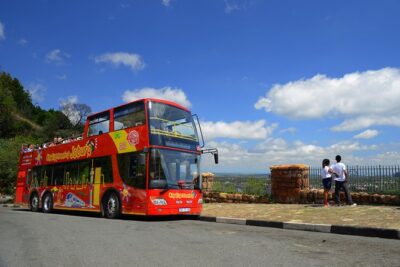
Johannesburg Hop-On Hop-Off City Tour with Soweto Option
Read our review →

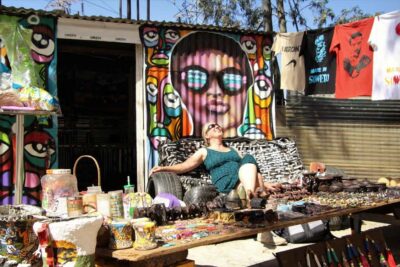
Jo’berg in 1 Day: Soweto, Apartheid Museum & City Tour
Read our review →
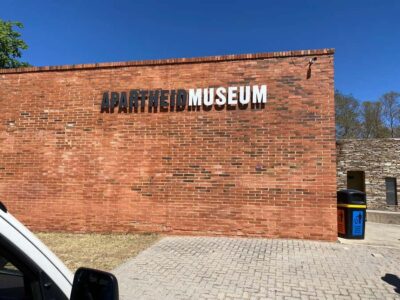
Full-Day Tour with Soweto and Apartheid Museum
Read our review →Browse the lists this tour appears in