
Reviewed · SOWETO & TOWNSHIP TOURS
Guided Bicycle Tour of Soweto with Lunch
Soweto is best understood from its streets, and this four-hour bicycle tour gives you a close look at neighborhoods, memorials, homes, and public spaces tied to the struggle against apartheid. You will visit Vilakazi Street, the Hector Pieterson Museum and Memorial, a former women’s hostel, and the home of anti-apartheid leader Lillian Mgoyi.
I like the focus on women’s history, which is often given too little space, and I like the local lunch: a filling kota sandwich rather than a generic tourist meal. Guides such as Themba, Thabo, and Mulalo are praised for making the past personal and explaining Soweto from a local point of view.
The main drawback is physical: Soweto has plenty of hills, and some bikes have been single-speed models. This is not a gentle, flat pedal along a river. Bring sunscreen, pace yourself, and ask about geared bikes when you arrive.
Key points to know before booking

- You cover a lot of Soweto by bicycle: The ride connects several major sites in a half-day.
- Women’s apartheid history gets real attention: The Mzimhlophe hostel and Lillian Mgoyi’s home add important context.
- Themba is a frequently praised guide: Thabo, Thato, Mulalo, and other local guides may also lead the outing.
- The kota lunch is substantial: Expect a deep-filled local burger-style sandwich.
- The route includes hills: The exercise is part of the experience, but it may challenge casual cyclists.
- Mandela House costs extra: The listed entrance fee is R60, and pickup and drop-off are not included.
Why a bicycle is a good way to see Soweto
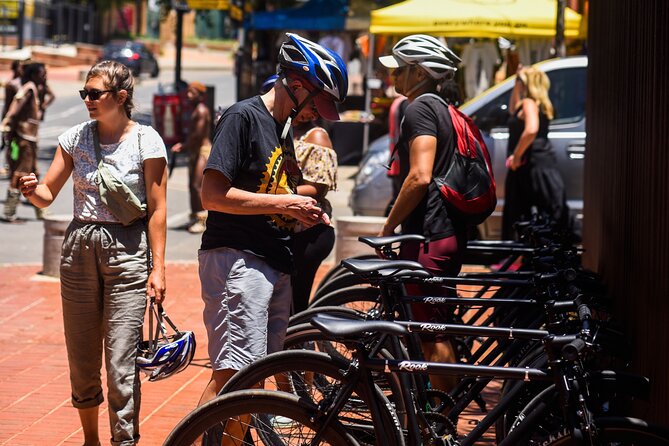
Soweto is too spread out for a short walk, but a vehicle can make the area feel distant and sealed off. A bicycle gives you a useful middle ground. You can cover more ground than on foot while still noticing street life, homes, public spaces, and the changing character of each neighborhood.
The group size is capped at 15 people. That is large enough to feel social but small enough for a guide to keep an eye on the riders. The bikes and helmets are supplied, along with bottled water.
I like the fact that the tour does not treat Soweto as a string of famous names only. The route links major political sites with ordinary residential areas and stories about family generations. You get a sense of how apartheid affected daily life, not just the headline events that appear in schoolbooks.
The trade-off is effort. Several sections rise and fall, and the hills can be demanding on a single-speed bicycle. Some equipment has been upgraded with gears, but that may not be guaranteed for every booking. If you are a casual cyclist, tell your guide early and ride at a steady pace rather than trying to keep a fast group pace.
More Township Tours in Johannesburg
- Johannesburg: Hop-On Hop-Off Bus with Optional Soweto Tour
★ 4.6 · 985 reviews - Soweto /Johannesburg and Apartheid Museum Guided Full Day Tour
★ 5.0 · 932 reviews - Johannesburg Hop-On Hop-Off City Tour with Soweto Option
★ 4.5 · 768 reviews
Phomolong: begin with Soweto’s family stories
The first stop is Phomolong, where the guide sets the tone with stories about different generations and the way apartheid shaped family life. This opening matters because it puts the rest of the ride into a human frame.
You are not simply moving from one monument to another. You begin by hearing how political rules reached into homes, work, movement, and opportunity. The stop lasts about 15 minutes, so expect an introduction rather than a long formal talk.
This is also a useful moment to ask questions. Guides such as Themba have been praised for explaining Soweto with warmth and humor while keeping the subject serious. The strongest part of this experience is likely to be the personal storytelling, not a memorized list of dates.
Mzimhlophe: the former women’s residential hostel
At Mzimhlophe, you visit the only former women’s residential hostel in Soweto. It housed domestic workers employed in Johannesburg’s suburbs, and it helps explain how apartheid separated workers from their families and communities.
This stop gives needed space to Black women’s lives under apartheid. The system relied heavily on domestic labor, yet the women who performed that work are often treated as background figures in standard accounts of the era. Here, their housing, employment, and daily pressures become part of the main story.
Plan on about 30 minutes. The stop is more reflective than flashy, which is exactly why it earns its place on the route. If your main interest is architecture or sightseeing, it may feel simple. If you want to understand how political laws shaped ordinary working lives, it is one of the most worthwhile stops.
Lillian Mgoyi’s home and the women’s march
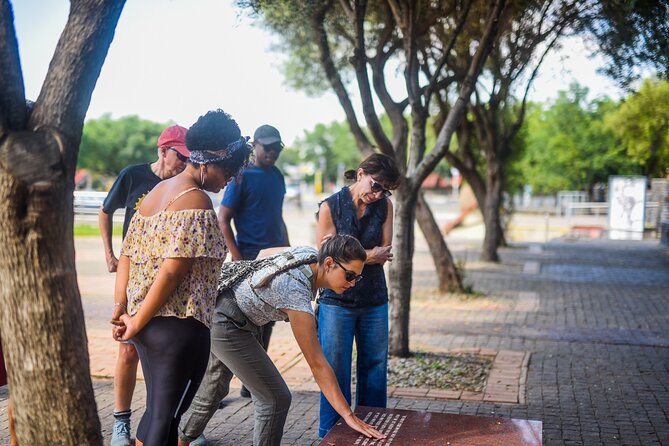
The visit to Lillian Mgoyi’s home is brief, about 10 minutes, but its subject is powerful. Mgoyi was an anti-apartheid activist and president of the Women’s League. She helped lead a march of 20,000 women to the Union Buildings in Pretoria to protest the requirement that women carry passbooks under the pass laws.
This stop corrects the idea that apartheid was challenged only by famous male leaders. Nelson Mandela and Desmond Tutu are essential figures, but the women’s movement played a major part in forcing the government to confront public resistance.
Because the visit is short, you will not receive a full biography. Still, the location gives the story a personal scale. You are connecting a national protest to the home of one of the women who helped organize it.
Other township visits from Johannesburg:
- Half-Day Tour of Soweto Tour
★ 4.5 · 712 reviews - Soweto: Walking Tour with a Local Guide and Lunch
★ 4.9 · 648 reviews - Jo’berg in 1 Day: Soweto, Apartheid Museum & City Tour
★ 4.8 · 524 reviews - Johannesburg: Full-Day Tour with Soweto and Apartheid Museum
★ 4.8 · 478 reviews
Hector Pieterson Museum and Memorial: the 1976 uprising

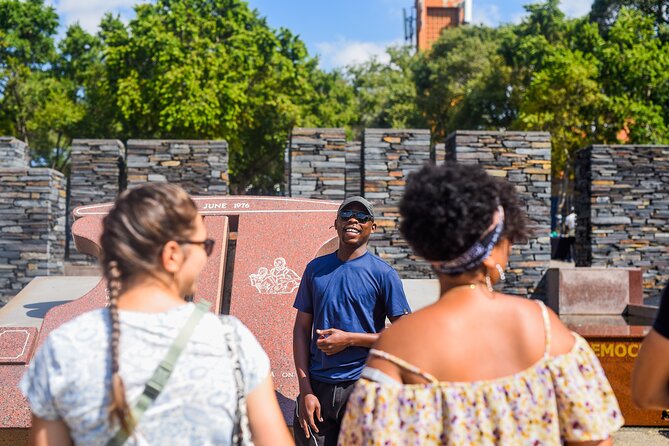
The Hector Pieterson Museum and Memorial focuses on the 1976 youth uprising. Hector Pieterson became a symbol of the student protests, and the museum provides the clearest look on this route at the events that brought international attention to the violence of apartheid.
You spend about 30 minutes here. That is enough for an introduction, though it is not a long museum visit. The subject is heavy, so allow yourself time to take in the photographs, names, and accounts rather than rushing straight back onto the bikes.
This is one reason I would choose the tour over a purely scenic bicycle ride. The cycling keeps the day active, but the stops give the ride purpose. You see places connected to young people who challenged an education system designed to limit them.
Orlando Stadium and the wider township
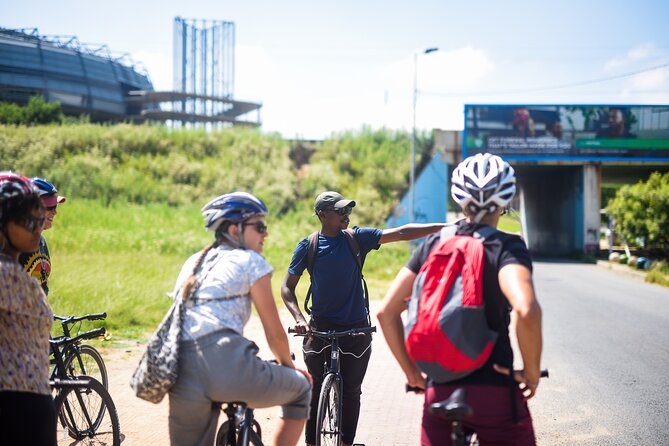
Orlando Stadium provides a different angle. It is a major Soweto sports venue with a capacity of more than 37,000 and a long connection to football, local events, and public life. The stadium is associated with Orlando Pirates and has also hosted large sports and entertainment gatherings.
The stop lasts about 10 minutes. You should think of it as a quick orientation point, not a stadium tour. Admission is not included, so you should not expect access to every part of the facility.
Its value is symbolic as much as visual. Soweto is not only a place of protest memorials. It is also a place where sport, music, gatherings, and local pride shape community life. Orlando Stadium helps widen the picture.
Mandela House and Vilakazi Street
Mandela House is the tour’s most famous stop. Nelson Mandela lived in this house, and the site offers a direct connection to one of South Africa’s best-known political figures. The visit is listed at about 30 minutes, and the entrance fee of R60 is extra.
That additional cost is worth considering when comparing the tour price. The bicycle, helmet, water, guide, and lunch are included, but you should budget separately if you want to enter the house. The tour can still be worthwhile without the admission, but the interior adds something that a quick look from the street cannot.
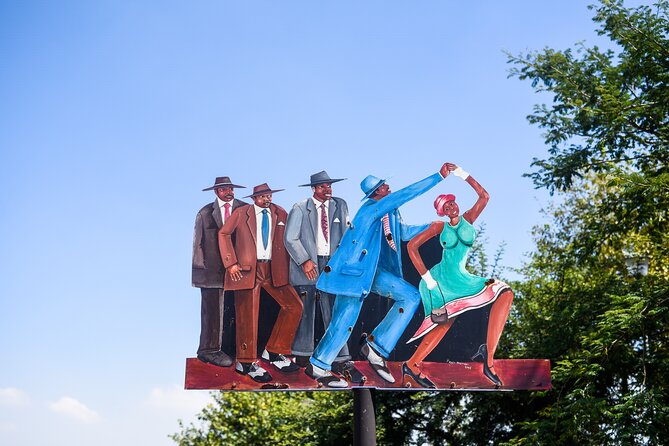
The ride continues along Vilakazi Street, which is known for its connection to both Nelson Mandela and Desmond Tutu. It is an unusual concentration of major South African political history in one residential street.
You spend about 40 minutes here, making it one of the longer stops. Expect time for orientation, photographs, and a closer look at the street rather than a rushed pass-through. The area can feel more visitor-focused than the residential sections, but it remains an important part of understanding Soweto’s place in the national story.
Some tours begin near an espresso shop linked to the family of the person after whom Vilakazi Street was named. That detail may depend on the exact route and guide, so do not treat it as guaranteed, but it reflects the local connections that can make the outing feel less scripted.
Riding through the neighborhood
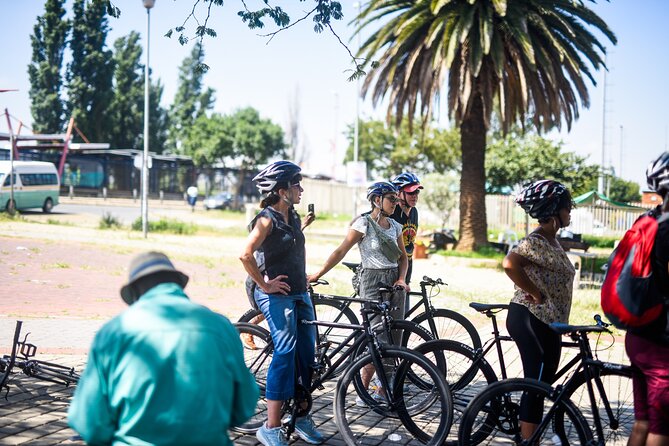
Between the scheduled stops, the real activity is the ride itself. You pedal through the township, moving between major sites and ordinary streets. That gives you a better sense of distance and layout than a stop-and-start vehicle trip.
The community atmosphere is part of the experience. You might find people waving or greeting the group as it passes, and the ride can feel friendly and open. A local guide helps you understand what you are seeing rather than leaving you to make assumptions from the saddle.
Safety is a clear priority in the strongest guide experiences. Themba, Thabo, Thato, Mulalo, and other guides are praised for keeping groups together, adapting the pace, and making riders feel welcome. One guide even adjusted the route when someone wanted to visit the cooling towers, showing that the experience may have some flexibility.
Still, this is a public-road bicycle outing, not a protected cycle path. You need to pay attention, follow the guide, and be comfortable riding in a township setting. The route’s hills are the bigger concern for most people, especially with a basic bike.
The kota lunch
Lunch is a local burger called a kota, usually a large, heavily filled sandwich. It is included in the price, along with bottled water. The food is meant to refuel you after the ride, and the portions are described as generous.
I like this part of the tour because it connects the activity to present-day Soweto rather than ending with political history alone. Food gives you a relaxed pause and a chance to talk with the guide about what you have seen.
The lunch may be paired with drinks or other purchases, but additional items are not included. Budget for those yourself. The kota is the included meal, so anyone with dietary restrictions should ask about options before booking.
Price, timing, and what you actually get
At $45.70 per person, the tour offers fair value if you want a guide, bike, helmet, water, lunch, and several important Soweto stops in one half-day. A comparable private car outing might cover more distance, but it would not give you the same physical connection to the streets.
The price does not include pickup or drop-off. You need to make your own way to 7346 Kumalo Street in Orlando West, Johannesburg, and the tour returns there at the end. The meeting point is near public transportation, which helps, but the activity is not a hotel transfer service.
You can choose a morning or afternoon departure. That makes it easier to fit the tour around other Johannesburg plans. The average booking lead time is 11 days, so I would reserve ahead if your schedule is fixed, especially if you want a particular time.
The total duration is about four hours. That includes cycling, talks, the lunch, and the listed stops. Since timing can shift slightly with group pace and questions, avoid scheduling something immediately afterward.
Confirmation is provided when you book, and the experience is intended for most participants. The most important practical question is not age or sightseeing interest. It is simply whether you are comfortable cycling hills for several hours.
Who should book this Soweto bike tour?
I would choose this for you if you want a strong first look at Soweto and prefer active sightseeing to sitting in a vehicle. It suits visitors who want apartheid history, local context, a taste of neighborhood life, and a meal in one compact outing.
It is also a good choice for families with older children or teenagers who may engage more readily with a bicycle ride than a long museum visit. Guides have made a point of including younger riders in the conversation, though the hills still need to be taken seriously.
I would hesitate if you dislike exercise, have difficulty with hills, or want a slow, museum-heavy day. The Hector Pieterson Museum and Mandela House visits are relatively short, and the route spends substantial time outside on the bikes.
If cycling ability is a concern, ask about geared bikes before you commit. Some bikes now have multiple gears, while other riders have used single-speed models. That difference can turn a manageable ride into a hard workout.
Cancellation and final booking advice
You can cancel up to 24 hours before the start time for a full refund. Cancellations or changes made within 24 hours are not refunded or accepted, based on local time.
I would book this tour if you want history delivered through places and people, not just a list of attractions. The women’s hostel and Lillian Mgoyi stop give the route unusual depth, while Vilakazi Street and Mandela House provide the famous landmarks most first-time visitors expect.
Book it with realistic expectations: you are getting a friendly, active introduction to Soweto, not a polished sightseeing circuit. Bring sunscreen and a cap, wear comfortable clothes, and save energy for the hills. If that sounds appealing, the bicycle is a smart way to see more of Soweto while staying close to its streets.
FAQ
How long is the Soweto bicycle tour?
The experience lasts approximately four hours.
Where does the tour begin?
It begins at 7346 Kumalo Street, Orlando West, Johannesburg, South Africa.
Where does the tour end?
The activity ends back at the meeting point.
Is lunch included?
Yes. A local kota burger-style sandwich is included, along with bottled water.
Are bicycles and helmets provided?
Yes. The tour includes a bicycle and helmet.
Is admission to Mandela House included?
No. The listed entrance fee for Nelson Mandela House is R60 and is paid separately.
Does the tour include hotel pickup and drop-off?
No. Pickup and drop-off are not included.
Are morning and afternoon departures available?
Yes. You can choose between morning and afternoon tours.
How large is the group?
The tour can have a maximum of 15 participants.
Can I cancel for a full refund?
Yes. You must cancel at least 24 hours before the start time for a full refund. Cancellations within 24 hours are not refunded.
Just added in Johannesburg
- Soweto Tuk-Tuk Food & Beer Tour★ 5.0 · 9 reviews
- Soweto: Sip & Paint Walking Tour & Take Home a Canvas★ 4.8 · 7 reviews
- Soweto Tour; Mandela House; Vilakazi Street; Market Culture★ 5.0 · 6 reviews
- Soweto & Johannesburg and Apartheid Museum★ 4.7 · 41 reviews
- Soweto Township Tour★ 4.4 · 4 reviews
- Private Soweto,Mandela House,Apartheid Museum,Constitution★ 4.6 · 15 reviews
- Soweto Food & Beer Bike Tour★ 4.9 · 40 reviews
- Soweto: Hector Pieterson Memorial, to Orlando Towers Tour★ 4.0 · 31 reviews
Soweto & Township Tours, compared.

Johannesburg Hop-On Hop-Off City Tour with Soweto Option
Read our review →

Jo’berg in 1 Day: Soweto, Apartheid Museum & City Tour
Read our review →
Full-Day Tour with Soweto and Apartheid Museum
Read our review →Browse the lists this tour appears in