
Reviewed · SOUTH AFRICAN FOOD TOURS
Cape Town: Bo-Kapp Walking Tour and Malay Cooking Class
Bo-Kaap is far more than a row of pretty painted houses. This four-hour experience pairs a local walking tour with a hands-on Cape Malay cooking class, so you learn how the neighborhood’s culture shows up in its streets, spices, and food. I especially like the stop at the spice shop and the chance to make roti from scratch, not simply watch someone else cook.
I also like the warm, home-based setting and the generous meal of curry, samosas, chili bites, salsa salad, donuts, and tea. The main thing to consider is the small cooking area. At times, only one or two people can work at the counter, so this suits you best if you are happy to share tasks and learn by watching as well as doing.
Key points to know before booking
- A local introduction to Bo-Kaap: Walk cobbled streets with guides such as Faldela, Gadija, or Ilyas and hear about the community, faith, buildings, and traditions.
- More than a photo stop: Visit the oldest mosque in South Africa, the cultural museum, local art and souvenir shops, and a spice store.
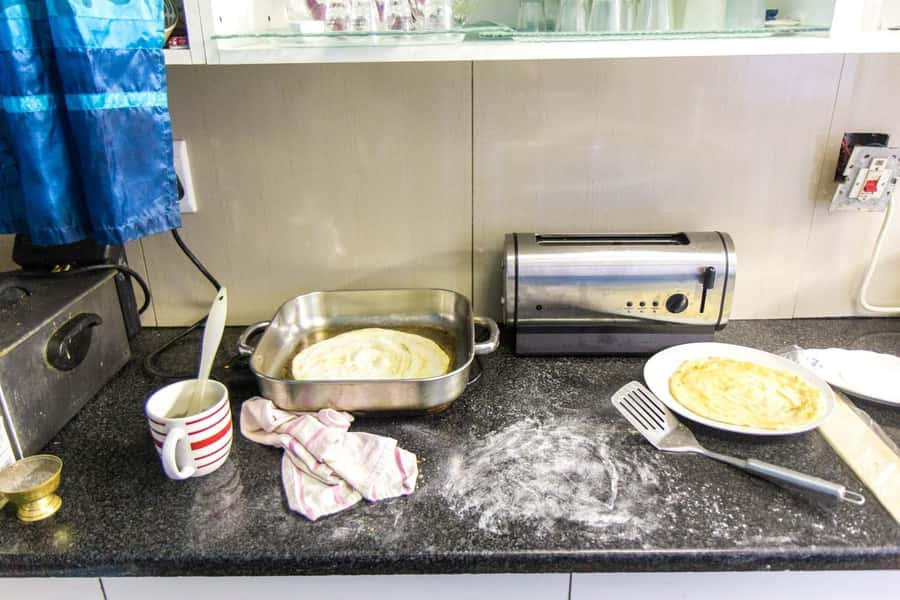
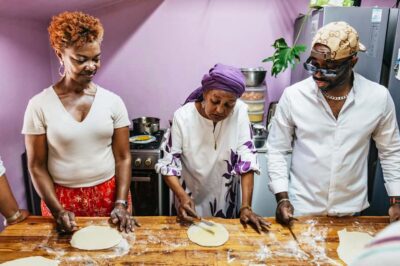
- Real hands-on cooking: Fold samosas, fry chili bites, prepare chicken curry, and learn the tricks behind flaky roti.
- A generous home-cooked meal: Sit down with your host to eat the food you helped prepare, followed by koesisters and cardamom tea.
- Useful for home cooks: You receive the recipes, and the dishes are practical enough to try again at home.
- Good value at $68: Four hours includes the guided walk, museum entrance, cooking lesson, meal, water, and recipes.
Why this Bo-Kaap experience works so well
Bo-Kaap is easy to reduce to colorful walls and a quick camera stop. The painted houses are striking, but the real interest is in the people, faith, food, and layered past behind them. This experience gives you time to connect those pieces.
The walking portion is led by a local guide, with names including Faldela, Gadija, Ilyas, and Gandija used for different departures. That matters here. Bo-Kaap is a neighborhood with a strong sense of community, and a local guide can explain details you would likely miss while wandering alone.
You will hear about the area’s Cape Malay culture and Islamic traditions, see historic buildings, and learn why the neighborhood matters to the people who live there. The pace is gentle enough to build an appetite rather than wear you out.
The experience has earned a 4.7 rating from 105 bookings, with especially strong praise for the guides’ warmth, humor, local connections, and cooking instruction. The high score is easy to understand: this is not just a history walk and not just a cooking class. Each half gives the other more meaning.
Other eating and drinking in Cape Town:
- Cape Town: Malay Cooking Class and Lunch in Bo-Kaap
★ 4.8 · 515 reviews - The Cape Town Essentials Food Tour
★ 5.0 · 385 reviews - Cape Town: V&A Waterfront Gin Voyage Cruise
★ 4.6 · 238 reviews
Walking the painted streets of Bo-Kaap
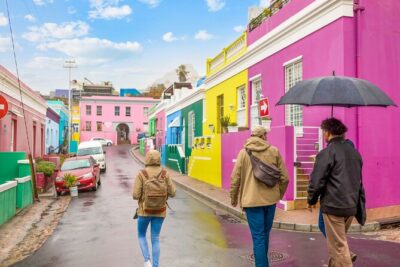
The tour begins at the meeting point, a purple house with flower pots on top. From there, you walk through the cobblestone streets and look at some of the oldest buildings in the neighborhood.
The houses are the obvious visual draw, but your guide adds the useful context. You learn about local traditions, the Cape Malay community, and the role of Islam in daily life. One guide has been described as a true local who is greeted by people along the street, which gives the walk a personal feel rather than the tone of a standard city tour.
You may also visit local art and souvenir shops and meet artists along the way. This is a nice touch if you want to support small businesses and see something beyond the famous house fronts. A visit to a home being renovated has also been included on some outings, offering a glimpse of the neighborhood as a living community rather than a preserved display.
The oldest mosque in South Africa is part of the historical discussion, along with the cultural museum. The museum entrance fee is included, although the exact amount of time spent there can vary. One participant suggested making separate time for the museum if it is important to you, so do not assume the walking portion will provide a long museum visit.
The tour also covers visible political and religious expression in the area. One account found some of the discussion about Palestine more direct than expected for a food-focused activity. If you prefer a strictly culinary tour, keep this possibility in mind. For many people, though, it is part of understanding the community and its present-day concerns.
Wear comfortable shoes. The walk is not described as strenuous, but cobblestones are less forgiving than a smooth pavement, and you will want to pay attention to the guide rather than your feet.
The spice shop is a lesson in Cape Malay flavor
The spice shop is one of the most useful stops. Your guide explains different spices, their possible health benefits, and the ways they are used in cooking. This is not just a quick purchase stop. It helps you understand why Cape Malay food tastes so layered and fragrant.
If you enjoy cooking, start a video when the spices come out, as one practical tip from a previous participant suggested. There is a lot to take in, including the uses of individual spices and the small techniques that make familiar ingredients taste different.
You may also want to ask questions here. The cooking class is friendly and conversational, and the spice discussion is one of the best moments to ask how to adapt a recipe or use an ingredient at home. The recipes you prepare are sent to you afterward, so the information has a life beyond Cape Town.
Inside the home cooking class
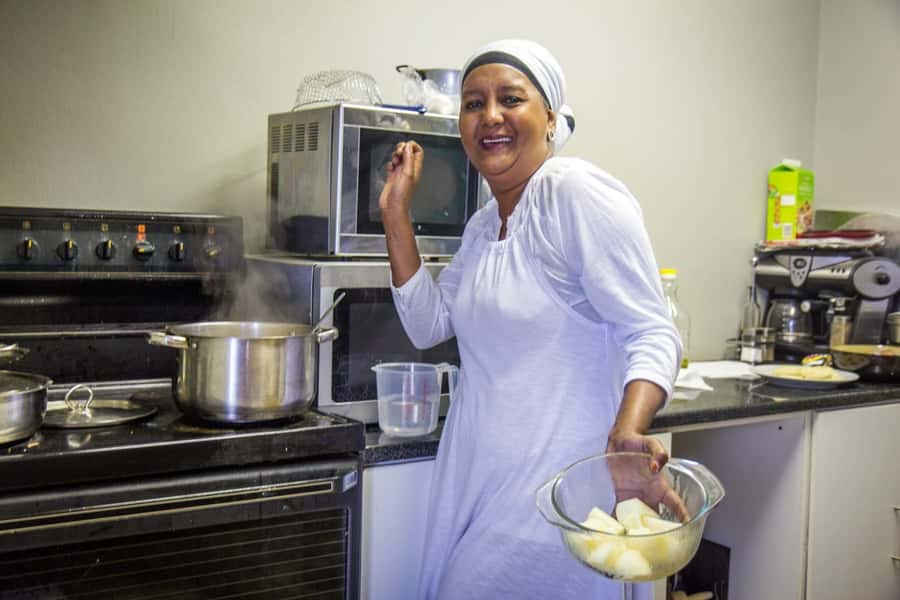
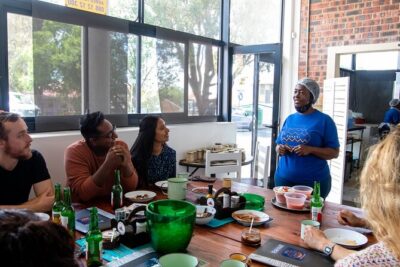
After the walk, you head to the host’s home for the cooking portion. Faldela is the main host named in the experience details, while some outings have been guided or taught by Gadija, Gandija, or another member of the local team.
The home setting makes the class feel personal. You are not standing in a polished demonstration kitchen built for large groups. You are cooking in a local home, chatting with your host, and sharing a meal in the same place where much of the teaching happens.
The class usually includes several stages:
- Folding samosas
- Preparing or frying chili bites
- Making chicken curry
- Rolling and cooking roti
- Preparing sambal, described here as a salsa salad
- Eating koesisters with cardamom tea
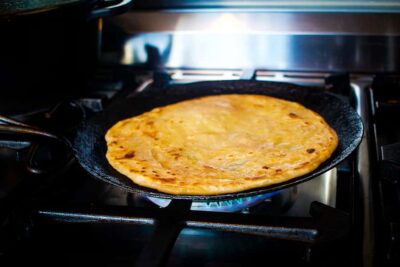
The samosa folding is a good first task because it gets everyone involved quickly. You learn the shape and technique, then move on to the curry and roti. The roti lesson is a highlight for many people. Making a flaky flatbread from scratch is more technical than it looks, and the host shares small tricks that can make the difference between a stiff bread and a tender one.
The cooking is interactive, but it is not a professional culinary examination. If you are not confident in the kitchen, you should still be able to follow along. The host keeps the process organized, and the final result does not depend on you performing every step perfectly.
There is one practical limitation: the cooking area is tiny. You may not have constant access to the counter, especially if the group is full. You will likely take turns, watch demonstrations, and help where there is room. That is normal for a home class, but it is worth knowing if you expect every person to cook continuously.
Dietary needs have been handled well on some outings, but you should provide that information when booking or before the class. Do not assume every request can be met without advance notice.
Other classes where you do the cooking in Cape Town:
- Authentic African Cuisine Cooking Experience
★ 5.0 · 236 reviews - Cape Town: Cape Malay Cooking Class in Bo-Kaap
★ 4.8 · 120 reviews - Cape Town: Authentic African Cuisine Cooking Experience
★ 4.9 · 31 reviews - Private Cape Malay Cooking Class in Cape Town with a Local Family
★ 5.0 · 24 reviews
The meal is part of the lesson
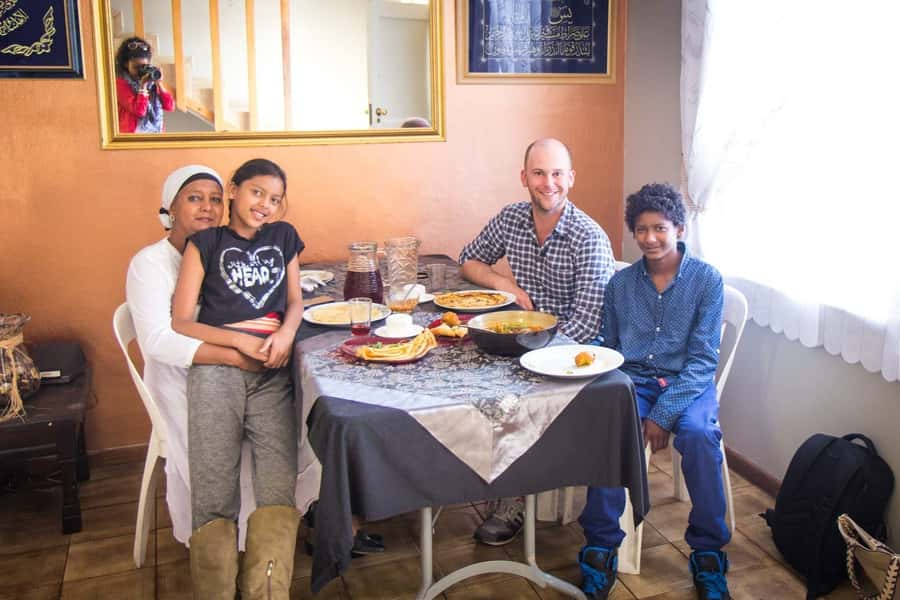
The best part of the class is sitting down to eat together. You are served the food you helped prepare, including curry, roti, samosas, salsa salad, chili bites, and dessert. The portions are described as plentiful, so plan this as a full meal rather than a small tasting.
Koesisters are served as the traditional sweet finish. They are spicy, fragrant donuts, paired with cardamom tea. The combination gives you another example of how Cape Malay cooking balances spice and sweetness.
Eating with the host is more than a convenient ending. It gives you time to talk about the neighborhood, compare notes with people in the group, and ask questions that did not fit naturally into the walking tour. Several accounts singled out the simple pleasure of sitting down and breaking bread with locals.
The class is also designed for people who do not cook often. The dishes are approachable, and the recipes can be recreated at home. You leave with a full stomach, a set of recipes, and a better sense of how the food connects to the place.
How much value do you get for $68?
At $68 per person, this is a good-value half-day experience if you want more than sightseeing. The price covers four hours, a guided neighborhood walk, the museum entrance fee, the cooking instruction, the meal you prepare, water, and the recipes.
Food and drinks are listed as not included, with no alcohol provided. Since the class clearly includes the dishes you cook and eat, read the wording as a warning that extra drinks or separate food purchases are not part of the price. Water is included.
The strongest value comes from the combination. A separate Bo-Kaap walk may cost less, but it would not include the cooking class or meal. A standard cooking class might teach you the recipes, but it would not explain the streets, mosque, museum, shops, and community that shaped the food.
This is especially good value for couples, families with older children, solo visitors, and anyone who wants a cultural activity with a clear human connection. It may be less appealing if you want a fast photo tour, a large professional kitchen, or a strictly private lesson.
Timing, meeting details, and cancellation
The experience lasts four hours, with starting times based on availability. You meet the host at the purple house with flower pots on top. Bring comfortable shoes and allow enough time to find the meeting point without rushing.
The tour is conducted in English. You can cancel up to 24 hours ahead for a full refund, and the reserve-now, pay-later option lets you hold a place without paying immediately.
The group can sometimes be small. One person reported that the activity went ahead even when they were the only participant, which suggests that a quiet departure may still operate, though you should not treat that as a guarantee.
Who should book this experience?
Book it if you want to understand Bo-Kaap through food, family stories, faith, and daily life. It is a strong choice for a first visit to Cape Town because the walking tour gives you local context, while the meal gives the afternoon a relaxed, social finish.
You should also book it if you want practical cooking skills. The roti lesson, samosa folding, spice explanations, and recipes make this more useful than a simple demonstration.
It is less suited to you if you dislike group cooking, have difficulty standing or walking on cobblestones, or expect a spacious kitchen with constant hands-on time. The small cooking area means you may share the work rather than control every dish.
If you are unsure about cooking classes, do not let that alone stop you. The experience includes the walk, food, conversation, and neighborhood stories, and the cooking is taught in a relaxed way. You can take part at your own level.
Should you book the Bo-Kaap cooking class?
I would book this if you have four hours in Cape Town and want an experience with more substance than colorful buildings and quick photographs. The local guides bring Bo-Kaap’s past and present into focus, while the home meal gives you a direct taste of Cape Malay hospitality.
Choose it with realistic expectations: this is a working home kitchen, not a cooking school; the museum visit may be brief; and the cultural discussion can include current political views. In exchange, you get an informative walk, excellent food, useful recipes, and a welcoming introduction to one of Cape Town’s most distinctive communities.
FAQ
How long does the Bo-Kaap walking tour and cooking class last?
The full experience lasts four hours.
What language is the tour conducted in?
The tour and cooking class are conducted in English.
Where is the meeting point?
You meet your host at a purple house with flower pots on the top.
What food will I prepare?
The class includes samosas, chicken curry, roti flatbread, sambal or salsa salad, and chili bites on some departures. Koesisters and cardamom tea are served for dessert.
Is the meal included?
You eat the food prepared during the class. Water is included, while additional food and drinks are listed as not included. Alcohol is not included.
Is the museum entrance included?
Yes. The museum entrance fee is included, although the amount of time spent at the museum may vary.
What should I bring?
Bring comfortable shoes for the walking portion. You may also want to bring a phone if you would like to record the spice lesson, where permitted.
More walking tours in Cape Town
- Cape Town: Nathi Langa Township Walking Tour
★ 4.9 · 493 reviews - Cape Town: Art, Culture & History Walking Tour
★ 4.9 · 392 reviews - Cape Town: Street Art Walking Tour in Woodstock
★ 4.8 · 293 reviews - Cape Town: Langa Township Walking Tour
★ 4.8 · 272 reviews
More classes and workshops in Cape Town
- Private Surf Lesson
★ 5.0 · 53 reviews - Private Surf Lesson in Cape Town – Transport & Photos Included
★ 5.0 · 50 reviews - Muizenberg Cape Town: Private Surf Lesson
★ 5.0 · 37 reviews - Koeksister and Samoosa Class by the Malay Cook Up
★ 4.8 · 9 reviews
Just added in Cape Town
- Wine Tasting in Cape’s Top Three Winelands Private Tour★ 4.5 · 17 reviews
- Private Tour to Aquila Game Reserve in Cape Town – see the Big5★ 5.0 · 5 reviews
- Private Tour:Cape of Good Hop>Seal island>Chapman’speak &Penguins★ 5.0 · 7 reviews
- Full Day Big 5 Aquila Safari Private Transfers Including Park Fee From Cape Town★ 4.5 · 54 reviews
- Robben Island and Table Mountain Cableway with Bo-Kaap Day Tour★ 5.0 · 8 reviews
- Private Full Day Cape Town City Scenic and Table Mountain Tour.★ 5.0 · 3 reviews
- Private Half DayTour:Cape Winelands, Stellenbosch from Cape Town★ 5.0 · 18 reviews
- Private Tour: Cape Winelands to Stellenbosch & Franschhoek★ 5.0 · 3 reviews
South African Food Tours, compared.

Full-Day All Inclusive Safari with Traditional Braai Lunch
Read our review →
Addo Elephant Full Day Safari with a Traditional South African Braai (BBQ) Lunch
Read our review →
Browse the lists this tour appears in