
Reviewed · BO-KAAP TOURS
Cape Town Walking Tour: Bo-Kaap & City Highlights
Cape Town’s story comes into focus on foot. This two-hour walk links the painful memory of District Six with the Slave Lodge, the city’s public squares, Long Street, and the colorful homes of Bo-Kaap. Dylan, Terrence, Tarrin, and Terence have led this experience, and the guide’s personal insight is a big part of its appeal.
I like the clear route and the human scale. You are not being whisked past these places in a bus, and you get time to ask questions about identity, forced removals, faith, architecture, and daily life. I also like the small local touch at the end, usually a koesister or another sweet snack. The main consideration is pace: two hours covers a lot, and the walk can feel warm and information-heavy, especially if you want long visits inside museums or churches.
Key points at a glance
- Truth Coffee is the starting point: Arrive early if you want time for coffee before the walk begins.
- District Six gives the tour its emotional weight: Expect careful discussion of displacement, community, and resilience.
- The route connects major city landmarks: Grand Parade, the Slave Lodge, St. George’s Cathedral, Greenmarket Square, and Long Street all fit into one compact walk.
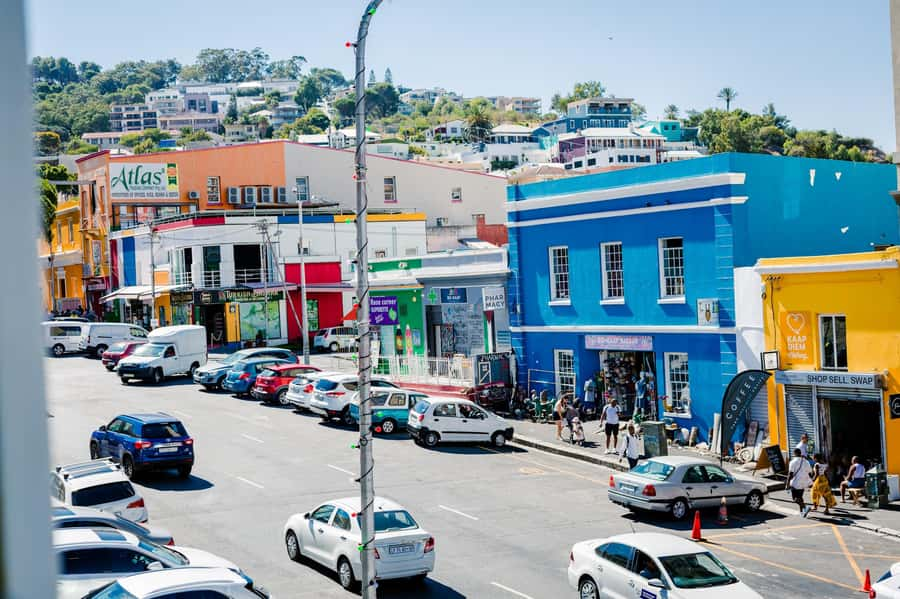
- Bo-Kaap is the colorful finish: You get time for photographs, local shopping, and a look at the area’s Cape Malay cultural identity.
- The guide shapes the experience: Dylan, Terrence, Tarrin, and Terence have been praised for clear explanations, patience, and personal perspective.
- The $40 price buys context, not just sightseeing: The value is strongest if you are new to Cape Town and want a useful orientation before exploring alone.
Starting with coffee at Truth Coffee
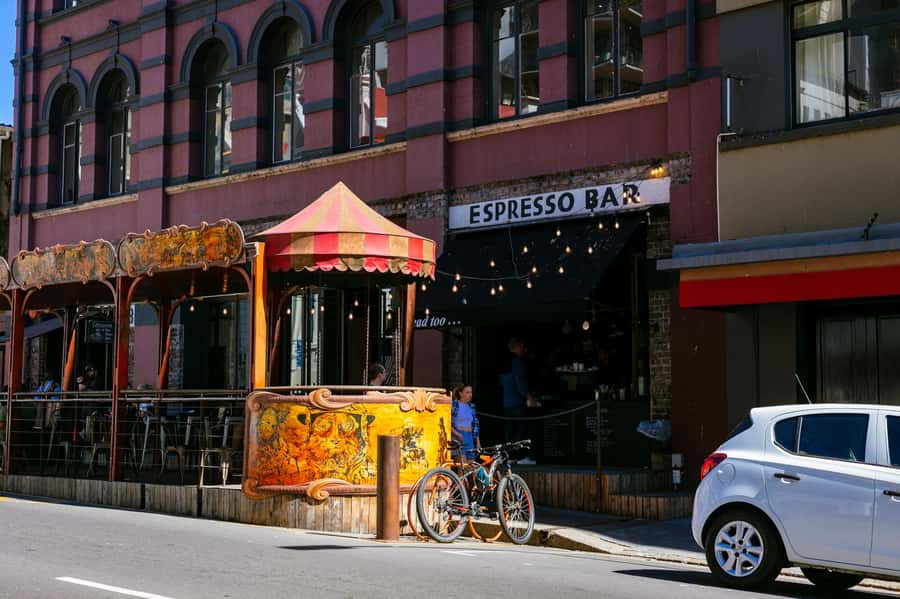
The walk begins at Truth Coffee Roasting, a useful meeting point in central Cape Town. Your guide waits by the side entrance in a black and white golf shirt with a name badge. That detail matters because busy city streets and café entrances can make a guide hard to spot.
I would arrive about 30 minutes early. The coffeehouse itself is part of the appeal, and one person described the coffee as the best they had ever had. Coffee is not listed as part of the tour, so plan to pay for it yourself. The complimentary snack comes later.
This is also a good place to meet your guide and settle into the tone of the walk. The experience is built around conversation. Guides have been praised for taking questions, adjusting to group interests, and sharing their own connection to South African identity. The exact guide may vary, with Dylan, Terrence, Tarrin, and Terence among the names associated with the tour.
Other neighbourhood walks in Cape Town:
- Cape Town: Malay Cooking Class and Lunch in Bo-Kaap
★ 4.8 · 515 reviews - Bo-Kaap: Walk with a local
★ 5.0 · 131 reviews - Cape Town: Cape Malay Cooking Class in Bo-Kaap
★ 4.8 · 120 reviews
District Six and the cost of forced removal
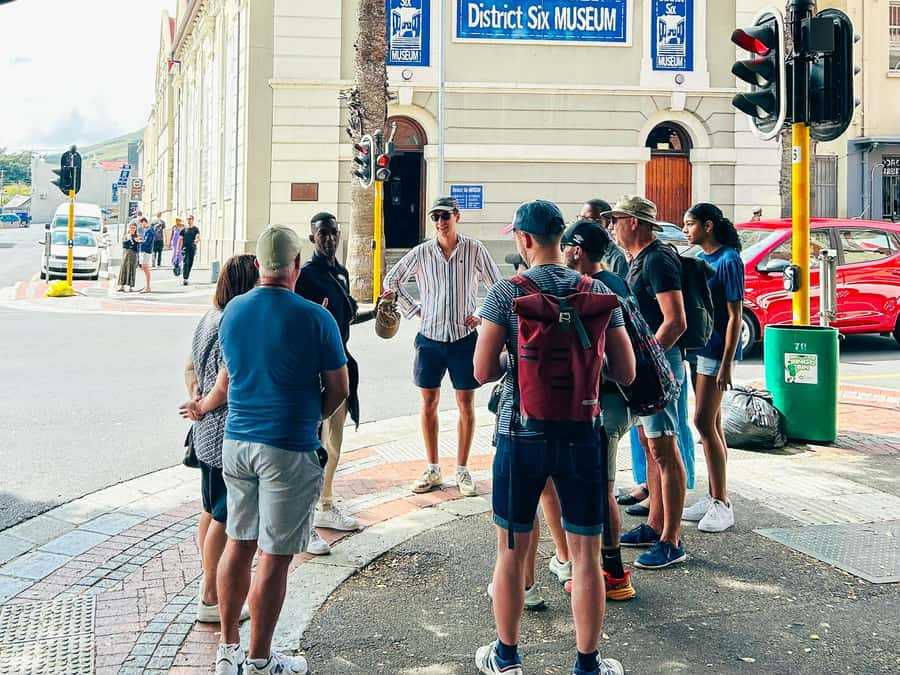
From Truth Coffee, the route moves toward District Six. This is not simply a photo stop. It is where the tour begins to explain how Cape Town was shaped by apartheid-era policies and the removal of established communities.
You can expect your guide to talk about the people who lived here, the communities that once filled the area, and the effects of displacement. The focus is on ordinary lives, not only dates and official decisions. That makes this part especially useful if you have little background on South African history.
The District Six Museum is listed as a guided sightseeing stop and pass-by rather than a guaranteed museum admission. Entry fees are not included, so confirm the details if you want to return for a full museum visit. The walking tour gives you context, but it is not a replacement for spending time inside every attraction.
I appreciate the way this stop gives the rest of the route a frame. The cheerful colors of Bo-Kaap mean more after you have heard how communities were divided, moved, and rebuilt.
Grand Parade and Cape Town’s public life

The route continues to Grand Parade, a broad civic space with links to important moments in Cape Town’s public story. The planned stop is short, about five minutes, so think of it as a focused explanation and photo opportunity rather than a long visit.
This is where the guide helps you connect buildings, public gatherings, and political change. The value comes from knowing what you are looking at. Without that context, a square can seem like an open patch between city streets. With a guide, it becomes part of the city’s story.
The stop also keeps the walk moving. Two hours is not long for this much ground, so the tour uses short explanations at several locations rather than spending half the morning at one site.
The Slave Lodge and a difficult chapter
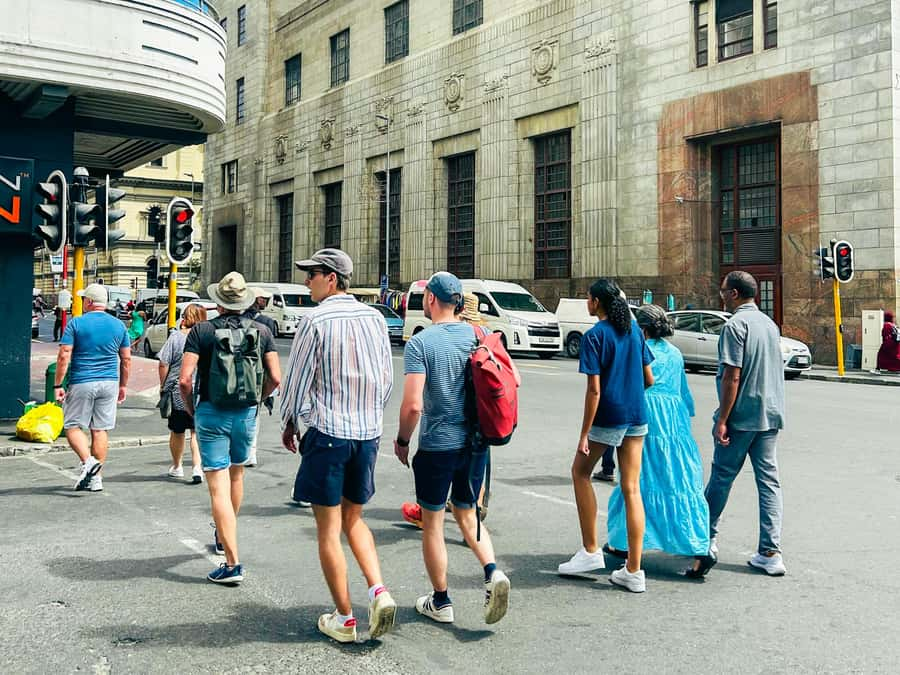
The Iziko Slave Lodge brings the tour to one of Cape Town’s most serious historical subjects. It recalls the people brought to the Cape through slavery and the systems that shaped the city long before modern South Africa.
Expect a thoughtful stop, not a light sightseeing pause. The guide explains the site and its meaning, while the walking route lets you see how this history sits within the modern city center. That mix of daily streets and difficult subjects can be powerful, but it also means this is not a tour built only around pretty buildings and easy photographs.
The listing describes the Slave Lodge as a guided stop and pass-by, with entry fees excluded. If you want to tour the interior, set aside extra time and money for a separate visit. During the walk, the emphasis is on historical context and the connection between places.
Other walks around Cape Town:
- Cape Town: Nathi Langa Township Walking Tour
★ 4.9 · 493 reviews - Cape Town: Art, Culture & History Walking Tour
★ 4.9 · 392 reviews - Cape Town: Street Art Walking Tour in Woodstock
★ 4.8 · 293 reviews - Cape Town: Langa Township Walking Tour
★ 4.8 · 272 reviews
St. George’s Cathedral and living faith
St. George’s Cathedral is another short stop, listed at about five minutes. You get a photo opportunity, a guided explanation, and a chance to look at the building as part of Cape Town’s religious and civic life.
The church can also bring a personal side to the experience. Some tours have included discussion of Nelson Mandela and Desmond Tutu, along with time inside a cathedral or another church. That part depends on the guide and the day, but it shows how the route can move beyond architecture into questions of leadership, belief, and public service.
Do not expect a full architectural tour in five minutes. The strength here is the connection between the building and the city around it. If churches are a major interest, you may want to return independently.
Greenmarket Square, crafts, and a practical pause
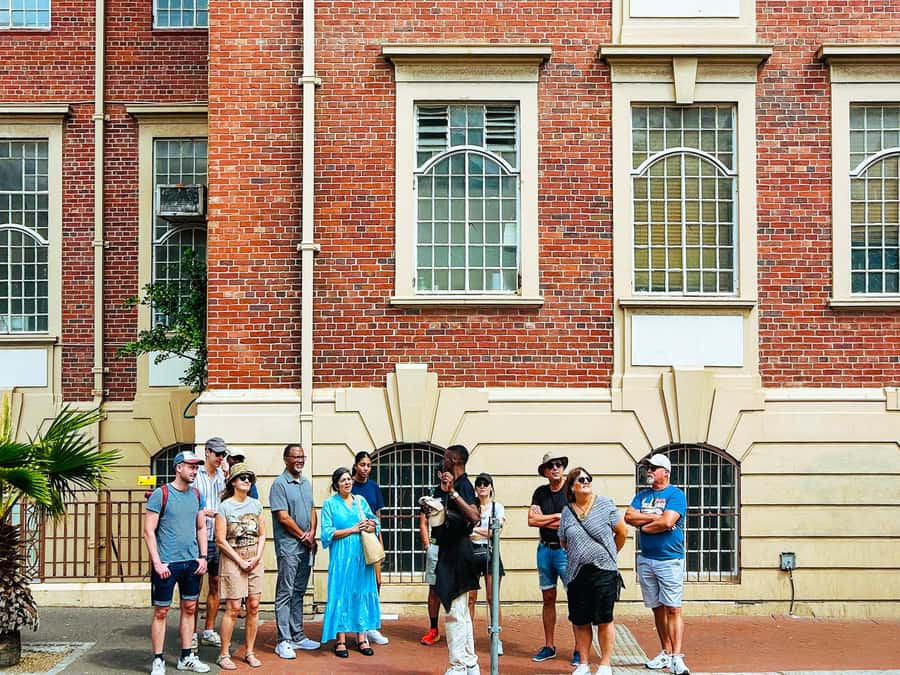
Greenmarket Square adds a change of pace. After the serious historical stops, you get a livelier public setting filled with local crafts and informal shopping. The planned visit lasts around ten minutes.
This is a good spot to look, take photographs, and get a feel for Cape Town’s street-level commercial life. You may find souvenirs here, but shopping is not the central purpose of the tour. The group needs to stay together, and ten minutes is enough for a quick look rather than serious browsing.
Personal expenses are not included. If something catches your eye, you will need to pay separately. Keep your attention on the guide as well, since the square forms part of the larger explanation of how old city spaces continue to function today.
Long Street and the city’s changing face

Long Street appears next, with about two minutes listed for walking and sightseeing. That sounds brief, but the point is to pass through an important central street rather than stop for a detailed visit.
The guide uses Long Street to show how older Cape Town and newer city life overlap. Restaurants, shops, historic buildings, and street activity sit close together. You may not spend long here, but it helps explain the changing character of the central city.
This is also where the walking format earns its keep. From a vehicle, you would register the street as a name and a view. On foot, you notice the transitions between one district and the next.
Bo-Kaap, color with a complicated story
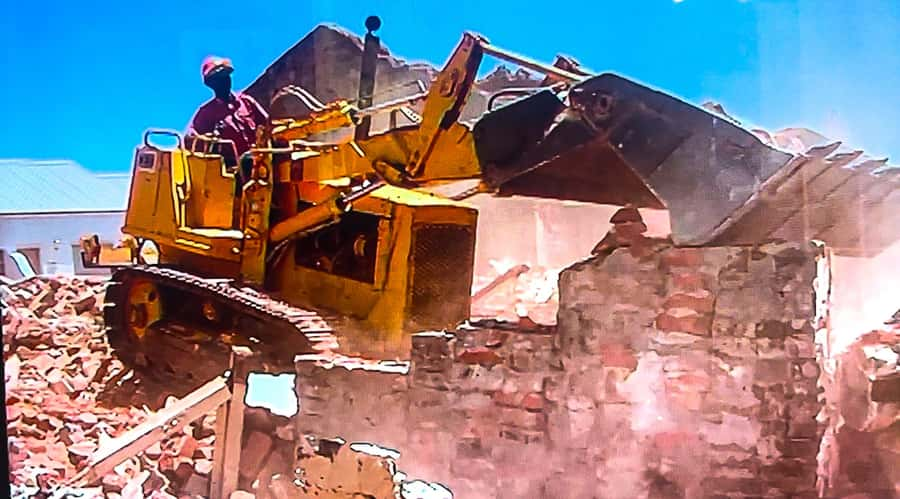
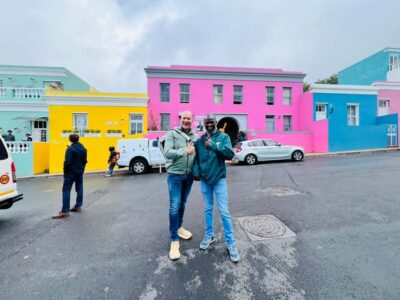
The route finishes in Bo-Kaap, the part most likely to fill your camera. Its pastel-painted homes and steep streets make for strong photographs, but the neighborhood is more than a backdrop.
Your guide explains the area’s cultural legacy and its place in Cape Town’s identity. The neighborhood is closely associated with Cape Malay culture, and the tour uses Bo-Kaap to bring together themes introduced earlier: displacement, faith, community, food, language, and belonging.
You have about 15 minutes here for sightseeing, photographs, and some shopping. That is enough for a first look, but not a full neighborhood exploration. I would treat the finish as an introduction and return later if you want more time with the streets, shops, and local food.
The complimentary snack is a welcome final touch. Several participants specifically enjoyed the koesister, a sweet local treat. It is a small item, but it gives the final stop a taste of place rather than ending with one more speech beside a building.
What the guide adds to the walk
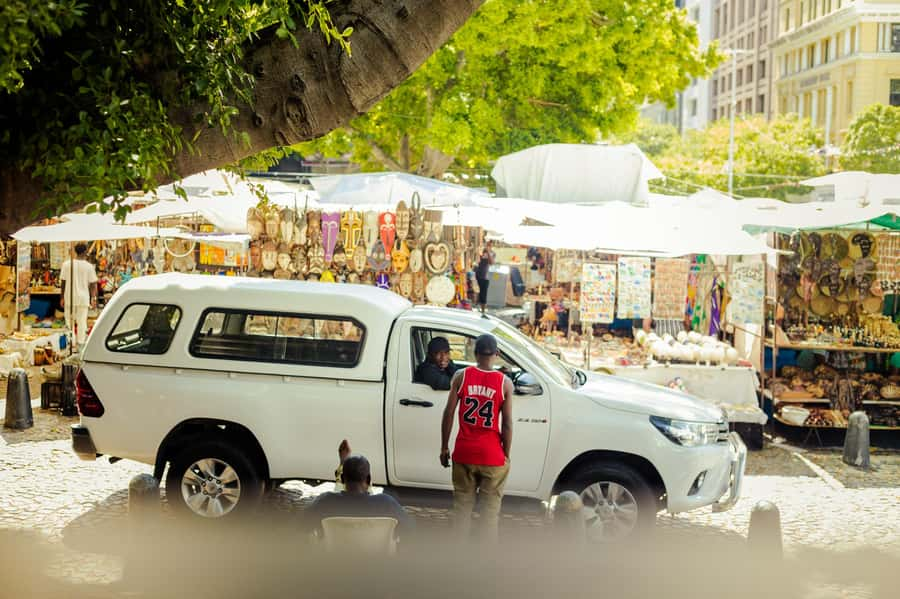
The strongest part of this experience is the guide. The route itself is useful, but the quality of the explanation determines how much you take away.
Dylan has been praised for his command of Cape Town and South African history, his humor, and his willingness to follow questions. Terrence has been described as friendly, clear, and open about his own identity and experience of living in South Africa. Tarrin and Terence have also led tours praised for a relaxed pace and useful personal insight.
You should not assume a private tour. Group size can vary, although some departures have been very small. A small group gives you more room to ask questions and can make the walk feel personal. Larger groups may be less flexible, but the route remains straightforward.
The tour is offered in English, Zulu, Xhosa, and Afrikaans. The guide may also adjust the emphasis to your interests. You can ask for more history, architecture, culture, or current local context, though the walk’s core focus remains the story of the city.
How much walking and heat to expect
The route covers several central landmarks in two hours. It is described as an easy walk by some participants, but you should still wear comfortable shoes and carry water. Cape Town sun can be strong, so bring sunglasses, a hat, sunscreen, and rain gear if the forecast is uncertain.
The walk is not designed around long indoor visits. You will spend much of the time outdoors, moving between stops and listening. That makes it a good first-day activity for getting your bearings, but less suitable if you want a slow museum tour.
Bring a camera, personal medication, and hand sanitizer or tissues. Alcohol and drugs are not allowed. The activity is wheelchair accessible, though the exact ease of every street section can depend on conditions on the day.
Is $40 good value?
At $40 per person, this is not the cheapest way to look around central Cape Town, but it offers more than a basic orientation walk. You are paying for a local guide, a planned route through several major sites, cultural explanation, and the chance to ask questions as you go.
The value is strongest at the beginning of a Cape Town stay. A good introduction helps you understand later visits to District Six, Bo-Kaap, museums, churches, and other city sights. It can also help you feel more comfortable exploring on your own.
The price does not cover transport to Truth Coffee, lunch, personal shopping, museum admissions, or extra food. If you expect a full museum experience or a long stop at every landmark, the tour may feel short for the cost. If you want a clear overview with local interpretation, the price is fair, especially when the group is small.
Free cancellation is available up to 24 hours before departure, and you can reserve now and pay later. Starting times vary, so check availability when booking.
Who should book this Cape Town walk?
I would recommend it to first-time visitors, history-minded people, and anyone who wants more than a checklist of buildings. It is especially useful if you are unsure how District Six, slavery, apartheid, religion, and Bo-Kaap fit into one city story.
It also suits travelers who prefer conversation to a scripted lecture. The guides are encouraged to answer questions and tailor the discussion, and several have shared personal perspectives when asked.
You may want a different experience if your main goal is nature, mountain views, food tasting, or long museum visits. One participant wanted more discussion of nature and scenery, and that is a fair limitation. This is a city history and culture walk, not a Table Mountain excursion or a food tour.
Should you book it?
Book this tour if you are new to Cape Town and want useful context before setting out on your own. The route is compact, the finish in Bo-Kaap is memorable, and the guide can turn a string of city streets into a connected story.
Skip it if you already know central Cape Town well or prefer to explore at a very slow pace. For most first-time visitors, though, the combination of District Six, the Slave Lodge, Greenmarket Square, Long Street, and Bo-Kaap makes this a worthwhile two-hour introduction. Arrive early for coffee, wear light and comfortable clothes, and leave room in your schedule to revisit the places that catch your interest.
FAQ
Where does the Cape Town walking tour begin?
The tour begins at Truth Coffee Roasting in central Cape Town. Your guide waits at the side entrance wearing a black and white golf shirt with a name badge.
Where does the tour finish?
The walk finishes in Bo-Kaap.
How long does the tour last?
The scheduled duration is two hours. Starting times vary, so check availability when booking.
What landmarks are included?
The route includes District Six, Grand Parade, Iziko Slave Lodge, St. George’s Cathedral, Greenmarket Square, Long Street, and Bo-Kaap.
Is the tour offered in languages other than English?
Yes. Live guiding is available in English, Zulu, Xhosa, and Afrikaans.
Is the walking tour wheelchair accessible?
Yes, the activity is listed as wheelchair accessible.
What is included in the price?
The price includes a guided walk through Cape Town’s history and culture, visits to Bo-Kaap and other key landmarks, a complimentary snack, and a local guide.
Are museum entry fees, lunch, and transport included?
No. Transport to the meeting point, lunch, personal expenses, and entry fees are not included.
Can I cancel or pay later?
You can cancel up to 24 hours in advance for a full refund. You can also reserve your place and pay later.
Just added in Cape Town
- Wine Tasting in Cape’s Top Three Winelands Private Tour★ 4.5 · 17 reviews
- Private Tour to Aquila Game Reserve in Cape Town – see the Big5★ 5.0 · 5 reviews
- Private Tour:Cape of Good Hop>Seal island>Chapman’speak &Penguins★ 5.0 · 7 reviews
- Full Day Big 5 Aquila Safari Private Transfers Including Park Fee From Cape Town★ 4.5 · 54 reviews
- Robben Island and Table Mountain Cableway with Bo-Kaap Day Tour★ 5.0 · 8 reviews
- Private Full Day Cape Town City Scenic and Table Mountain Tour.★ 5.0 · 3 reviews
- Private Half DayTour:Cape Winelands, Stellenbosch from Cape Town★ 5.0 · 18 reviews
- Tastes of Stellenbosch Wine Full Day Tour with Private Transfer★ 5.0 · 7 reviews
Bo-Kaap Tours, compared.




Cape Town Township Tour Including Langa Township and Bo-Kaap
Read our review →

Full-Day Kirstenbosch, Bo-Kaap, and Penguins Tour
Read our review →Browse the lists this tour appears in