
Reviewed · BO-KAAP TOURS
Bo-Kaap: Walk with a local
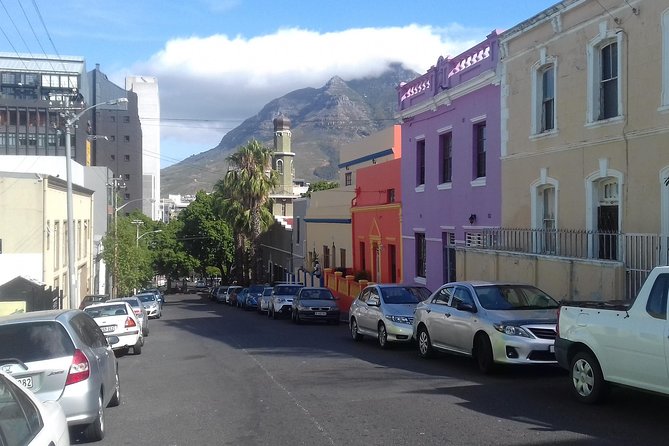
Bo-Kaap is far more than a row of colorful houses. A local guide such as Ilyas, Rafiq, Siddiq, or Sedick connects those bright façades to slavery, Islam, family life, and the neighborhood’s uncertain future. I like the personal family stories and the chance to meet people who still live here.
I also like the stop at Atlas Trading Company, where the smell of cardamom, cinnamon, and other Cape Malay spices gives the past a very real edge. A homemade koesister, rooibos tea, or coffee adds a welcome taste of local life. The main consideration is the physical route: it lasts about an hour but includes hills, uneven cobbles, and some walking in the sun.
Key points at a glance
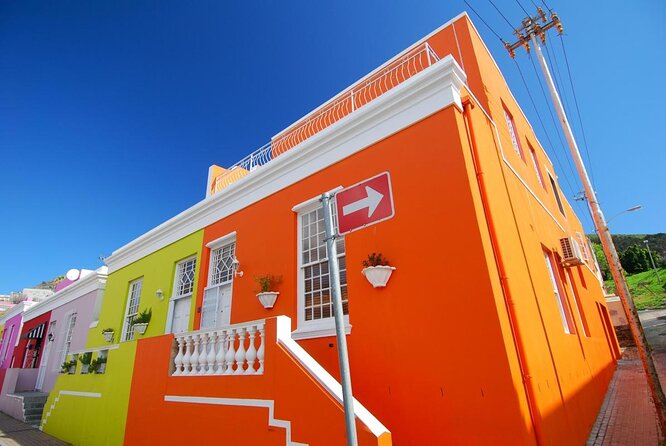
- Hear Bo-Kaap from someone who belongs here: Guides are local residents and, in some cases, descendants of people brought to the Cape as slaves.
- Visit Auwal Mosque: The tour includes one of South Africa’s oldest mosques and explains Bo-Kaap’s place in Cape Islam.
- Stop at Atlas Trading Company: Smell the spices that shape Cape Malay cooking and learn about their cultural meaning.
- Taste a local treat: Rooibos tea or coffee and a snack are included, with some walks featuring homemade koesisters.
- Keep the group small: The maximum is 20 people, making it easier to ask questions and hear personal stories.
- Plan for a short uphill walk: Comfortable shoes matter on cobblestones and sloping streets.
Why Bo-Kaap needs more than a photo stop
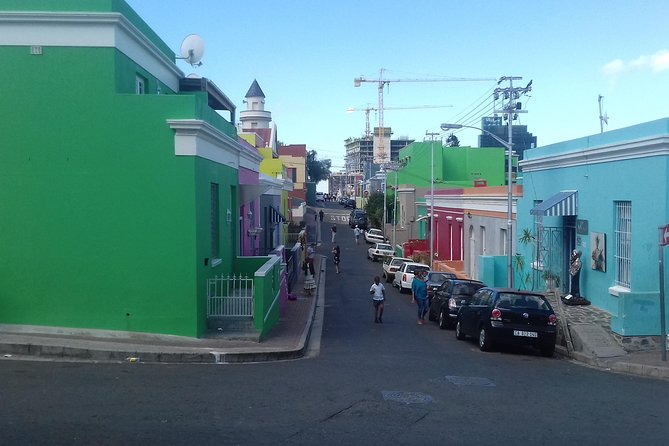
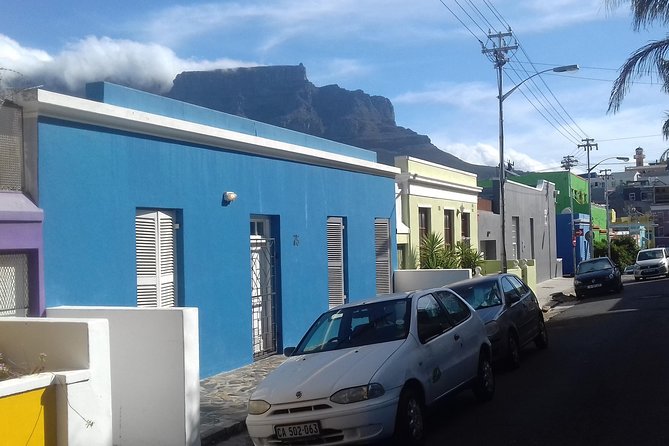
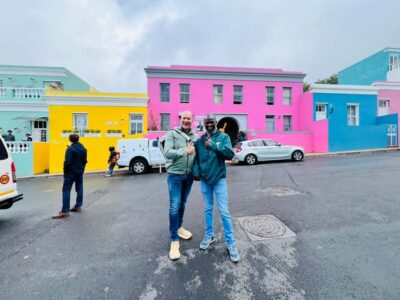
The famous houses are the easy part to notice. Pink, blue, yellow, green, and orange walls make excellent photographs, especially along Wale Street and the nearby lanes. But the colors are only the surface of this neighborhood.
Bo-Kaap sits at the foot of Signal Hill, close to central Cape Town. Its past is tied to slavery, Islam, forced movement, and the mixing of cultures under Dutch colonial rule. Enslaved people, artisans, and political exiles were brought to the Cape from parts of Africa, India, Sri Lanka, Indonesia, Malaysia, and elsewhere.
That background gives the walk weight. You are not simply ticking off one of South Africa’s most photographed streets. You are learning how a community formed, how faith shaped daily life, and why preserving the area matters to people who still call it home.
I like this approach because the guide can explain details that are easy to miss on your own. A painted doorway, a mosque, a spice shop, or a quiet side street becomes part of a larger story. The walk is short, but it gives you a useful framework for the rest of your time in Cape Town.
Other neighbourhood walks in Cape Town:
- Cape Town: Malay Cooking Class and Lunch in Bo-Kaap
★ 4.8 · 515 reviews - Cape Town Walking Tour: Bo-Kaap & City Highlights
★ 4.8 · 161 reviews - Cape Town: Cape Malay Cooking Class in Bo-Kaap
★ 4.8 · 120 reviews
Meeting at 71 Wale Street
The tour begins at 71 Wale Street, where the guide introduces Bo-Kaap and gives you a basic outline of Cape Town’s past. This opening takes about 15 minutes and helps place the neighborhood in the wider city.
The meeting point is practical. Wale Street is near public transportation, and the activity finishes at the same location. That makes it easy to pair the walk with other time in central Cape Town, though the tour itself does not include transport to or from your accommodation.
The group can include up to 20 people. That is not a private walk, but it is still far more manageable than a large coach group. You should have a fair chance to ask questions, especially if the group is smaller on your chosen date.
Guides have included Ilyas, Sadiq, Rafiq, Siddiq, Sedick, and Eliyas. Names and guide assignments can vary, but the key point is the local connection. Several guides live in Bo-Kaap or grew up there, and that changes the tone of the walk. You are not just hearing a set script. You may hear about relatives, neighbors, community gardens, local concerns, and daily routines.
The colorful streets, seen in context
The first part of the walk moves through Bo-Kaap itself. Allow about 20 minutes for this portion, though the exact pace can depend on the group and the number of questions and photo stops.
This is the point where many people reach for their camera. You should. The houses are striking, and the narrow streets offer plenty of good angles. The guide also helps you look beyond the colors. The neighborhood’s architecture and religious buildings reflect its long connection with Cape Malay culture and Islam.
A useful part of the experience is the access to quieter areas. Guides such as Ilyas and Siddiq have taken groups away from the busiest photographic spots and through less familiar streets. That can make the walk feel more like a visit to a living community and less like a quick stop at a postcard view.
You may also meet local residents along the way. Guides who live in the area often know people on the street and may stop to greet them. Those small exchanges help show that Bo-Kaap is a home first and a sightseeing destination second.
That distinction matters. Photography is welcome, but this is not a staged neighborhood. You should be respectful around houses, people, and religious sites. The best pictures come with some patience and awareness, not with treating every doorway as a prop.
Auwal Mosque and the birth of Islam in the Cape
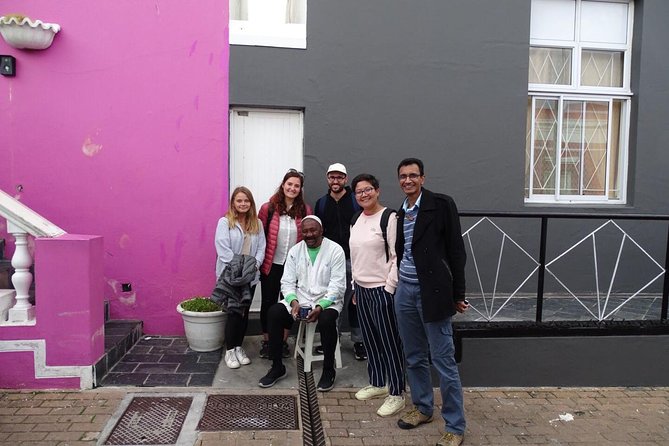
Auwal Mosque is one of the important stops. It is described as one of the oldest mosques in South Africa, and the visit gives the neighborhood’s religious history a clear focal point.
Bo-Kaap is often called the birthplace of Islam in the Cape. The tour explains how enslaved people and others brought from across the Indian Ocean world helped shape the area’s faith, food, language, and customs.
This is one of the strongest reasons to choose a guided walk rather than simply wandering around with a camera. You can see Auwal Mosque on your own, but a local guide adds the human and historical context. The building becomes connected to the people who worshipped there and to the wider story of Islam under colonial rule.
The supplied information does not specify the exact interior access or worship schedule, so you should follow the guide’s instructions on the day. Dress and behave respectfully around the mosque. The tour may explain the site even if circumstances limit the time spent inside.
Other walks around Cape Town:
- Cape Town: Nathi Langa Township Walking Tour
★ 4.9 · 493 reviews - Cape Town: Art, Culture & History Walking Tour
★ 4.9 · 392 reviews - Cape Town: Street Art Walking Tour in Woodstock
★ 4.8 · 293 reviews - Cape Town: Langa Township Walking Tour
★ 4.8 · 272 reviews
Atlas Trading Company and the smell of Cape Malay cooking
The stop at Atlas Trading Company lasts about 10 minutes. It is short, but it may be one of the most memorable parts of the walk.
Atlas is a famous Bo-Kaap spice shop. Here, you can smell the ingredients used in everyday Cape Malay cooking. The aromas make the cultural story immediate: cardamom, cinnamon, and other spices are not just products on a shelf. They connect to recipes, households, and traditions passed through generations.
The guide also explains how spices became an expression of freedom in the kitchens of colonial masters. Enslaved cooks used their skill and ingredients to create food with identity and flavor, even under harsh conditions. That is a striking detail, and it gives the food story a serious historical edge.
You may have time to look around after the formal walk, but the activity ends back at 71 Wale Street. If spice shopping is important to you, ask the guide how much time is practical. The stated tour duration is about one hour, so this is an introduction rather than a long food tour.
Tea, coffee, and a homemade koesister
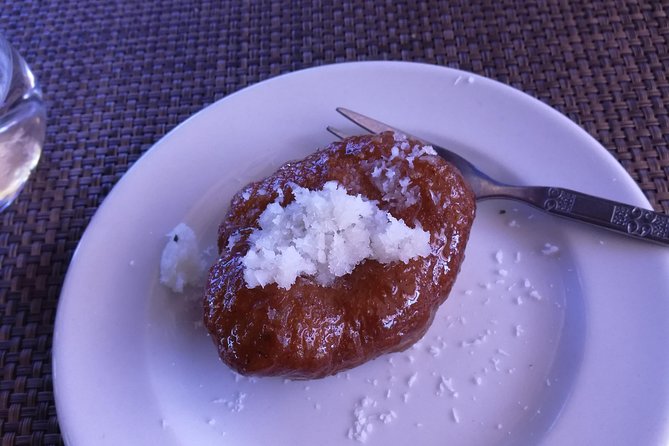
Refreshment is included, which is useful in Cape Town’s sun and adds another local detail to the experience. You receive rooibos tea or coffee and a snack.
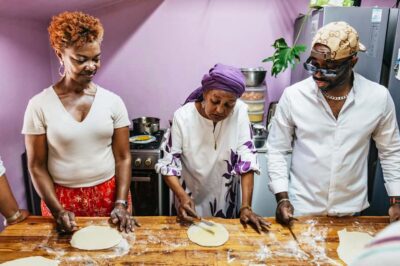
Some walks have included a homemade koesister at a relative’s house. This is a Cape Malay sweet, and a fresh version can be a highlight of the morning. The home visit is not described as a guaranteed part of every departure, so treat it as something that may happen rather than a fixed promise.
The snack matters because it turns an explanation about food into a taste you can remember. It can also open the door to stories about family recipes and everyday life. Several guides have introduced groups to friends or relatives, which gives the walk a warm, informal quality.
If you have dietary restrictions, ask before booking or at the start of the tour. The supplied details do not list alternatives or allergens. Do not assume that the included snack can be changed.
What the personal stories add
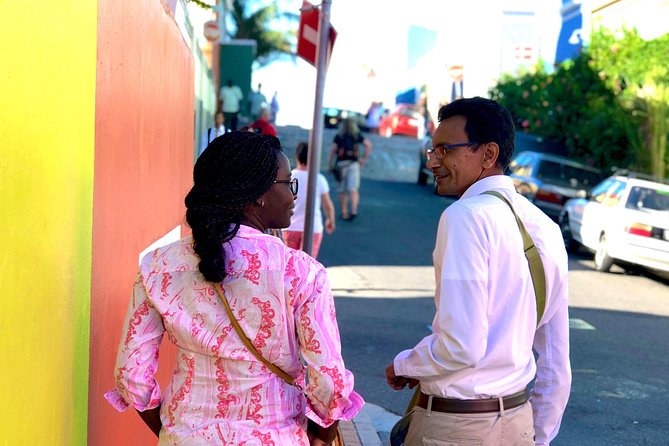
The strongest feature here is the guide’s personal connection. Ilyas has been described as born and raised in Bo-Kaap, while Rafiq is presented as someone who lives in and loves the neighborhood. Other guides have shared family ties, local concerns, and memories of growing up in the area.
That perspective can cover ground a standard city tour often misses. You might hear about the community garden, meet a neighbor, or learn how residents view the pressure to preserve the area while dealing with its future. The tour can show you Bo-Kaap as a place with current issues, not only as a preserved historic district.
This is also where the tour earns its price. At $25.31 per person, you are paying for about an hour, a local guide, a small-group setting, a drink, a snack, and access to stories that are hard to get from a guidebook. It is not the cheapest possible way to see colorful houses, since you can walk through parts of Bo-Kaap for free. But the value is strong if you want context and conversation.
I would not choose it solely for food. The snack is a pleasant extra, not a full tasting program. I would choose it for the combination of local voice, history, religious culture, and a small taste of daily life.
Walking conditions, safety, and timing
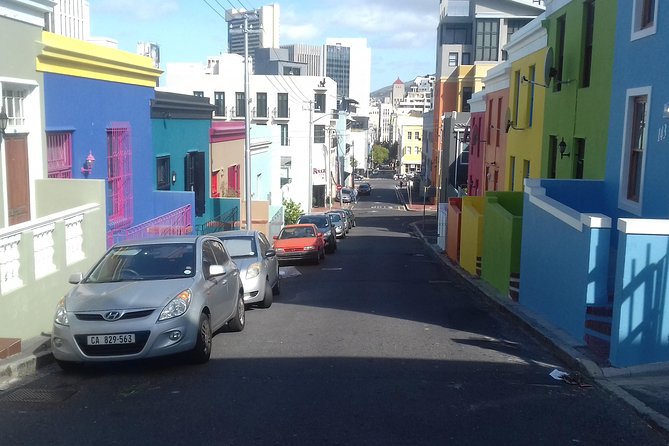
The route is short, but do not treat it as completely flat or effortless. The streets include hills, elevations, uneven cobblestones, and some walking between stops. Wear solid, comfortable shoes rather than sandals with thin soles or anything chosen only for photographs.
The walk is roughly one hour. That suits a first morning in Cape Town, a spare slot between other activities, or anyone who wants a focused introduction without giving up half a day. The duration also limits how much detail the guide can cover, so ask questions as you go.
The experience requires good weather. If poor conditions cancel the walk, you are offered another date or a full refund. It also requires a minimum number of participants, and a cancellation for that reason comes with the same choice of another date, another experience, or a full refund.
The walk has been described as feeling safe with the guide, but one person also encountered a panhandler. That is a useful reminder to stay aware and keep valuables secure, as you would in any city neighborhood. A solo woman specifically found the local escort reassuring and recommended arranging transport to and from the tour. The activity itself begins and ends at 71 Wale Street.
The booking pattern suggests planning ahead. It is booked about 21 days in advance on average, so reserve early if your Cape Town dates are fixed.
Who will enjoy this Bo-Kaap walk
This is a good choice for you if you want more than photographs. It suits first-time Cape Town visitors, people interested in slavery and colonial history, food lovers curious about Cape Malay cooking, and anyone who values direct contact with a local community.
It also works well for photographers who want the famous streets but would rather understand what they are photographing. The guide generally allows time for pictures and questions, while also leading you through less familiar corners.
Families and older participants may find the one-hour length manageable, but the hills and cobbles still matter. Most people can take part, according to the tour details, though no specific accessibility information is provided. If mobility is a concern, ask before booking.
You may want a different activity if you are looking for a full-day food tour, a private walk, or a route with no uneven ground. You may also find the pace too brief if your main aim is detailed architectural study.
Should you book it?
I would book this walk if you want Bo-Kaap explained by someone with a real connection to the neighborhood. The best parts are the personal stories, Auwal Mosque, Atlas Trading Company, and the chance of sharing a homemade koesister with a local family.
The tour is especially good value for about $25.31 because it combines a guide, a small group, refreshments, and cultural context in one hour. Just bring comfortable shoes, allow for a hill or two, and remember that the bright houses are only the beginning of the story.
Skip it only if you want to wander independently and take photos without a set schedule. For most visitors, the local voice is what makes this short walk worth fitting into a Cape Town itinerary.
FAQ
Where does the Bo-Kaap walk begin?
The tour begins at 71 Wale Street, Schotsche Kloof, Cape Town, 8001, South Africa.
Where does the activity finish?
The walk ends back at the meeting point at 71 Wale Street.
How long does the tour last?
The experience lasts about one hour.
How much does the tour cost?
The listed price is $25.31 per person.
How many people can join the tour?
The maximum group size is 20 people.
Is the tour available by mobile ticket?
Yes. The experience includes a mobile ticket.
Is food or drink included?
Yes. A cup of rooibos tea or coffee and a snack are included.
Will I visit Auwal Mosque?
Auwal Mosque is included as a stop on the walk. It is described as one of the oldest mosques in South Africa.
Does the tour include a stop at Atlas Trading Company?
Yes. The walk includes a stop at Atlas Trading Company, where you can smell spices used in Cape Malay cooking.
Can I cancel for a full refund?
Yes. You can cancel at least 24 hours before the local start time for a full refund. Changes or cancellations made less than 24 hours before the start time are not accepted for a refund.
Just added in Cape Town
- Wine Tasting in Cape’s Top Three Winelands Private Tour★ 4.5 · 17 reviews
- Private Tour to Aquila Game Reserve in Cape Town – see the Big5★ 5.0 · 5 reviews
- Private Tour:Cape of Good Hop>Seal island>Chapman’speak &Penguins★ 5.0 · 7 reviews
- Full Day Big 5 Aquila Safari Private Transfers Including Park Fee From Cape Town★ 4.5 · 54 reviews
- Robben Island and Table Mountain Cableway with Bo-Kaap Day Tour★ 5.0 · 8 reviews
- Private Full Day Cape Town City Scenic and Table Mountain Tour.★ 5.0 · 3 reviews
- Private Half DayTour:Cape Winelands, Stellenbosch from Cape Town★ 5.0 · 18 reviews
- Private Tour: Cape Winelands to Stellenbosch & Franschhoek★ 5.0 · 3 reviews
Bo-Kaap Tours, compared.
Cape Town Walking Tour: Bo-Kaap & City Highlights
Read our review →


Cape Town Township Tour Including Langa Township and Bo-Kaap
Read our review →

Full-Day Kirstenbosch, Bo-Kaap, and Penguins Tour
Read our review →Browse the lists this tour appears in