
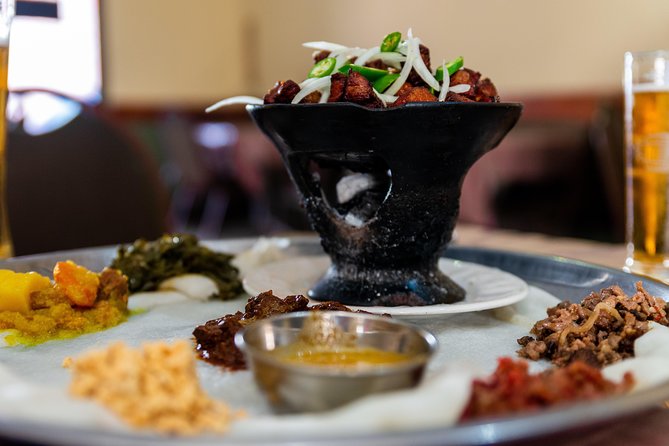
Reviewed · SOUTH AFRICAN FOOD TOURS
Taste of Africa Food tasting Experience
Johannesburg’s Taste of Africa Food Tasting Experience is part food tour, part neighborhood walk, and part street-art outing. In Maboneng, you move through a creative district while sampling dishes from several African countries. In Yeoville, the focus is a highly Afro-cosmopolitan neighborhood shaped by migration from across the continent.
I especially like the chance to eat at small, locally run restaurants rather than polished tourist venues, and I like that guides such as Romeo, Murnendeni, Nsoki, and Angela add local stories to the meal. The main caution is that the food can be inconsistent, and the experience involves plenty of walking over uneven pavement. Some bookings also include fewer food stops or a narrower beer selection than expected.
Key points to know before booking
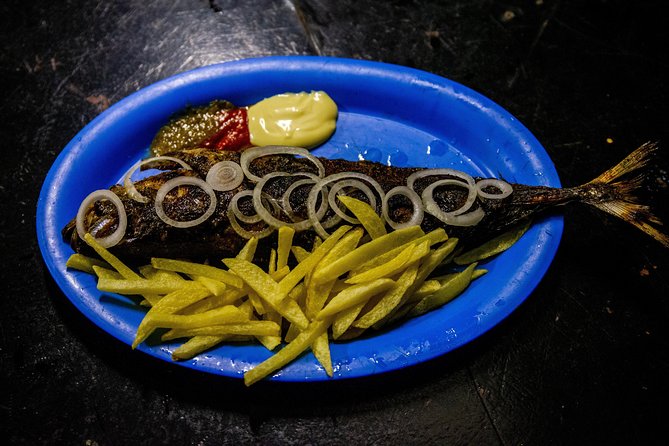
- Four or more African dishes: Depending on the route, you may try South African, Nigerian, Ghanaian, Ethiopian, Zimbabwean, Cameroonian, or Congolese food.
- Maboneng and Yeoville routes: Maboneng departures are listed at noon and 5 p.m.; the Yeoville option begins at 3 p.m.
- Food and street art together: Maboneng adds murals, galleries, graffiti, and neighborhood stories to the tasting.
- Come hungry: Some stops serve portions close to full meals, not tiny sample plates.
- Walking matters: Expect street crossings and uneven pavement, so comfortable shoes are essential.
- Alcohol needs checking: African beer tasting can be added, but confirm exactly which beers are included and what nonalcoholic options are available.
What this Johannesburg food tour is really like
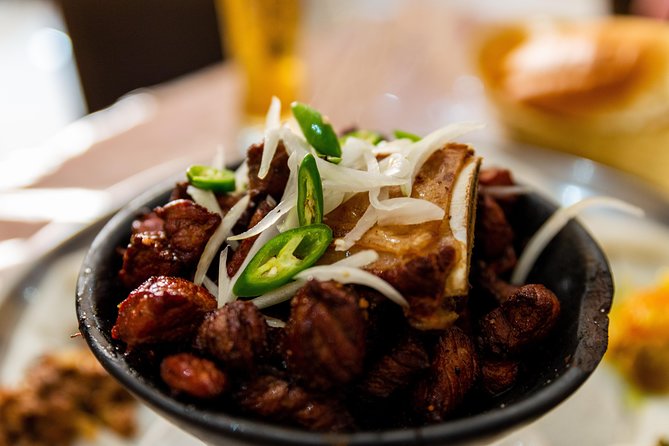
This is not a restaurant-hopping trip built around fancy dining rooms. It is designed to show you everyday African cooking in two Johannesburg districts with strong links to migration, art, and local enterprise. That makes the experience more interesting than a simple list of tastings, but it also means you should arrive ready for ordinary storefronts, informal surroundings, and changing conditions.
The advertised price is about $54.64 per person for roughly three hours. That is fair if you receive four substantial tastings, transport, guiding, and a useful introduction to the neighborhoods. It is less convincing if the tour gives you only three stops, small servings, or a limited beer sample. The value depends heavily on the route, the size of the group, and how much food is served that day.
The group can reach 25 people, though some departures are much smaller. A small group gives you more time to ask questions and makes restaurant stops easier. A larger group may feel less personal, especially in compact local eateries.
Other eating and drinking in Pretoria:
- Cape Town: Malay Cooking Class and Lunch in Bo-Kaap
★ 4.8 · 515 reviews - The Cape Town Essentials Food Tour
★ 5.0 · 385 reviews - Full-Day All Inclusive Safari with Traditional Braai Lunch
★ 4.8 · 345 reviews
Maboneng: food, murals, and a changing district
Maboneng is the most visually engaging option. The neighborhood is known for art, culture, graffiti, and independent businesses, and the walk gives you a look at how people and local projects shape the area. The community itself is central to the experience, not just a backdrop for lunch.
You may spend the opening part of the tour hearing about the district and examining murals before sitting down to eat. This can surprise people who expect food right away. One route reportedly took about 45 minutes to reach the first meal, so do not assume the opening walk means you have been placed on the wrong tour.
The street art is a real strength. Guides including Romeo have been praised for explaining the murals and the surrounding buildings, making the walk more than a series of photo stops. You get context for the district, then see how food from across Africa fits into the daily life of Johannesburg.
The drawback is focus. If you want three uninterrupted hours of eating, Maboneng may feel too art-heavy. If you enjoy public art and city stories, the combination works well. I would choose this route for a first look at Johannesburg’s creative side, especially at the noon or 5 p.m. departure.
Yeoville: a more direct taste of Africa
Yeoville is described as one of South Africa’s most diverse suburbs, with many African nationalities living within a compact area. The neighborhood’s food culture reflects migration into Johannesburg, so the route can introduce you to cooking from countries far beyond South Africa.
The listed Yeoville departure is at 3 p.m. This route is likely the better choice if food is your main goal and you want less emphasis on murals and galleries. The exact restaurants and countries can vary, but the intended spread includes South African, Ghanaian, Nigerian, Cameroonian, Zimbabwean, and Congolese food, along with Ethiopian dishes on some outings.
You should expect a walking tour between food stops rather than a seated tasting in one location. That is part of the point: you see the streets, cross roads, and enter small restaurants where the food is prepared for local customers. The setting may feel less polished than a central dining district, but it can also feel more connected to the neighborhood.
Because the tour area is unfamiliar to many international visitors, arrange transport carefully. The supplied information warns that Uber is not allowed in the area, so you should speak with the host before the start time about pickup and drop-off. Do not wait until the last minute to work out your ride.
The food: four countries, four different experiences
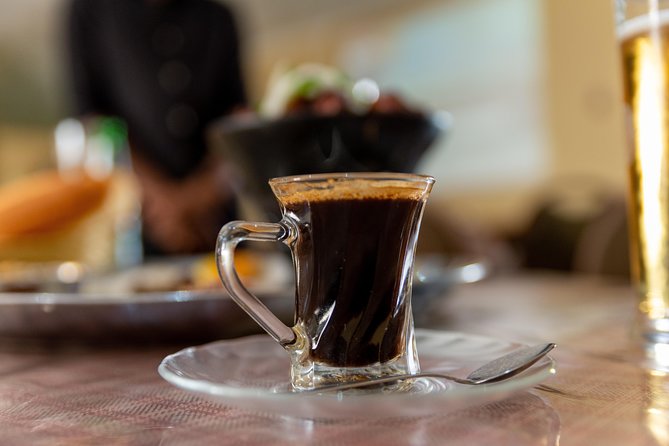
At least four dishes are promised, but the actual mix can change. Possible cuisines include South African, Ghanaian, Nigerian, Ethiopian, Zimbabwean, Cameroonian, and Congolese cooking. That range is the best reason to book: in one afternoon, you can compare several traditions rather than eating one national cuisine in depth.
The tastings may be served at three or four different locations. Some outings have included Nigerian, Ethiopian, Ghanaian, and South African stops. Portions can be generous, with some servings close to full meals. Eat lightly beforehand, but do not expect every course to be a tiny bite.
Ethiopian food may be especially social, with dishes shared and eaten by hand. One account describes a chef showing the group how the food is eaten. That kind of guidance can make an unfamiliar meal easier to understand, although you should feel free to ask questions rather than simply copy the demonstration.
South African food gives the tour a local base, while Nigerian and Ghanaian dishes show the influence of West African communities in Johannesburg. Zimbabwean, Cameroonian, and Congolese options can add further variety when available. Since the route changes, you should treat the country list as a guide to the possible menu, not a guarantee of every stop.
Food quality is not perfectly consistent. Many meals have been described as delicious, fresh, and generous, but some outings have produced mediocre food or dishes that seemed prepared in advance. That is the trade-off of eating at small local businesses rather than a single restaurant with a fixed tasting menu.
Vegetarians have had enough to eat on some departures, but the tour information does not promise a vegetarian menu. If you do not eat meat, have allergies, or follow a strict diet, contact the host before booking and ask what the current route can provide.
Same base, a different kind of day out:
- Soweto Half Day Tour
★ 5.0 · 231 reviews - Johannesburg and Soweto tour
★ 5.0 · 231 reviews - Ultimate Johannesburg Tour
★ 5.0 · 200 reviews - Johannesburg: Pretoria and Cullinan Diamond Mine Tour
★ 4.7 · 165 reviews
Beer tasting and the drink question
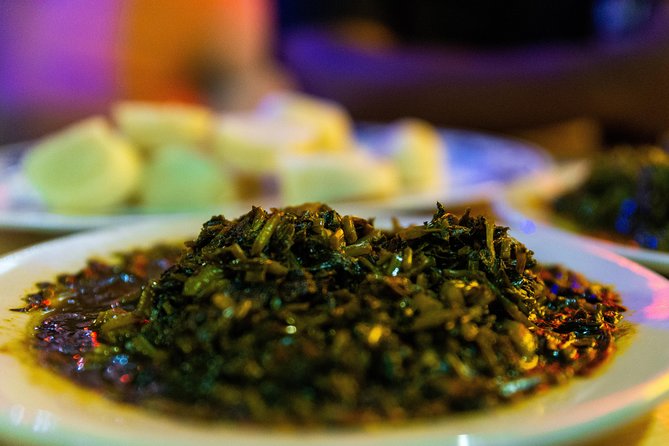
African beer tasting is available as an add-on. This can be a nice way to extend the regional theme, but the wording leaves room for uncertainty about how many beers you receive and which countries they represent.
Some participants received South African beers rather than a broad continental selection. Another account describes two different bottles shared among four people in plastic cups. That may be fine as a small extra, but it does not match the expectations of someone paying for a full beer flight.
If beer matters to you, confirm the details before you pay for the add-on. Ask how many bottles are included, whether each person receives a serving, and which brands or countries are planned. If you do not drink alcohol, also ask what alternative drink is available. The food tour itself does not depend on alcohol, and a nonalcoholic option should be clarified in advance.
The guides make the difference
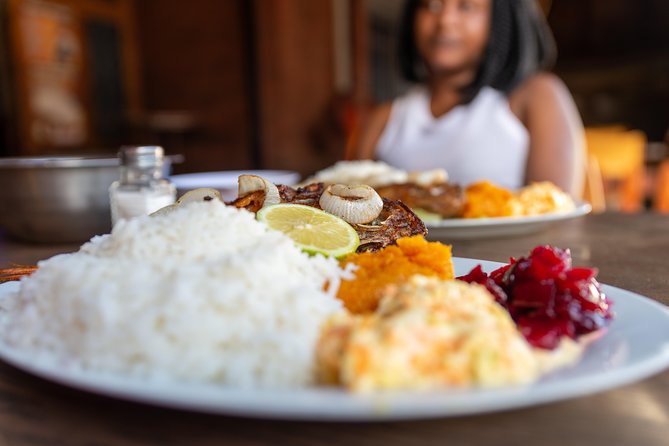
The guide can shape this experience as much as the food. Romeo has been singled out for his explanations of Maboneng’s history and murals. Murnendeni has been praised for describing the dishes clearly, while Nsoki and Angela have also been associated with friendly, personal outings.
A strong host helps you understand why the restaurant is part of the route, how a dish is traditionally eaten, and what you are seeing between meals. The best version of this tour feels like a conversation with someone who knows the neighborhood, not a formal lecture.
Pickup and communication have generally been useful features, but arrival arrangements need care. One problematic booking involved confusion at the meeting point and an unidentified guide, while other accounts describe smooth pickup and a helpful driver named Junior. You can reduce this risk by confirming the driver’s name, phone number, exact meeting point, and pickup time before the day of the tour.
The stated pickup time may be earlier than the tour start. One booking involved a driver arriving 30 minutes before the scheduled beginning without that change being clearly understood. Check the timing directly so you are not left rushing from your hotel.
Walking, safety, and comfort
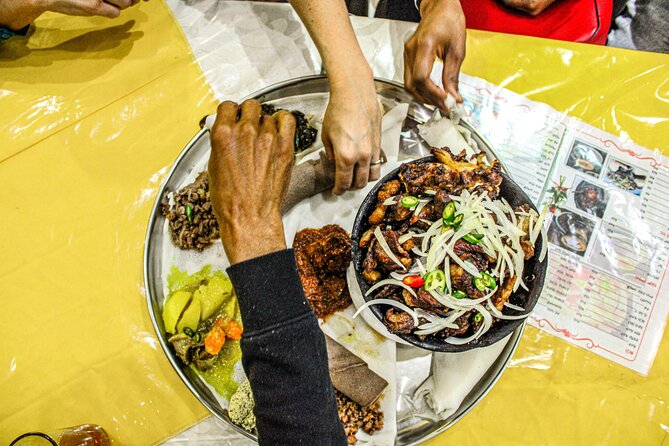
This is a walking experience in active city neighborhoods. You will cross streets, use uneven pavement, and move between restaurants. Comfortable walking shoes are more important here than stylish footwear.
The route is suitable for most people, but the uneven ground may be tiring if you have mobility limitations. The tour information does not promise step-free access or a pace tailored to individual needs, so ask the provider before booking if that matters to you.
The neighborhood setting is part of the appeal, but it also means the meeting point may not look like a traditional tour office. One arrival took place while the meeting area was under construction, which created uncertainty at first. A clear meeting instruction and a phone contact are useful safeguards.
The maximum group size is 25. That is manageable for a city walk, but the experience will feel very different with four people than with a full group. If you prefer close conversation and quick movement between eateries, a smaller departure is preferable.
Is $54.64 a fair price?
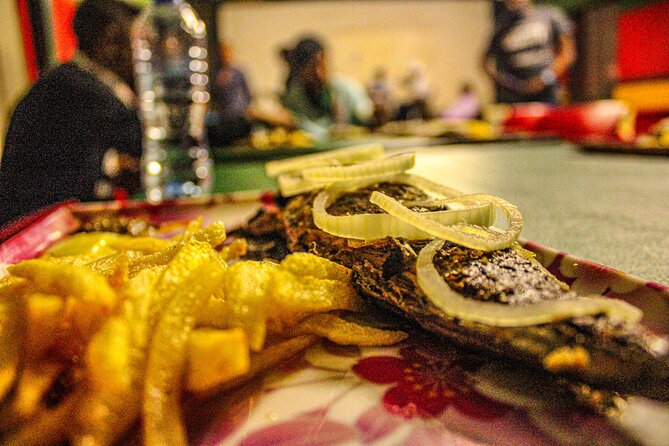
At $54.64, the tour is not the cheapest way to eat in Johannesburg. Local food can cost less if you order directly, and you could explore one neighborhood on your own. The fee pays for more than the dishes: it covers a host, the route planning, introductions to several cuisines, and pickup and drop-off when arranged.
I think the price works when you value interpretation and variety. Four substantial tastings across several African cuisines can easily replace a meal, while the neighborhood walk adds another layer. It is also useful early in a Johannesburg visit because you can learn which foods and areas you want to explore later.
The price feels high if you mainly want a carefully designed tasting menu, guaranteed dishes, or a polished restaurant setting. The route can include only three restaurants, and the quality or portion size may vary. Think of it as a guided neighborhood food outing, not a formal culinary class.
The experience is often booked well ahead, with bookings averaging about 40 days in advance. That does not mean you must reserve that early, but it is sensible to plan ahead if your dates are fixed.
Who should book this experience?
You are a good match if you like trying unfamiliar food, enjoy walking through city neighborhoods, and want art and local stories alongside your meal. It suits curious eaters who would rather visit small independent restaurants than stay inside a hotel or international chain.
It is also a good choice for a first Johannesburg visit. The guide gives you an introduction to Maboneng or Yeoville, and the food can help you understand how migration has shaped the city’s dining culture.
You may want another option if you need guaranteed dishes, dislike uneven pavements, want a quiet seated meal, or expect a wide beer flight. The tour is also less suitable for strict dietary needs unless the host confirms the menu in advance.
Free cancellation is available up to 24 hours before the start time. Inside that window, the fee is not refunded, and changes are not accepted. If the minimum number is not reached and the operator cancels, you are offered another date or experience, or a full refund.
Should you book the Taste of Africa Food Tasting Experience?
Book it if you want a cross-continental food sampler with a real neighborhood walk. The strongest version gives you four generous tastings, a personable guide, excellent street art, and a useful introduction to Johannesburg’s African communities.
Go in with flexible expectations. The restaurants are informal, the route can change, the first food stop may take time, and the beer add-on needs clarification. Confirm transport, ask about the current menu, wear good walking shoes, and arrive hungry. With those points settled, this is a worthwhile way to see Johannesburg through food rather than from a tour bus window.
FAQ
Where does the Taste of Africa Food Tasting Experience take place?
The experience is offered in Yeoville and Maboneng, two Afro-cosmopolitan areas of Johannesburg. The tour summary lists Pretoria as the location, so confirm the exact pickup and meeting area before booking.
How long does the experience last?
The experience lasts approximately three hours.
What time does the tour begin?
Maboneng departures are listed at noon and 5 p.m. The Yeoville departure is listed at 3 p.m.
How many dishes are included?
Each food tasting includes at least four dishes. The exact countries and restaurants can vary by route and day.
Which cuisines might I try?
Possible cuisines include South African, Ghanaian, Nigerian, Cameroonian, Zimbabwean, Congolese, and Ethiopian food.
Is pickup available?
Yes. Pickup and drop-off are listed as included, but you should arrange the exact details with the host in advance.
Can I add an African beer tasting?
Yes, African beer tasting can be added to the booking. Confirm the number and type of beers included, since the selection may focus on South African beer.
How many people can join the tour?
The maximum group size is 25 people.
Can I cancel for a full refund?
You can cancel at least 24 hours before the experience for a full refund. Cancellations or changes made within 24 hours are not refunded or accepted.
More food to try in Pretoria
- Johannesburg: Local Food Tasting Guided Walking Tour
★ 4.7 · 192 reviews - The 10 Tastings of Cape Town With Locals: Private Food Walking Tour
★ 4.5 · 169 reviews - African Food and Storytelling Tour Cape Town City Centre
★ 5.0 · 61 reviews - Cape Town: Essential Food and Drink Tour
★ 4.9 · 56 reviews
More eating and drinking in Pretoria
- Hartbeespoort Dam: The Luxury Alba Boat Cruise with Food
★ 3.9 · 81 reviews - Cape Town: Full-Day Winelands Tour with Wine Tastings & Food
★ 4.9 · 1,288 reviews - Hartbeespoort: 2-Hour Dam Cruise with South African Food
★ 4.4 · 621 reviews - From Cape Town: Winelands Full Day Tour and Wine Tasting
★ 4.5 · 364 reviews
Just added in Pretoria
- Pretoria: Pretoria City and Lion Park Tour★ 4.8 · 41 reviews
- Pretoria: Half-Day City Tour with Hotel Pickup★ 4.2 · 6 reviews
- Pretoria Tour-Voortrekker Monument, Town, Union Buildings★ 5.0 · 3 reviews
- Pretoria half day tour★ 3.7 · 3 reviews
- Pretoria: Pretoria City Tour and Cullinan Diamond Mine Tour★ 4.9 · 24 reviews
- Pretoria Soweto And Johannesburg★ 3.8 · 13 reviews
- Half day Pretoria city tour★ 4.5 · 4 reviews
- From South Africa Joburg: Pretoria City Half Day Tour★ 4.3 · 4 reviews
South African Food Tours, compared.

Full-Day All Inclusive Safari with Traditional Braai Lunch
Read our review →
Addo Elephant Full Day Safari with a Traditional South African Braai (BBQ) Lunch
Read our review →
Browse the lists this tour appears in