
Reviewed · BO-KAAP TOURS
Cape Town: City Bowl, Bo-Kaap, and Langa Township Tour
Cape Town’s most useful city tour is not just a roll call of sights. This experience connects Bo-Kaap’s painted houses and old architecture with Langa’s apartheid history, township life, local art, food, music, and community work. You finish with a better sense of how the city’s past still shapes its neighborhoods.
I like the direct contact with local life and the chance to hear from a guide such as Banele or Subusiso, both praised for clear, patient explanations. I also like the modest $28 price for 150 minutes of guiding, cultural activities, and a food tasting. The main caution is that the route details are not perfectly clear: Guga S’thebe in Langa is listed as both the start and finish, while the description also promises City Bowl and Bo-Kaap.
Key points at a glance

- Guga S’thebe is the meeting point: The stated start and finish are at this Langa cultural center, so confirm the exact meeting instructions before you go.
- Langa is the main cultural focus: Expect a guided walk, local art and craft stops, food tasting, music or dance, and discussion of life during and after apartheid.
- Bo-Kaap adds architectural color: The route is meant to include its well-known painted houses and Cape Malay cultural setting, though the exact timing is not stated.
- Guides make the difference: Banele and Subusiso are praised for being friendly, patient, and able to answer questions with local insight.
- The tour runs for 150 minutes: That is enough time for a strong introduction, but not for a slow, detailed survey of every neighborhood.
- Bring walking basics: Wear comfortable shoes, carry water, and use a hat and sunscreen. The walking is described as moderate.
Why this tour gives Cape Town more context
Cape Town can be easy to admire from a lookout or waterfront promenade. It is harder to understand. The city’s architecture, neighborhoods, and social divisions tell a longer story, and this tour tries to connect those pieces in one short outing.
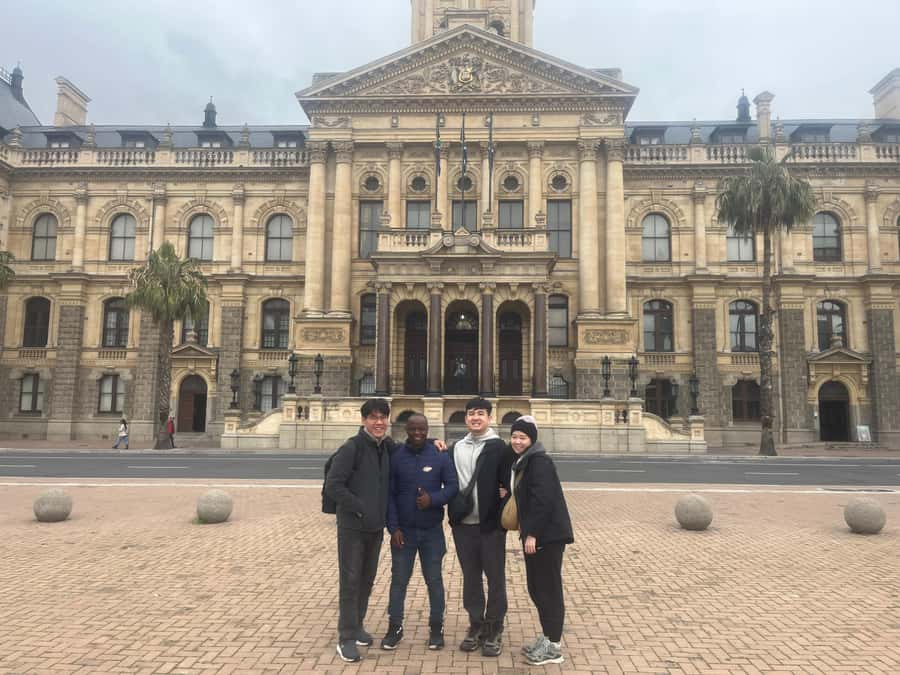
You begin with the city’s built character, including Cape Dutch, Rococo, Art Deco, and British styles. That mix matters because Cape Town is not defined by one period or one visual style. Buildings reflect different eras of settlement, trade, colonial rule, and urban growth.
The tour then turns toward Bo-Kaap and Langa. Bo-Kaap is known for its brightly painted homes and strong Cape Malay identity. Langa offers a different kind of lesson, centered on forced removals, apartheid-era planning, community life, and the changes that followed.
I would not book this expecting a quiet architecture walk with a few photo stops. The value lies in the contrast. You see attractive streets and important buildings, but you also hear how power shaped where people could live and how neighborhoods developed.
More Township Tours in Cape Town
- Half-Day Tour Through Cape Town’s Townships
★ 4.8 · 979 reviews - Cape Town: Guided Township Tour with Hotel Pickup
★ 4.4 · 536 reviews - Cape Town: Nathi Langa Township Walking Tour
★ 4.9 · 493 reviews
Starting at Guga S’thebe in Langa
Guga S’thebe is given as both the starting point and the return point. That is useful if you can reach Langa easily, but it also creates the first practical question: is the City Bowl and Bo-Kaap portion covered before or after the Langa visit, and is transport between areas included?
The supplied details describe a walking tour and list Langa, South Africa as the main stop. They also describe a wider city tour through the City Bowl and Bo-Kaap. Because those details do not fully line up, I would confirm the route before paying, especially if you are choosing this experience to see Bo-Kaap specifically.
Once the tour begins, expect an introduction to Langa and its role in Cape Town. The guide is there to explain the area rather than simply lead you through it. That distinction matters. A local guide can add personal context, explain community projects, and help you understand details that would otherwise be easy to miss.
The walk involves moderate activity. Comfortable shoes are more important than fashionable ones, and a hat, sunscreen, and water are sensible in Cape Town’s strong sun. There is no need to prepare for high altitude, and people with altitude sickness are listed as unsuitable, though the tour information does not explain why that restriction applies.
Langa’s history beyond a photo stop
Langa is the heart of the experience. The tour includes a guided walk through the township and an introduction to its history during apartheid and in the post-apartheid period.
That subject deserves time and care. A short visit cannot explain every part of Langa, but it can give you a starting point. The guide may connect streets, buildings, local projects, and daily routines to the larger story of segregation and forced separation.
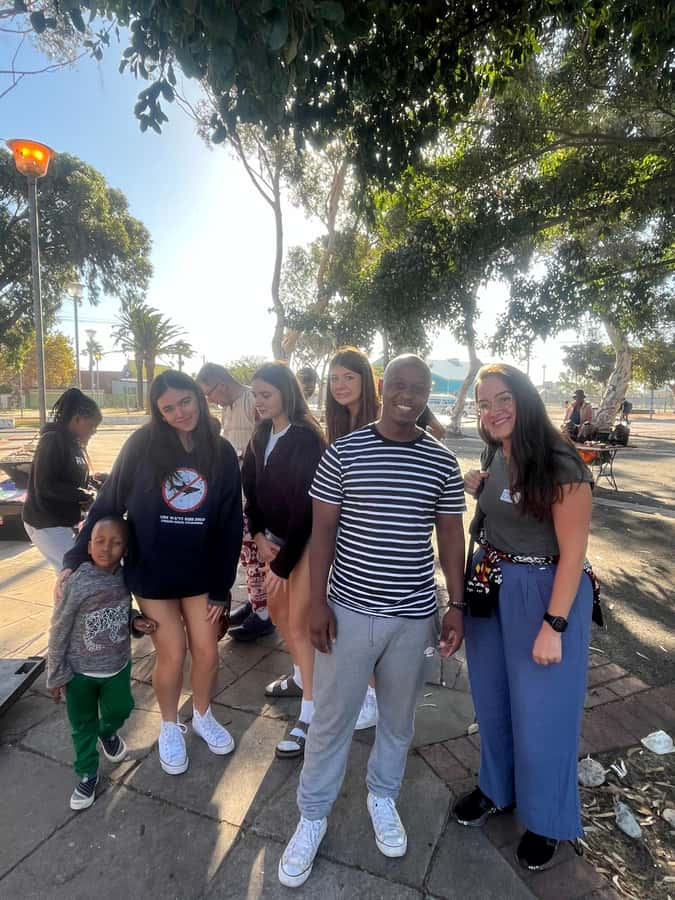
I especially value the promise of meeting local residents and learning about ordinary life. This helps keep the tour from becoming a one-sided history lesson. You are not only hearing about political events. You are also being introduced to the people, businesses, artists, and community groups shaping Langa now.
The tone matters here. A township visit can feel uncomfortable if treated like a spectacle. This tour is better suited to you if you approach it with respect, listen carefully, and ask questions without treating people’s homes or daily lives as scenery.
Photography is included as an opportunity at key points, but that does not mean you should photograph everyone you see. Ask permission before taking pictures of residents, performers, vendors, or children. A good guide can help you understand what is welcome.
Local food, music, and handmade work
The experience includes a tasting of traditional dishes, along with a brief stop at local cafes or shops. Meals and drinks are not included unless specifically stated, so treat the food tasting as a small sample rather than a full lunch.
This is a useful part of the visit because food can explain place in a way that dates and political terms cannot. A local dish, a cafe, or a shop gives you a simple point of contact with everyday life. If you are hungry, eat beforehand and bring water.
You also have the chance to hear local music and dance traditions. The program may include a cultural performance or a music session with local artists. The word may matters here: the information promises the opportunity, but does not guarantee a particular performer or style on every departure.
Local art and craft markets are another stated stop. You can browse handmade souvenirs and buy directly from artisans. That is more meaningful than picking up a generic item at an airport, though you should still buy only what you genuinely want. The $28 price does not include purchases.
Community projects and initiatives are also part of the visit. These stops can show how residents are responding to local needs and creating opportunities. The exact project is not named, so the content may vary. Ask your guide what the project does and how visitors can support it responsibly.
Other neighbourhood walks in Cape Town:
- Cape Town: Malay Cooking Class and Lunch in Bo-Kaap
★ 4.8 · 515 reviews - Cape Town Walking Tour: Bo-Kaap & City Highlights
★ 4.8 · 161 reviews - Bo-Kaap: Walk with a local
★ 5.0 · 131 reviews - Cape Town: Cape Malay Cooking Class in Bo-Kaap
★ 4.8 · 120 reviews
Bo-Kaap and Cape Town’s changing architecture
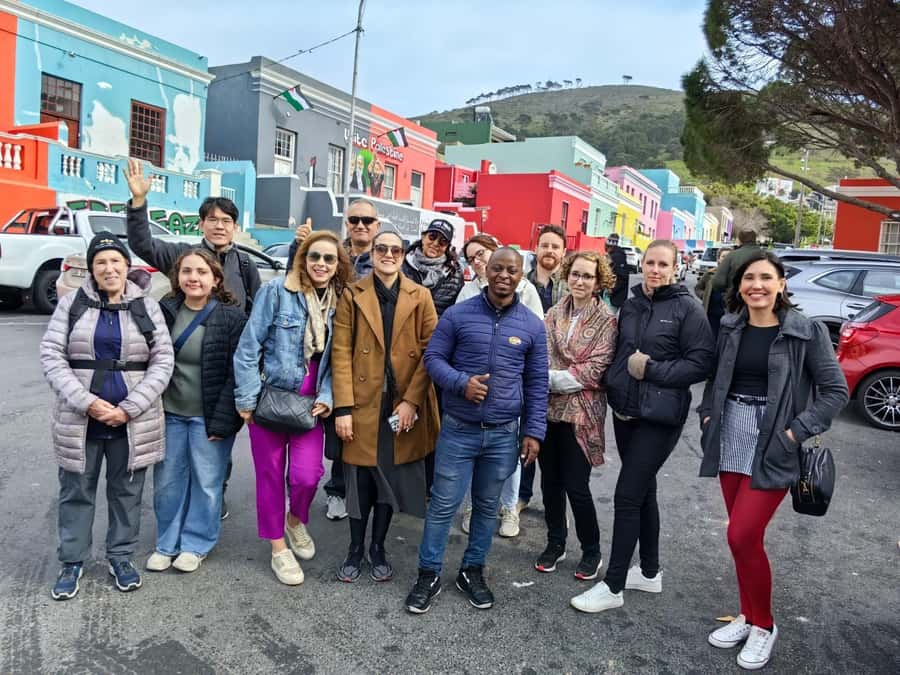
Bo-Kaap brings a different mood and a different visual language. Its brightly painted houses make it one of Cape Town’s most recognizable areas, but the neighborhood is more than a backdrop for photographs.
The tour introduces Bo-Kaap as part of Cape Town’s cultural story. You can expect to learn how the area connects to the city’s past and to see its distinctive streets and homes. The architectural discussion also includes Cape Dutch and Rococo styles, as well as Art Deco and British influences elsewhere in the city.
That range is useful if you want more than a quick look at colorful facades. Your guide can help explain why a building looks the way it does and what period or influence it represents. Still, keep your expectations in proportion. The total tour lasts 150 minutes, so this will be an introduction, not a full architectural survey.
The route description repeats City Bowl, Bo-Kaap, and Langa, but the practical itinerary names Guga S’thebe and Langa most clearly. I would ask two direct questions before booking: Is Bo-Kaap visited in person, and how do you move between the City Bowl and Langa? That small check can prevent disappointment.
What the guides add to the experience
Guide quality is especially important on a tour like this. Banele is described as kind, thorough, available for questions, and pleasant to spend time with. Subusiso is praised for taking time to explain things and for knowing the local area and its people.
Those details point to the kind of guide you need here. The best guide is not simply someone who recites dates. You want someone who can explain sensitive history plainly, answer questions, and help you meet the community in a respectful way.
The tour is conducted in English. If you want a conversation rather than a scripted walk, use the question time well. Ask how apartheid affected the area, what has changed since then, and how local projects work today. The supplied information does not promise a particular guide, so Banele or Subusiso may not lead every departure.
The six available ratings are all five out of five, but the sample is small. I would treat that as encouraging evidence about the guides, not as proof that every departure will be identical. Timing, the guide assigned, and the exact community stops can affect the feel of a short tour.
Is $28 a fair price?
At $28 per person, this is reasonably priced if you want a guided introduction to Cape Town’s social history and Langa’s culture. The cost covers a local guide, a 150-minute experience, the township walk, cultural landmarks, a food tasting, and the chance to see music, crafts, and community work.
The value is strongest if you would otherwise visit these areas without context. A self-guided walk may show you the houses and streets, but it will not necessarily explain the history or connect you with local initiatives.
There are limits. Hotel pickup and drop-off are not included, meals and drinks are generally extra, and handmade goods cost more. If the route requires you to arrange your own transport between central Cape Town and Langa, add that time and cost to your plans.
For a short cultural tour, I think the price works. It is not a full-day excursion or a sightseeing bus tour, and it should not be judged by how many landmarks it checks off. You are paying for access, interpretation, and local contact.
Who will enjoy it most
I would recommend this for you if you want to understand Cape Town beyond its postcard views. It suits first-time visitors who want a guided introduction, repeat visitors seeking a different side of the city, and anyone interested in architecture, apartheid history, local food, and community work.
It is also a good choice if you prefer a small-scale walking experience to a large coach tour. The available information does not state the group size, so do not assume a private tour. Still, the format encourages questions and personal exchange.
You should think twice if you want a relaxed, purely scenic outing. The subject matter can be serious, and the tour asks you to pay attention to social history and present-day realities. It also involves moderate walking and may not suit anyone who needs a fully accessible route.
There is conflicting accessibility information. One section says the activity is wheelchair accessible, while another says it is not wheelchair accessible. Since the tour includes walking through Langa and the details do not resolve the contradiction, contact the provider before booking if you use a wheelchair or have limited mobility.
Practical details for a smooth visit
Wear comfortable walking shoes and bring a hat, sunscreen, and water. A camera is useful, but use it with care and ask before photographing people.
The tour lasts 150 minutes and is led in English. Starting times depend on availability. You can cancel up to 24 hours in advance for a full refund, and the reserve-now, pay-later option can help if your schedule is still changing.
The age restriction says the activity is not suitable for people over 95 years. It is also listed as unsuitable for people with altitude sickness. Since that latter restriction is unusual for a Cape Town city tour and no explanation is provided, ask the provider if it concerns you.
Should you book this Cape Town tour?
Book it if you want a short, affordable introduction to Cape Town’s neighborhoods, architecture, and social history, with Langa as the main point of contact. The strongest reasons are the local guiding, the chance to hear from residents, and the mix of food, music, crafts, and community projects.
Before booking, confirm the route from Guga S’thebe, especially how much time is spent in Bo-Kaap and the City Bowl. If you are comfortable with moderate walking and an honest look at Cape Town’s past and present, this tour offers more substance than a standard landmark checklist.
FAQ
Where does the tour start?
The stated starting location is Guga S’thebe in Langa, South Africa.
Where does the tour finish?
The tour is listed as returning to Guga S’thebe.
How long does the tour last?
The tour lasts 150 minutes.
What language is the tour conducted in?
The live tour guide conducts the experience in English.
Is hotel pickup included?
No. Hotel pickup and drop-off are not included.
Is food included?
A tasting of traditional dishes is included, but meals and drinks are not included unless specifically stated.
What should I bring?
Bring comfortable shoes, a hat, sunscreen, water, and a camera.
Is the tour wheelchair accessible?
The information is conflicting. One section says it is wheelchair accessible, while another says it is not. Contact the provider before booking to confirm the current conditions.
Can I cancel for a refund?
Yes. You can cancel up to 24 hours in advance for a full refund.
Just added in Cape Town
- Wine Tasting in Cape’s Top Three Winelands Private Tour★ 4.5 · 17 reviews
- Private Tour to Aquila Game Reserve in Cape Town – see the Big5★ 5.0 · 5 reviews
- Private Tour:Cape of Good Hop>Seal island>Chapman’speak &Penguins★ 5.0 · 7 reviews
- Full Day Big 5 Aquila Safari Private Transfers Including Park Fee From Cape Town★ 4.5 · 54 reviews
- Robben Island and Table Mountain Cableway with Bo-Kaap Day Tour★ 5.0 · 8 reviews
- Private Full Day Cape Town City Scenic and Table Mountain Tour.★ 5.0 · 3 reviews
- Private Half DayTour:Cape Winelands, Stellenbosch from Cape Town★ 5.0 · 18 reviews
- Tastes of Stellenbosch Wine Full Day Tour with Private Transfer★ 5.0 · 7 reviews
Bo-Kaap Tours, compared.
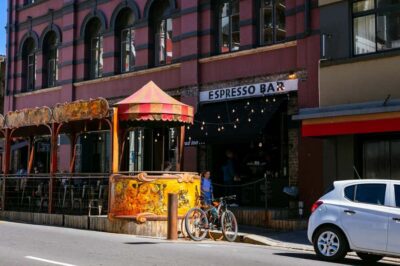
Cape Town Walking Tour: Bo-Kaap & City Highlights
Read our review →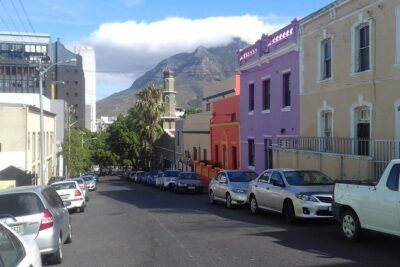


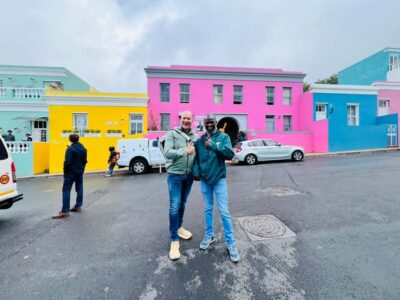

Cape Town Township Tour Including Langa Township and Bo-Kaap
Read our review →
Browse the lists this tour appears in