
Reviewed · SOUTH AFRICAN FOOD TOURS
Cape Town: Authentic African Cuisine Cooking Experience
The best part of this Cape Town cooking class is that you do not just sit down to eat African food. You help make it, learn why the dishes matter, then share the meal with Florence, Caleb, and the other cooks in the easygoing style of an African home. I like the family recipes passed down through generations, and I like that every person gets a real task rather than watching a demonstration from the sidelines. The main consideration is that the meal has no dessert, and the food includes meat unless you request a vegetarian or vegan option.
I also like the welcome drinks, the small-group limit of 10, and the chance to eat with your hands after the cooking is done. The separate room beside Pahari African Restaurant gives the session a private, relaxed feel, though you should expect to get your hands messy and spend two and a half hours focused on food, conversation, and shared work.
Key points to know before booking
- Cook five substantial dishes: You help prepare Sadza, chicken stew, chakalaka, sugar beans, and meaty beef bones with green vegetables.
- Meet Florence and Caleb: Florence learned to cook from her mother, while she and her husband have worked in food service for two decades.
- Start with African drinks and snacks: African juice, beer, tea, coffee, and starter bites are included.
- Hear the story behind the food: The class explains ingredients, customs, and how recipes changed as they passed through families.
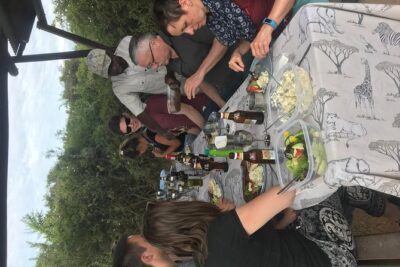
- Share the finished meal communally: The cooking ends around a large table, with food traditionally eaten by hand.
- Plan for a small, English-language class: The group limit is 10, and private bookings can sometimes happen when fewer people reserve.
Meeting Florence at Pahari African Restaurant
You arrive at Pahari African Restaurant and ask for Florence. The cooking experience takes place in a separate room next to the restaurant, so this is not a market tour or a lesson inside a busy professional kitchen. It is a focused food session built around conversation and participation.
Florence is a co-owner of the restaurant and learned to cook from her mother at an early age. The recipes used in the class have been passed through her family, giving the meal a personal connection that you do not get from a generic cooking demonstration.
Her husband, Caleb, has worked with her in food service for two decades. Together, they bring two useful sides of the experience: the practical work of preparing a meal and the wider story of African food, ingredients, and customs.
The class is conducted in English. Since the group is limited to 10 people, you should have a better chance to ask questions and take part in each stage of the cooking. A small group also suits anyone who wants a social evening without the noise and hurry of a large restaurant event.
Other eating and drinking in Cape Town:
- Cape Town: Malay Cooking Class and Lunch in Bo-Kaap
★ 4.8 · 515 reviews - The Cape Town Essentials Food Tour
★ 5.0 · 385 reviews - Cape Town: V&A Waterfront Gin Voyage Cruise
★ 4.6 · 238 reviews
African drinks and starter snacks begin the lesson
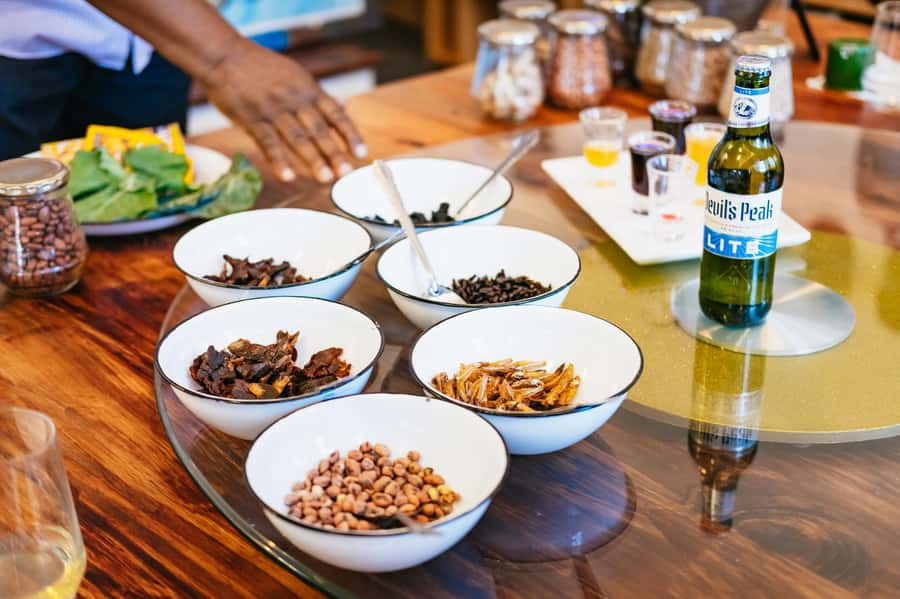
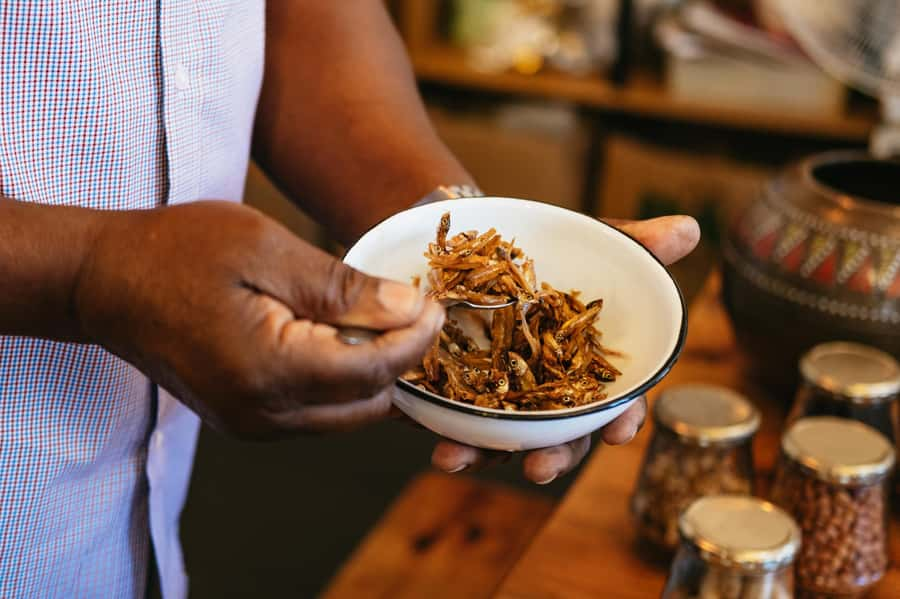
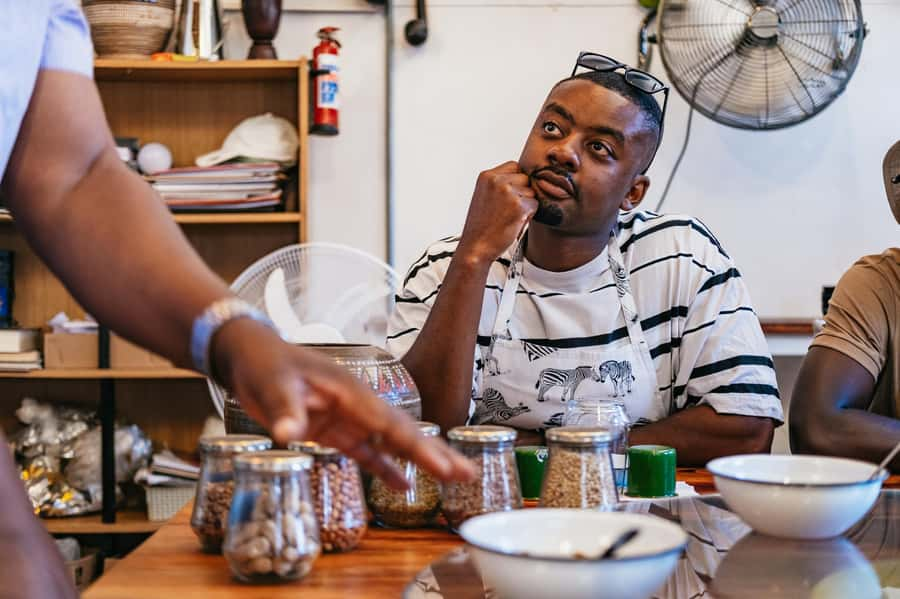
The welcome is part of the experience, not just a quick introduction before the cooking starts. You can choose from African juice and African beer, with African tea or coffee served at the end. Starter snacks are also provided before the main cooking begins.
The snacks can be a chance to try something well outside your usual restaurant order. One class included caterpillars and termites among the early bites, and they were described as surprisingly tasty. You should see this as an optional moment of curiosity rather than the main point of the meal. The class is about a full range of African food, and some ingredients may be unfamiliar.
This opening also gives Florence and Caleb time to talk about food customs and local ingredients. That matters because the recipes make more sense when you know how people shop, cook, share food, and adapt dishes over time.
If you are cautious about unusual foods, you can still enjoy the class without treating every snack as a test of bravery. The main dishes include familiar forms of stews, beans, vegetables, and ground maize, even though the seasoning and method may differ from what you know.
What you cook: Sadza, stews, greens, and beans
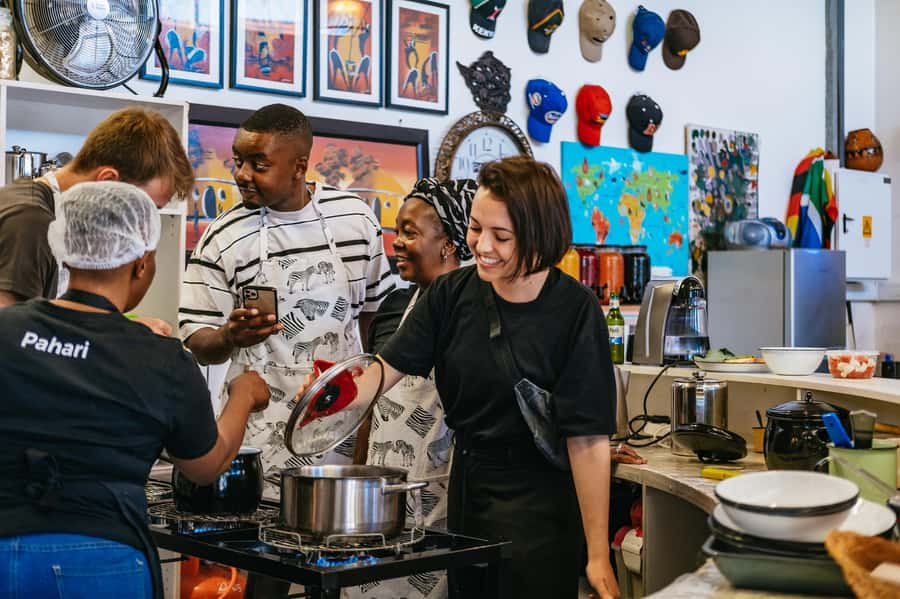
The main part of the class is hands-on. You help cook the dishes served at Pahari African Restaurant, with Florence and the kitchen team showing you each step.
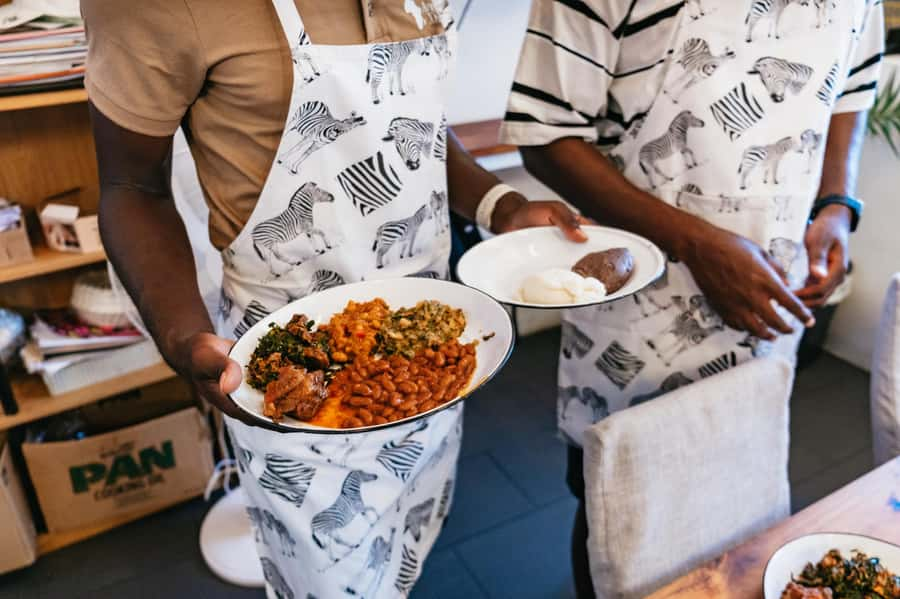
The menu includes:
- Sadza, made from ground mealie meal
- Chicken stew
- Meaty beef bones mixed with green vegetables
- Chakalaka
- Sugar beans
Sadza is the foundation of the meal. Made from ground mealie meal, it is a filling staple and an important part of the class because it shows how a simple base can carry the rest of the plate. You are not simply handed a serving at the end. You learn how it is prepared and how it fits with the stews and vegetables.
The chicken stew brings a familiar format, but the class puts it into an African food setting. You can follow the process from preparation to the finished dish, then taste it alongside the other parts of the meal.
The beef bones with green vegetables offer a different texture and a stronger connection to traditional, practical cooking. This is food built around using ingredients fully and making a hearty meal for sharing. If you prefer leaner or meat-free food, tell the hosts when booking or arriving so the vegetarian and vegan options can be arranged.
Chakalaka adds a vegetable-based dish with its own character, while sugar beans bring another filling, straightforward element to the table. The balance of maize, meat, vegetables, and beans means you are learning a complete meal rather than one isolated recipe.
The food is described as using local and organic ingredients where possible. You should not expect a formal culinary-school lesson with technical terms and restaurant plating. The value is in learning a home-style meal that you can understand well enough to prepare again.
The history behind the recipes
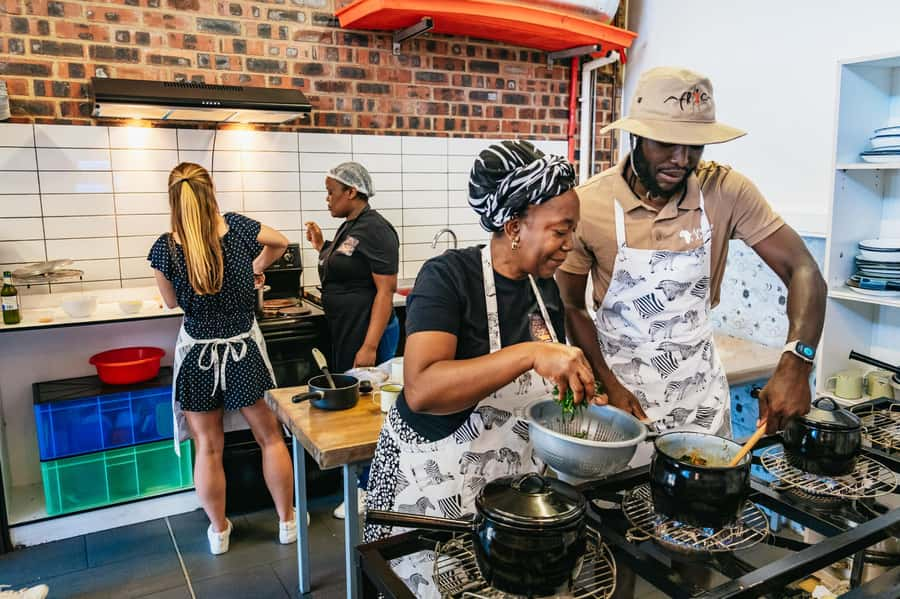
A useful feature of this experience is the explanation that comes with the cooking. Caleb discusses the origins of ingredients and the history of traditional African cuisine, while the hosts explain how recipes have changed as they moved from one generation to the next.
That context helps you avoid treating Sadza, chakalaka, or sugar beans as random menu items. You see how food can carry family memory, daily habits, local produce, and social customs all at once.
The recipes are not presented as frozen museum pieces. They have evolved over time, which is an important point for anyone who wants to understand African food beyond the word traditional. Families adjust dishes according to what is available, what people prefer, and what has been learned over years of cooking.
Florence and Caleb also enjoy hearing about the foods you know. That makes the class conversational rather than one-sided. You can expect the cooking to be paired with questions about culture, eating habits, and the ways food connects people.
Other classes where you do the cooking in Cape Town:
- Authentic African Cuisine Cooking Experience
★ 5.0 · 236 reviews - Cape Town: Cape Malay Cooking Class in Bo-Kaap
★ 4.8 · 120 reviews - Cape Town: Bo-Kapp Walking Tour and Malay Cooking Class
★ 4.7 · 105 reviews - Private Cape Malay Cooking Class in Cape Town with a Local Family
★ 5.0 · 24 reviews
Sharing the meal around the table
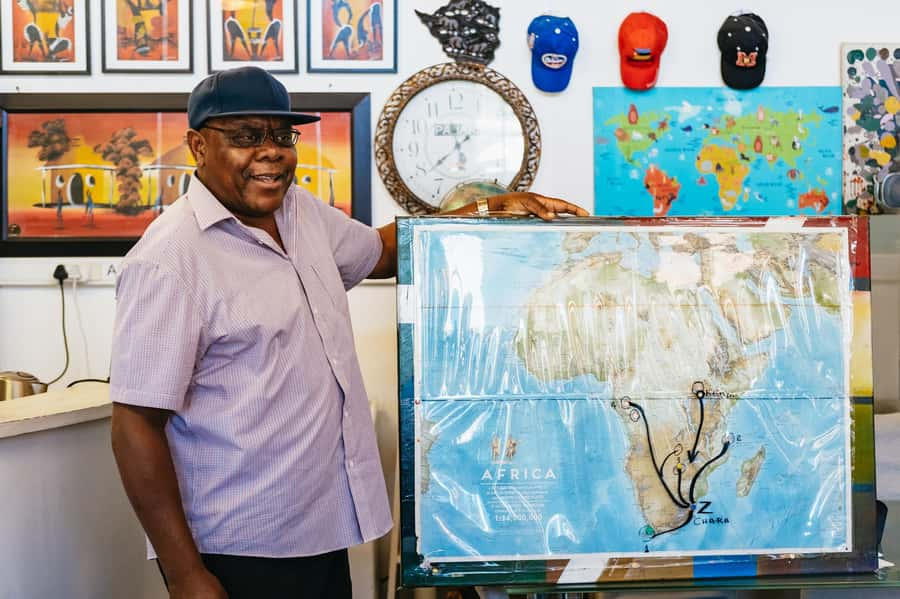
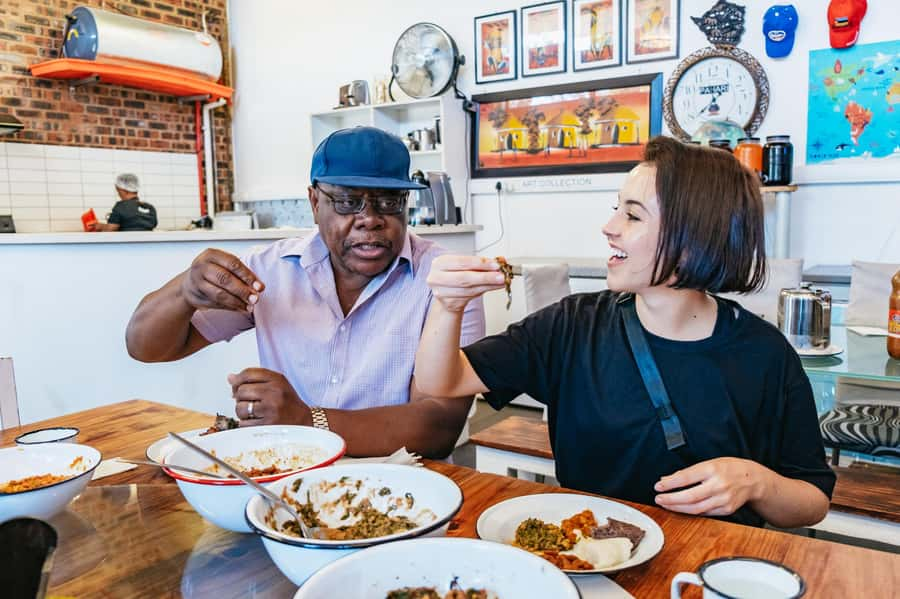
Once the dishes are ready, you eat together. The meal is served communally, following the style of sharing food in an African home.
This is where the class becomes more than a recipe lesson. You have worked on the food, so the final meal has a direct connection to what you just learned. It also gives you time to talk with the hosts and other participants rather than rushing away after the last cooking step.
The meal may be eaten by hand, which is part of the custom being presented. You can expect a little awkwardness if you are used to a knife and fork. That is normal, and it is part of the fun. The point is not to perform perfectly. It is to understand another way of eating and sharing.
The communal format will suit you if you enjoy social meals and cultural exchange. If you want a quiet, private dinner with formal service, this is not the right setting. The experience is designed around participation and company.
The class finishes with African tea or coffee. There is no dessert included, so anyone with a strong sweet tooth should know that the meal ends with a hot drink rather than a final course.
How much value do you get for $71?
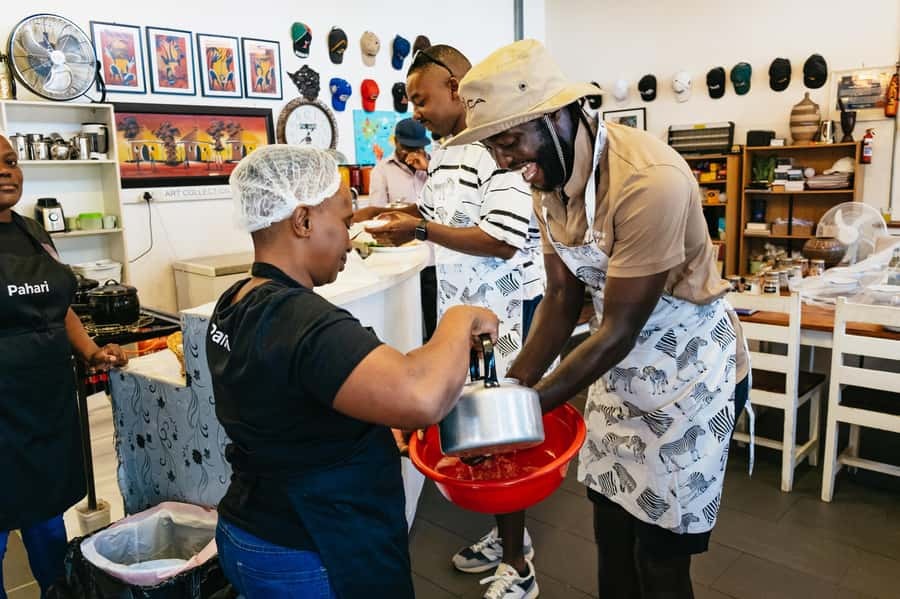
At $71 per person, this is not the cheapest way to eat in Cape Town. You are paying for more than a plate of food, though. The fee covers 150 minutes of instruction, the ingredients, starter snacks, African juice, African beer, tea or coffee, and the finished meal.
The strongest value comes from the combination of food and cultural explanation. A restaurant meal can introduce you to African flavors, but it will not normally show you how Sadza is made, explain how family recipes changed, or let you take part in preparing several dishes.
You also receive a recipe on request, making it possible to repeat the meal at home. That adds practical value, especially if you enjoy cooking and want a useful reminder rather than a one-night memory.
The group limit of 10 helps the price make more sense. You are not paying to watch a large demonstration from the back of a room. You take part, ask questions, and contribute to the meal. When bookings are light, the session may even feel private, although you should not reserve on the assumption that you will have the room to yourself.
I would recommend this experience more strongly for people who value food stories and participation than for anyone seeking a quick tasting. At two and a half hours, it takes a real part of your day. That is a fair trade if you want a slower, more personal introduction to African cooking.
Who will enjoy this cooking class most?
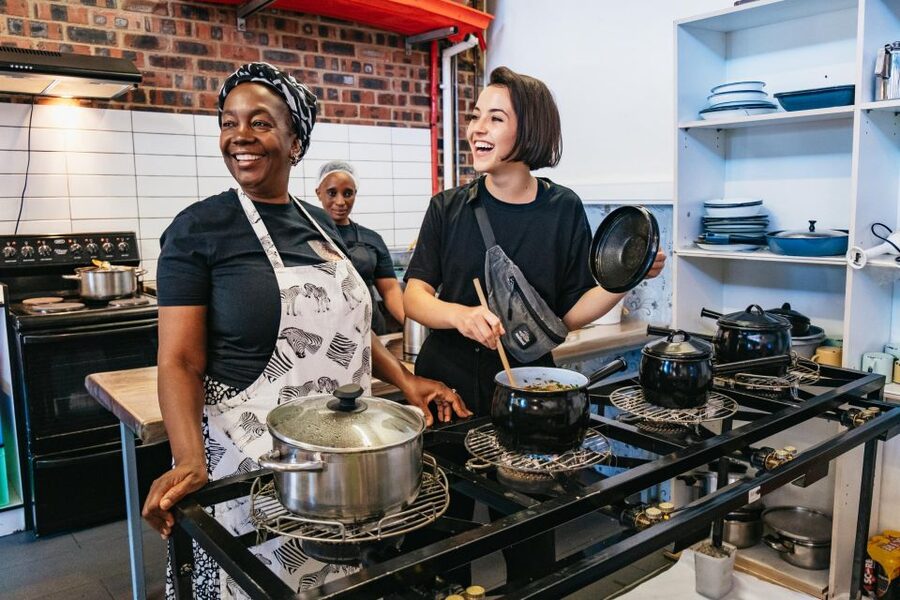
This class is a good fit for couples, families, friends, work groups, and solo visitors who like meeting people through food. The small group format makes it easy to work alongside others, and the shared meal gives the session a natural ending.
It is also well suited to anyone who wants to move past the usual Cape Town sightseeing list. You are not only looking at the city. You are learning how a meal is built, why ingredients matter, and how hospitality works around a shared table.
Vegetarians and vegans can take part because alternatives are available. You should make your needs clear in advance so the hosts can prepare the right menu.
You may want to skip it if you dislike group activities, do not want to handle food, or prefer a polished restaurant meal with no explanation. The cooking is practical and informal. Expect to roll up your sleeves.
Families should also consider the two-and-a-half-hour length. Children who like helping in the kitchen may enjoy it, while those who need constant movement may find the pace slow.
Useful planning details for your Cape Town day
The meeting point is Pahari African Restaurant. Ask for Florence when you arrive. Hotel pickup and drop-off are not included, so you need to make your own way to the restaurant.
The duration is 150 minutes, and starting times depend on availability. Allow enough time in your Cape Town schedule to arrive before the class begins, since joining a cooking session late can make it harder to follow the sequence of dishes.
English is the teaching language. The group can include up to 10 participants, and the experience is offered in a separate room beside the restaurant.
You can reserve now and pay later, which helps if your Cape Town plans are still changing. Cancellation is free up to 24 hours before the activity for a full refund. Those terms are useful, but the bigger planning question is simple: can you spare an uninterrupted evening or afternoon for cooking and a shared meal?
My verdict on the Pahari African cooking experience
I would book this class if you want a genuine food-based introduction to African culture and enjoy doing something with your hands. Florence and Caleb bring family knowledge, restaurant experience, and a warm interest in cultural exchange. The food is substantial, the history adds meaning, and the communal meal gives the class a clear purpose.
I would think twice if you want dessert, a formal chef-led lesson, or a short tasting with no group interaction. The meal is centered on savory dishes, and the experience asks you to participate rather than sit back.
For most food-minded visitors to Cape Town, the $71 price is reasonable because it covers instruction, drinks, snacks, dinner, and a recipe you can use later. Book it when you want to understand the meal as well as eat it.
FAQ
Where does the cooking experience take place?
It takes place at Pahari African Restaurant in the Western Cape, Cape Town, in a separate room next to the restaurant.
Who should I ask for when I arrive?
Ask for Florence at Pahari African Restaurant.
How long does the experience last?
The cooking experience lasts 150 minutes.
What food will I cook?
You will learn to prepare Sadza made from ground mealie meal, chicken stew, meaty beef bones with green vegetables, chakalaka, and sugar beans.
Are vegetarian or vegan options available?
Yes. Vegetarian and vegan options are available.
What drinks are included?
The experience includes African juice, African beer, and African tea or coffee. Tea or coffee is served as the concluding hot drink.
Is hotel pickup included?
No. Hotel pickup and drop-off are not included, so you must arrange your own transportation to Pahari African Restaurant.
Just added in Cape Town
- Wine Tasting in Cape’s Top Three Winelands Private Tour★ 4.5 · 17 reviews
- Private Tour to Aquila Game Reserve in Cape Town – see the Big5★ 5.0 · 5 reviews
- Full Day Big 5 Aquila Safari Private Transfers Including Park Fee From Cape Town★ 4.5 · 54 reviews
- Robben Island and Table Mountain Cableway with Bo-Kaap Day Tour★ 5.0 · 8 reviews
- Private Tour:Cape of Good Hop>Seal island>Chapman’speak &Penguins★ 5.0 · 7 reviews
- Private Full Day Cape Town City Scenic and Table Mountain Tour.★ 5.0 · 3 reviews
- Private Half DayTour:Cape Winelands, Stellenbosch from Cape Town★ 5.0 · 18 reviews
- Private Tour: Cape Winelands to Stellenbosch & Franschhoek★ 5.0 · 3 reviews
South African Food Tours, compared.


Full-Day All Inclusive Safari with Traditional Braai Lunch
Read our review →
Addo Elephant Full Day Safari with a Traditional South African Braai (BBQ) Lunch
Read our review →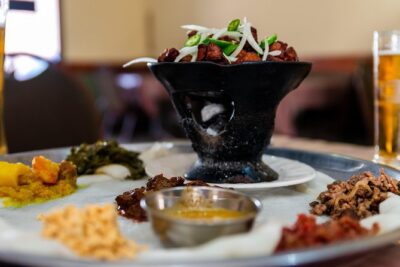
Browse the lists this tour appears in