
Reviewed · CULTURAL VILLAGE TOURS
Lesedi Cultural Village Half-Day Tour
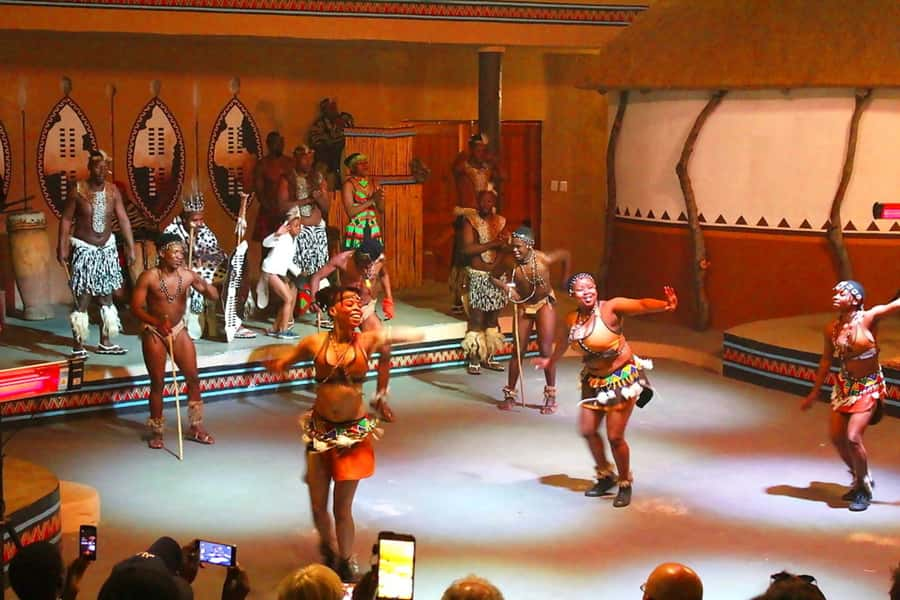
At Lesedi Cultural Village, the most memorable part is the quick change from Johannesburg suburbia to a traditional setting built around the customs of several South African peoples. You move through Zulu, Xhosa, and Pedi traditions, seeing how clothing, music, courtship, and household design differ from one community to another.
I like the small-group limit of 15, which gives the guide a better chance to explain details and answer questions. I also like that the visit ends with African cuisine, rather than stopping at a dance performance and a few photo opportunities. The main drawback is the travel time: about 80 minutes each way by bus, so much of this five-hour outing is spent on the road.
Key points to know before you book
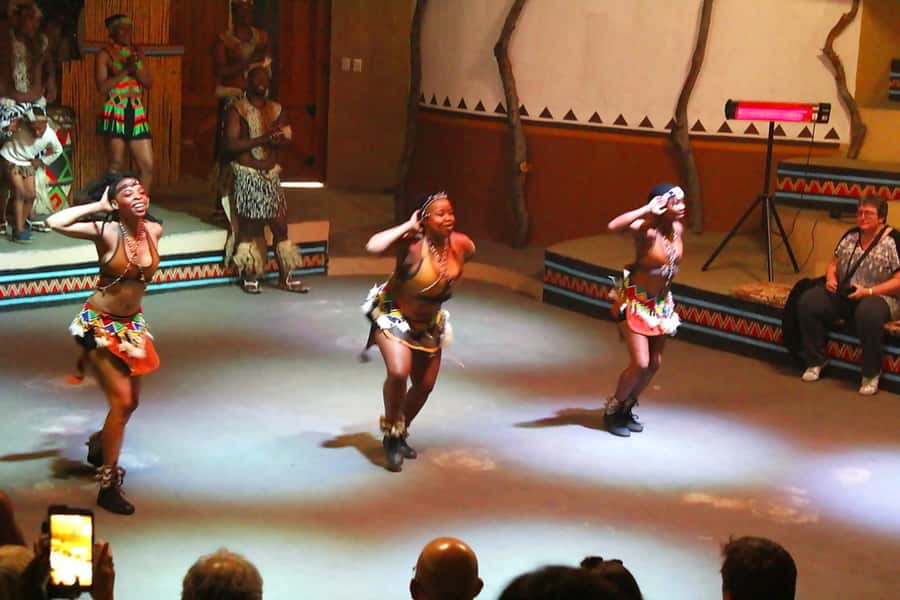
- Three cultural traditions in one visit: Learn about Zulu fighting sticks, Xhosa blankets, and Pedi drums and whistles.
- A full half-day from Johannesburg: Hotel pickup, the ride north, the village visit, and return transport take about five hours.
- Traditional performance included: Expect a Zulu dance presentation as part of the cultural program.
- Small English-speaking group: The group is limited to 15 people, with a live guide and an English audio guide.
- Food is part of the experience: A traditional local meal is included, while alcoholic drinks cost extra.
- Good value for a planned outing: At $183 per person, the price covers transport, entrance, guiding, bottled water, and the meal.
Leaving Johannesburg for Lesedi Cultural Village
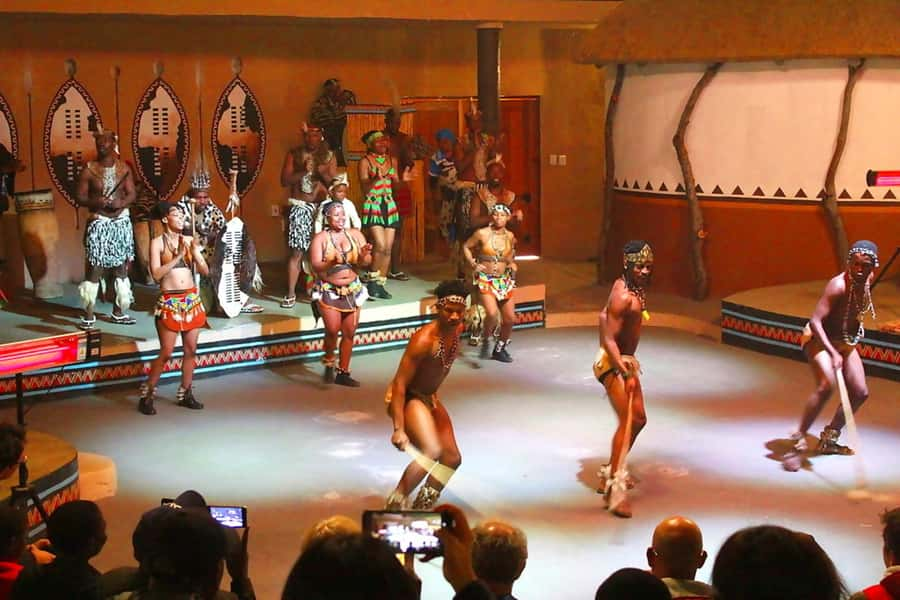
Your morning or afternoon begins with pickup in the lobby of your Johannesburg hotel or accommodation. You are asked to wait there five minutes before the scheduled time, and it is wise to confirm the pickup hour with Africa Moja Tours & Safaris the day before.
The ride takes you through Johannesburg’s leafy northern suburbs. At first, the trip feels like a city transfer. Then the buildings thin out, and the setting becomes more open and rural. The listed drive time is about 80 minutes each way, although the overall description calls Lesedi roughly an hour from Johannesburg. Plan on a substantial road journey either way.
That travel time matters when you judge the price. You are not booking a short city attraction. You are paying for a half-day outing that removes the need to arrange a rental car, find the village yourself, or manage a separate entrance ticket. If your Johannesburg schedule is packed, the road time may feel long. If you want a guided cultural visit without handling transport, it is a useful trade.
Bottled water is included. Sunglasses and comfortable shoes are sensible choices, especially since the visit involves moving around the village rather than sitting in one place.
More Cultural Village Tours in Johannesburg
- Lesedi Cultural Village and Cradle of Humankind Tour
★ 5.0 · 48 reviews - Lesedi Cultural Village Tour
★ 5.0 · 46 reviews - Lesedi Cultural Village
★ 5.0 · 45 reviews
Seeing traditional homesteads in one village
At Lesedi, the mood changes from transport stop to cultural presentation. The village uses homesteads based on historical designs, giving you a physical setting for the customs the guide explains.
You are divided into smaller groups when you arrive. This helps spread people through the different areas and gives each group a closer look at the traditions being presented. The purpose is not simply to walk past buildings. You are shown how cultural identity appears in everyday objects, dress, music, family customs, and social values.
The village presents several South African cultures in one place. That makes the visit easy to follow, particularly if this is your first introduction to the country’s many cultural communities. It also means the experience is a structured overview rather than a visit to a single community in its ordinary daily setting.
That distinction is worth keeping in mind. Lesedi offers a clear and accessible introduction, but it is designed for visitors. You will see arranged presentations and reconstructed or historically styled homesteads, not an unplanned look at private family life. For many people, that structure is a strength because you can cover several traditions in a few hours. Others may prefer a longer visit focused on one community.
Zulu dance and the meaning of the fighting sticks
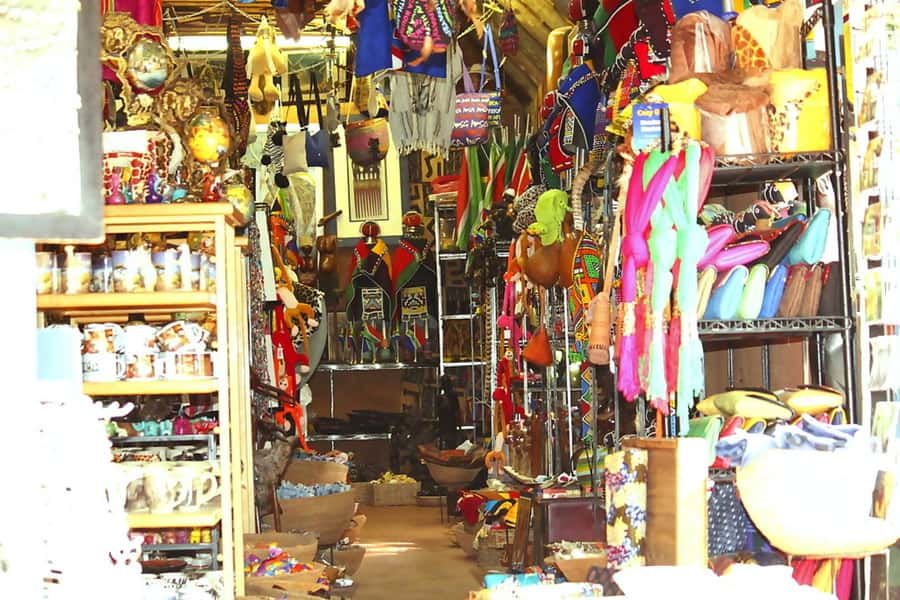
The Zulu portion is one of the major highlights. You see traditional Zulu dance and learn why fighting sticks are important within the cultural presentation.
The dance gives the visit energy, but the explanation around it is just as useful. A performance can become a quick photo stop if nobody explains what you are seeing. Here, the program places the dance within a broader look at Zulu customs and symbols.
The reference to fighting sticks is especially practical because it connects an object to a social idea. You are not only shown an item, you learn why it matters and how it fits into the culture being presented. That kind of context is what makes the visit more worthwhile than a stage show on its own.
You should still expect a visitor-friendly performance rather than a long specialist lecture. The tour is only five hours in total, and that includes the drive from Johannesburg. The guide has to keep the program moving so you can see several cultural groups in the time available.
Xhosa blankets and Pedi drums
The Xhosa section is linked with the distinctive use of blankets. Clothing and textiles are often among the clearest ways to notice cultural differences, and the blankets give you a visual detail to remember after the tour.
The Pedi presentation features drums and whistles. Music helps break up the explanations and gives the visit a stronger sense of place. It also shows that the cultures are not being described only through architecture or household objects. Sound, movement, and performance are part of the program too.
I like this side-by-side format because it gives you points of comparison. You can begin to see that South African culture is not one single set of customs. Zulu, Xhosa, and Pedi traditions are presented as distinct, with their own clothing, instruments, symbols, and social practices.
The tradeoff is pace. You receive a broad introduction rather than a long, quiet conversation about one tradition. If you want depth on a single group, you may leave with questions. If you want a solid first look at several cultures during one Johannesburg outing, the variety works well.
Other cultural villages within reach of Johannesburg:
- Johannesburg: Lesedi Cultural Village Experience
★ 4.6 · 43 reviews - Johannesburg: Cradle of Human Kind & Lesedi Cultural Village
★ 4.6 · 31 reviews - Johannesburg: Lion Park Safari and Cultural Village Tour
★ 4.8 · 12 reviews - Cradle Of Humankind, Lesedi Cultural Village & Lion’s Park
★ 4.7 · 10 reviews
Marriage customs and the cost of dowry
One of the more unusual subjects covered is dowry. You learn how much each group asks for and that payment is made in cows.
This detail brings family and marriage customs into the conversation in a way that is easy to understand. It also helps you see how cattle can carry social and economic importance, rather than being treated as a random detail in a tourist presentation.
The subject may prompt questions about how customs have changed over time, so this is a good moment to listen closely and ask the guide for clarification. The supplied information does not promise a long academic discussion, but it does confirm that dowry is part of what you learn at Lesedi.
That practical focus is one reason this outing can suit first-time visitors. You come away with specific details you can remember: fighting sticks, blankets, drums, whistles, and cattle used in dowry. Those details make a general introduction easier to hold onto.
Finishing with African cuisine
Food comes near the end of the visit. You taste traditional local cuisine before returning to Johannesburg, and this is included in the experience. Alcoholic drinks are not included, so budget separately if you want them.
A shared meal adds something that a performance alone cannot. Food gives you another way to encounter local culture, and it provides a natural pause after the guided presentations. It also makes the outing feel like a complete half-day program rather than a quick visit to a display area.
The exact menu is not specified, so you should not book this expecting a particular dish. If you have strict dietary needs, the available information does not promise special arrangements. The safest approach is to confirm food details with the provider before booking.
Is $183 per person a fair price?
At $183 per person, this is not a low-cost attraction. The value depends on what you need included.
The fee covers hotel pickup and drop-off in Johannesburg, transport, entrance fees, a live English-speaking guide, an English audio guide, bottled water, and the cultural visit with food. You are also getting a small group capped at 15 people. Those inclusions reduce the number of separate arrangements you need to make.
The price makes more sense if you are staying in Johannesburg without a car or if you prefer a planned excursion with a guide. It is less attractive if you are already arranging transport to Lesedi or mainly want a short performance. In that case, the five-hour commitment and long road journey may feel heavy.
The high customer score of 4.7 out of 5 suggests the format works well for many people. One verified booking from Germany described learning a lot about another culture, while a visitor from the United States called it the best experience of the trip. A French-language response praised the experience as both informative and fun. Those reactions fit the strongest features here: clear cultural variety, a lively program, and an easy day from Johannesburg.
Group size, language, and pace
The group is limited to 15 participants. That is small enough to make the visit more personal than a large coach outing, although it does not mean you will have a private tour.
The live guide speaks English, and an English audio guide is also included. If you need another language, the supplied details do not indicate that one is available.
The visit itself lasts about 2.5 hours, followed by roughly 80 minutes of transport in each direction. That breakdown explains the pace. You have enough time to see the homesteads, learn about several traditions, watch dance, and eat, but not enough time for long independent wandering.
You should arrive ready to follow the group schedule. Comfortable shoes matter more than dressy clothes, and sunglasses can help during the outdoor portions. Keep your phone or camera ready, but listen first. The explanations are the part that turns the buildings and performances into a meaningful visit.
Who should book this half-day outing?
I would recommend Lesedi Cultural Village to you if you want a straightforward cultural introduction during a stay in Johannesburg. It is especially suitable for first-time visitors, families, couples, and anyone who prefers a guide to explain what they are seeing.
It also suits you if you want several cultural subjects in one outing. The Zulu, Xhosa, and Pedi sections offer variety, and the meal gives the program a satisfying finish.
I would think twice if you have only a short time in Johannesburg or dislike long transfers. Around 160 minutes of the day may be spent on the road, depending on traffic and timing. The experience is also less suitable if you are seeking an unstructured visit to a living community, because Lesedi is a planned cultural village with organized presentations.
The cancellation terms are helpful if your plans may change: you can cancel up to 24 hours in advance for a full refund. You can also reserve now and pay later, which keeps the booking flexible.
Should you book Lesedi Cultural Village?
Book it if you want an organized, informative introduction to several South African cultures and value having transport, entry, guiding, and food handled together. The strongest parts are the contrast between traditions, the Zulu dance, the homesteads, and the clear cultural details about fighting sticks, blankets, drums, whistles, and dowry.
Skip it if your main goal is to avoid road time or to spend a full day in one community. At $183, the value rests on convenience and breadth, not on a cheap ticket or a long, independent cultural visit. For a first look from Johannesburg, however, this is a practical choice with enough substance to make the five-hour commitment worthwhile.
FAQ
Where does the Lesedi Cultural Village tour begin?
Pickup begins in Johannesburg, with hotel or accommodation pickup included.
How long does the tour last?
The full experience lasts about five hours.
How long is the drive to Lesedi Cultural Village?
The bus journey is listed at about 80 minutes each way. The village is also described as roughly an hour from Johannesburg.
How long do you spend at Lesedi Cultural Village?
The guided visit lasts about 2.5 hours.
Which cultures are included in the visit?
The program presents Zulu, Xhosa, and Pedi traditions.
Is Zulu dance included?
Yes. Traditional Zulu dance is one of the highlights of the experience.
Is food included?
Yes. A traditional local cuisine experience is included. Alcoholic drinks are not included.
What language is the tour conducted in?
The live guide speaks English, and an English audio guide is included.
How large is the group?
The group is limited to 15 participants.
What should you bring?
Bring comfortable shoes and sunglasses. You should also confirm your pickup time with the service provider one day before the tour.
Just added in Johannesburg
- Soweto Tuk-Tuk Food & Beer Tour★ 5.0 · 9 reviews
- Soweto: Sip & Paint Walking Tour & Take Home a Canvas★ 4.8 · 7 reviews
- Soweto Tour; Mandela House; Vilakazi Street; Market Culture★ 5.0 · 6 reviews
- Soweto & Johannesburg and Apartheid Museum★ 4.7 · 41 reviews
- Soweto Township Tour★ 4.4 · 4 reviews
- Private Soweto,Mandela House,Apartheid Museum,Constitution★ 4.6 · 15 reviews
- Soweto Food & Beer Bike Tour★ 4.9 · 40 reviews
- Soweto and apartheid museum tour(Half-day)★ 5.0 · 4 reviews
Cultural Village Tours, compared.

Lesedi Cultural Village and Cradle of Humankind Tour
Read our review →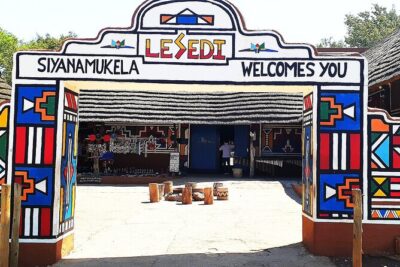

Durban City & PheZulu Cultural Village Day Tour from Durban
Read our review →
Browse the lists this tour appears in