
Reviewed · SOUTH AFRICAN FOOD TOURS
South African Cultural Biltong-Making Experience in Cape Town
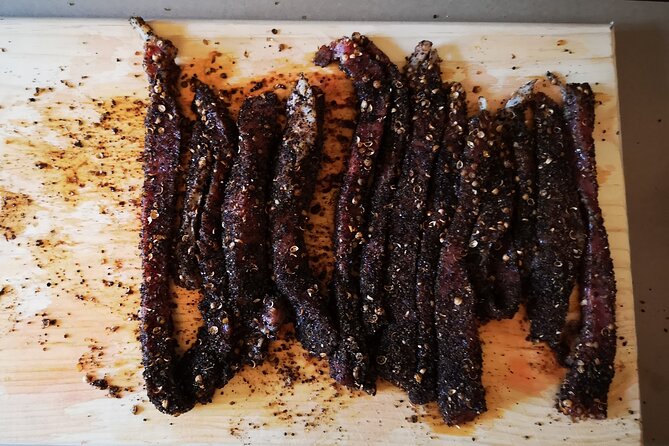
Biltong is more than South Africa’s answer to jerky. At this small, home-based workshop, Greg and Lindi show you how meat becomes a seasoned, air-cured snack while sharing the story of their English and Afrikaans family backgrounds. You’ll handle the process yourself, taste several treats, and take biltong sticks to eat or save.
I like the maximum group size of six, which keeps the session personal and gives you room to ask questions. I also like the mix of food and culture: you learn biltong technique, Afrikaans expressions, the history behind the snack, and the difference between a Soutie and a Boeremeisie.
The main drawback is that this is a focused 90-minute indoor activity, not a broad Cape Town sightseeing tour. If your schedule is tight, you’ll need to make your own way to Sea Point, and the experience may feel too specialized if you do not care about food preparation or cultural storytelling.
Key points to know before booking
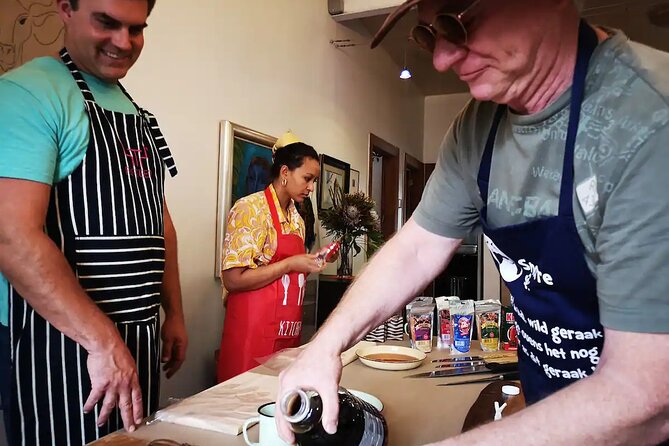
- Make your own biltong sticks: Learn how to select, cut, marinate, season, cure, and store the meat.
- Meet Greg and Lindi at home: The workshop takes place in their cosy voorkamer, or front lounge, at 165 High Level Road in Sea Point.
- Taste more than biltong: Expect a sample of biltong, homemade karringmelkbeskuit, and strong moerkoffie, with chicory coffee also featured in the tasting.
- Hear the story behind the snack: The session connects Khoisan food traditions, the Great Trek, Afrikaans language, and the couple’s own family story.
- Vegan visitors have an option: A meat-free version is offered and presented as a surprisingly satisfying alternative.
- Plan for a very small group: No more than six people take part, and the activity returns to its starting point.
A Cape Town food experience with a personal setting
You begin at 165 High Level Road in Sea Point, a short, practical meeting point for a food workshop. The activity begins and ends there, so you do not need to track a moving tour or worry about a distant final drop-off.
The setting is a home voorkamer, a front lounge traditionally used for receiving visitors. That matters here. You are not watching a large commercial demonstration from the back of a room. You sit close to the hosts, follow the preparation, and have a natural chance to ask about ingredients, family customs, and South African life.
Greg is the English Soutie, while Lindi is the Afrikaans Boeremeisie. Their relationship gives the cultural side of the session a clear human thread. Instead of presenting South African culture as a list of facts, they use their own different backgrounds to explain how English and Afrikaans traditions meet in daily life.
You can expect a relaxed tone, folk music called Boeremusiek, and catchy Afrikaans songs. There are also tall tales and classic Afrikaans sayings. The result is less like a formal lecture and more like an evening of food, conversation, and local character compressed into about an hour and a half.
Other eating and drinking in Cape Town:
- Cape Town: Malay Cooking Class and Lunch in Bo-Kaap
★ 4.8 · 515 reviews - The Cape Town Essentials Food Tour
★ 5.0 · 385 reviews - Cape Town: V&A Waterfront Gin Voyage Cruise
★ 4.6 · 238 reviews
What happens during the 90-minute biltong workshop
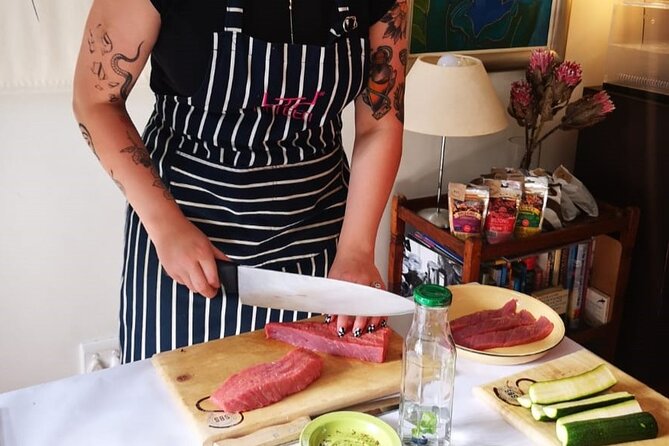
The practical heart of the experience is the biltong demonstration. You learn how to choose suitable meat, cut it into strips, add marinade and seasoning, and prepare it for curing and storage.
That order is useful because biltong depends on several small choices. The cut affects the shape and texture. The seasoning gives it its South African identity. The curing and storage steps determine how the snack develops after preparation.
You also get the chance to prepare biltong sticks yourself. This is a modest hands-on task, but it changes the experience from simply tasting a finished product to understanding how it is made. If you enjoy taking food ideas home, this is the part worth paying attention to. The hosts explain the steps in a way you can follow later.
Biltong is often compared with American jerky, but the comparison only goes so far. The workshop explains that biltong can be made with beef, game meat, or ostrich and uses a South African spice blend. You will come away with a better sense of why biltong has its own character rather than being just another type of dried meat.
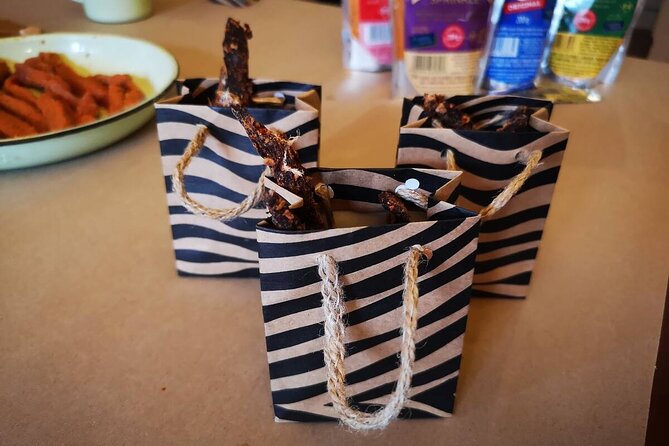
A sample of biltong sticks is included for eating or taking home. There is also an opportunity to buy more. That is handy if the tasting convinces you that your next long drive, hike, or flight needs a small protein snack.
The food tells a South African story
The strongest part of this experience is the way food opens the door to culture. Biltong is not treated as an isolated snack. Greg and Lindi connect it with Khoisan hunter-gatherers, who are described as the originators of the drying tradition, and with the pioneers of the Great Trek, who added the spice element.
The workshop also introduces the origin of Afrikaans. You’ll hear how the language developed in Africa and learn a few local expressions along the way. That gives you something practical to use in conversation, even if your new vocabulary is limited to a handful of sayings.
The English and Afrikaans relationship is another useful thread. The Soutie and Boeremeisie story explains two cultural identities through one household. It is a simple way to understand that South Africa’s past and present cannot be reduced to one language, one cuisine, or one social tradition.
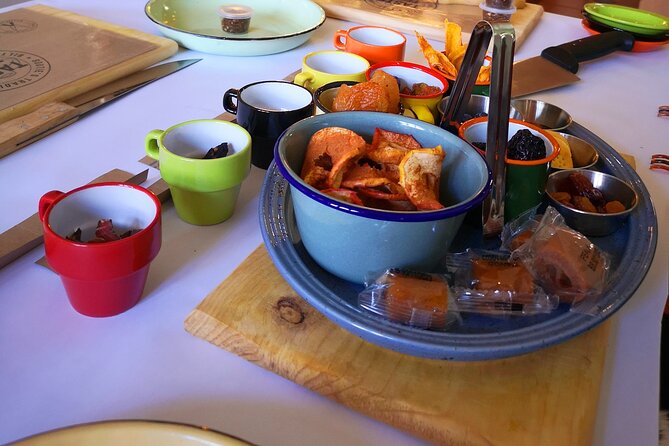
Food tastings help keep the cultural talk grounded. You’ll have a piece of homemade karringmelkbeskuit, a buttermilk rusk traditionally suited to dunking in coffee. The drink is strong moerkoffie served in a tin mug, and the tasting has also been described with brewed chicory coffee.
These touches matter because they make the session sensory. You are not only hearing names and dates. You are tasting a snack, holding a tin mug, listening to folk music, and learning phrases connected with the people presenting the experience.
Why the small group size makes a difference
The workshop accepts a maximum of six people. That is one of its biggest advantages.
A small group allows the hosts to keep an eye on the food preparation and respond to questions without rushing. It also suits the home setting. Six people can still share a table and conversation comfortably, while a much larger group would make the voorkamer feel crowded and reduce the personal quality of the session.
The tradeoff is that availability may be limited. The activity is booked, on average, 25 days in advance, so you should not assume you can decide at the last minute during a busy Cape Town visit. If this is important to you, reserve it early and fit the rest of your schedule around the fixed start time.
The experience has a 100 percent recommendation rate from the available feedback and a five-star rating based on 10 reviews. That is a small sample, so I would not treat it as a guarantee. Still, the pattern is clear: the most praised elements are the friendly home setting, the chance to make biltong, the cultural stories, and the value of the tastings.
Same base, a different kind of day out:
- Wine Tour: Paarl, Franschhoek & Stellenbosch incl 3 wineries
★ 5.0 · 3,940 reviews - Cape Town: Hop-On Hop-Off Bus Tour with Optional Cruise
★ 4.8 · 3,929 reviews - Cape Town: Cape of Good Hope & Penguins Day Tour with Pickup
★ 4.7 · 3,362 reviews - Zipline Cape Town – From Foot of Table Mountain Reserve
★ 5.0 · 3,179 reviews
The vegan option deserves attention
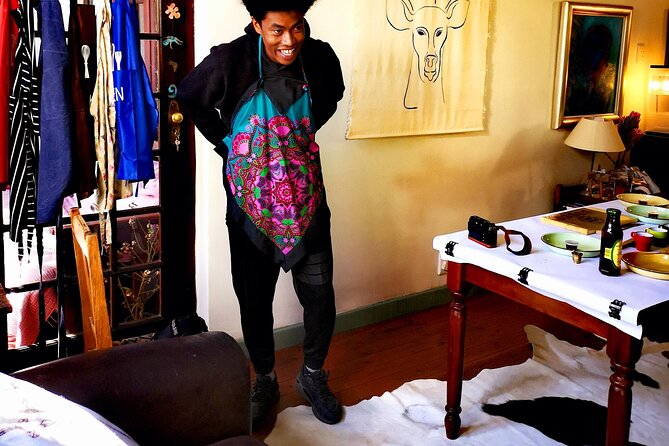
You do not need to eat meat to take part. A vegan alternative is offered and described as surprisingly good.
The available information does not spell out the exact ingredients or preparation method, so you should not book expecting a detailed plant-based cooking class. The vegan option is best understood as a way to join the central tasting and preparation experience without eating meat.
For mixed groups, this is useful. Meat eaters can learn about beef, game meat, or ostrich biltong, while vegan participants have their own version to try. You may want to confirm any particular dietary needs when booking, since the supplied details only confirm that a vegan option is available.
Is $37.58 a fair price?
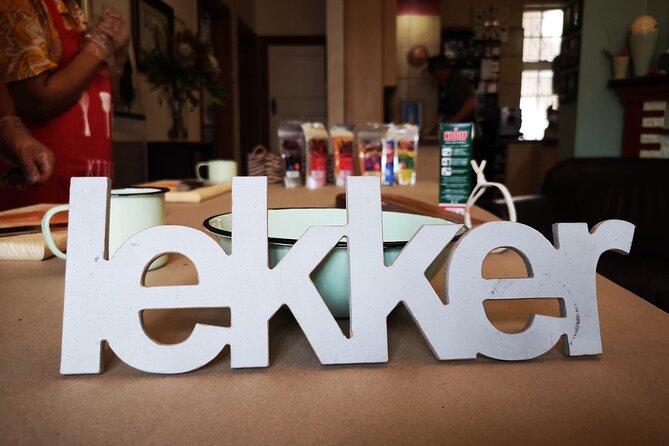
At $37.58 per person, this is not priced like a quick market sample. You are paying for a 90-minute hosted activity, instruction, tastings, a small take-home portion, and a personal cultural exchange in a home setting.
The value is strongest if you want something beyond a standard Cape Town sightseeing stop. You get a practical skill, food to taste, local drinks and baking, music, language, and storytelling in one compact session. The small group limit also gives the price more weight than a large, impersonal demonstration.
It is less compelling if you only want to try biltong cheaply. You can find dried meat elsewhere in South Africa, and this activity does not replace a meal or a full-day tour. You are paying for the explanation and the people behind the food, not simply for a bag of snacks.
The included sample can be eaten during the activity or taken home. More biltong may be available to buy, though one participant specifically suggested that biltong and spice should be available for sale in the future. I would treat extra purchases as an opportunity rather than something to count on.
Who will enjoy this Sea Point experience?
I would recommend this for food-minded visitors who like to understand what they are eating. It suits couples, solo visitors, and small groups looking for a personal activity that does not consume half a day.
It is also a good choice if you have already seen major Cape Town sights and want a slower encounter with local culture. The session gives you stories and expressions that can add color to the rest of your South African trip.
Families and groups with older children may also enjoy the hands-on aspect, though the supplied details do not specify a minimum age. If your group includes people who dislike meat, the vegan option helps, but the main subject remains biltong.
I would skip it if you want outdoor scenery, a packed sightseeing program, or a full meal. You also may not get enough from it if you already make biltong regularly and are looking only for advanced curing instruction. This is an introduction, demonstration, tasting, and cultural conversation rather than a professional butcher’s course.
Practical details that affect your day
Confirmation is provided when you book, and the activity is near public transportation. The meeting point is 165 High Level Road, Sea Point, Cape Town, 8060, South Africa. The activity ends at the same location.
The mobile ticket makes the booking easy to keep on your phone. Allow about 90 minutes for the session itself, plus time to reach Sea Point and continue to your next plan.
You can cancel for a full refund up to 24 hours before the local start time. Cancellations or changes made within 24 hours are not accepted for a refund. The activity also requires a minimum number of participants, so if that number is not reached and the session is canceled, you are offered another date or experience, or a full refund.
Should you book Soutie’s Biltong Making Experience?
Book it if you want a small, personal Cape Town activity built around food, language, and family stories. The strongest reasons are the hands-on preparation, the maximum group size of six, and the unusual chance to hear South African culture explained through the lives of Greg and Lindi.
The price makes sense for a visitor who values conversation and instruction as much as tasting. The main caution is scope: this is a 90-minute home workshop, not a city tour, a restaurant meal, or an advanced culinary course.
Reserve ahead, especially if you have only a few days in Cape Town. For curious eaters, people interested in Afrikaans culture, and anyone who wants to understand why biltong matters, this is a compact and memorable use of an afternoon.
FAQ
Where does the biltong-making experience take place?
It takes place at 165 High Level Road, Sea Point, Cape Town, 8060, South Africa.
How long does the activity last?
The experience lasts approximately 1 hour and 30 minutes.
Does the activity begin and end at the same place?
Yes. It ends back at the meeting point on High Level Road.
How many people can join?
The activity has a maximum of six participants.
Is there a vegan option?
Yes. A vegan alternative is available as part of the experience.
What food and drink are included?
You receive a sample of biltong sticks, homemade karringmelkbeskuit, and strong moerkoffie served in a tin mug. Brewed chicory coffee is also included in the tasting details.
Can I cancel for a refund?
Yes. You can cancel up to 24 hours before the local start time for a full refund. Cancellations and changes made less than 24 hours before the start are not accepted for a refund.
Just added in Cape Town
- Wine Tasting in Cape’s Top Three Winelands Private Tour★ 4.5 · 17 reviews
- Private Tour to Aquila Game Reserve in Cape Town – see the Big5★ 5.0 · 5 reviews
- Private Tour:Cape of Good Hop>Seal island>Chapman’speak &Penguins★ 5.0 · 7 reviews
- Full Day Big 5 Aquila Safari Private Transfers Including Park Fee From Cape Town★ 4.5 · 54 reviews
- Robben Island and Table Mountain Cableway with Bo-Kaap Day Tour★ 5.0 · 8 reviews
- Private Full Day Cape Town City Scenic and Table Mountain Tour.★ 5.0 · 3 reviews
- Private Half DayTour:Cape Winelands, Stellenbosch from Cape Town★ 5.0 · 18 reviews
- Private Tour: Cape Winelands to Stellenbosch & Franschhoek★ 5.0 · 3 reviews
South African Food Tours, compared.

Full-Day All Inclusive Safari with Traditional Braai Lunch
Read our review →
Addo Elephant Full Day Safari with a Traditional South African Braai (BBQ) Lunch
Read our review →
Browse the lists this tour appears in