
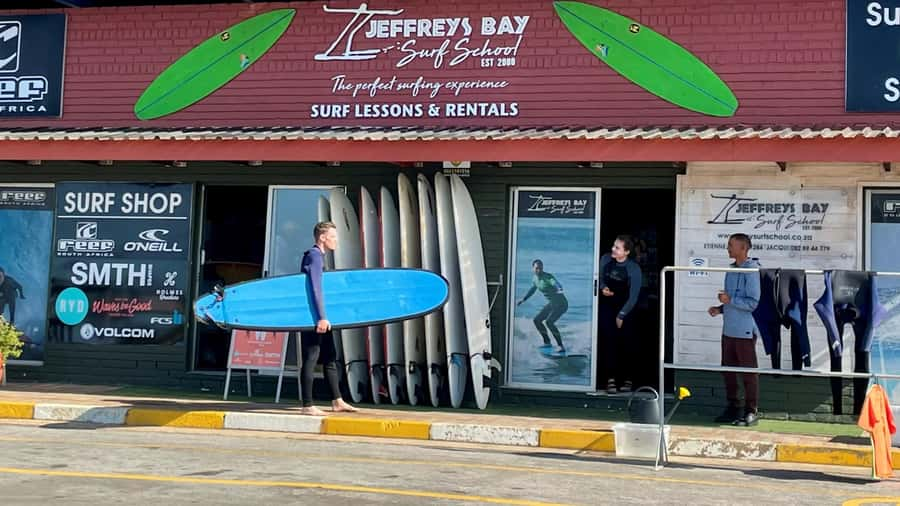
Reviewed · SURFING, KAYAKING & PADDLING
Jeffreys Bay: Private Surfing Lesson for Beginners
Jeffreys Bay is famous for serious surfing, but you do not need serious skills to begin here. This private two-hour lesson starts with the basics on the sand, then moves into waist-deep water where you can practice paddling, catching a wave, and standing on the board. The aim is simple: ride your first wave toward the beach.
I like the one-to-one feel and the fact that qualified coaches focus on practical progress rather than showing off. I also like the included photographs, which give you a record of your first surfing attempt. The main catch is the ocean itself: weather and wave conditions can force a change of plan, and the lesson is not suitable for non-swimmers.
Key points for your first ride
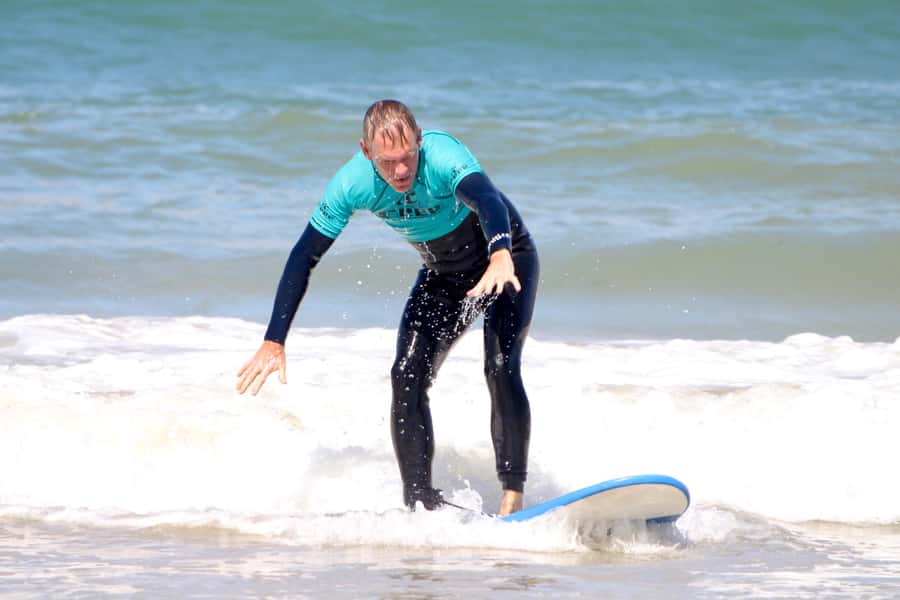
- Private coaching: Get direct instruction rather than sharing attention with a large class.
- Oldest surf school in Jeffreys Bay: Learn at a long-running local surf school in one of South Africa’s best-known surfing towns.
- Beach and water practice: Work through the movements on land before trying them in waist-deep water.
- First-wave goal: Learn to paddle, catch a wave, stand up, and ride toward shore.
- Equipment included: A surfboard, wetsuit, changing rooms, and secure storage are provided.
- Photos from the session: Bring home pictures of your first surfing experience.
Starting at Jeffreys Bay’s oldest surf school
This lesson is built for a first encounter with surfing, not for people who already know how to handle a board. You meet at the oldest surf school in Jeffreys Bay and work with a qualified professional coach in a private group.
That private format matters. Beginners often need the same movement explained more than once, and small errors can make standing up feel impossible. With a private coach, you can receive direct corrections on your balance, foot position, paddling, and timing instead of trying to copy a whole class.
The instruction is in English. One coach named in the feedback is Ernie, who received specific praise for helping participants get to their feet by the end of the session. Coach assignments can vary, but the useful point is clear: the lesson depends on hands-on instruction and steady encouragement rather than a quick equipment handoff.
You receive a surfboard and wetsuit, so you do not need to arrange the main gear yourself. Changing rooms are available, along with safe storage for your belongings and card facilities. Food and drinks are not included, so plan those separately before or after the lesson.
Other time on the water around South Africa:
- Cape Town: Marine Life Kayak Tour From the V&A Waterfront
★ 4.8 · 640 reviews - Cape Town: Guided Kayaking in Hout Bay
★ 4.8 · 228 reviews - Atlantic Outlook Kayak Tour Cape Town
★ 5.0 · 194 reviews
Your first 20 minutes on the beach
The lesson begins on dry land. This is where you learn the basic body position and rehearse the move from lying on the board to standing. It may feel a little awkward at first, but this is the part that saves time once you reach the water.
You can expect to work on how to lie on the board, how to paddle, and how to position your feet when a wave begins to carry you. The coach also explains how to keep your balance while moving from a prone position to a standing stance.
The beach practice has a practical purpose. You can concentrate on the sequence without fighting moving water, drifting boards, or breaking waves. I like this approach because it gives you a clear routine to repeat: paddle, feel the wave, push up, place your feet, and ride toward shore.
Do not expect a long theory session. The goal is to get you moving. Your coach will likely keep the advice focused on the next action you need to take, which is helpful when your attention is split between the board, the water, and your own balance.
Moving into waist-deep water
After the beach instruction, you practice in waist-deep water. This keeps the lesson aimed at beginners while giving you a real feel for the board and the movement of the waves.
You learn to paddle into a wave and recognize the moment when it begins to push the board. Timing is a large part of the first lesson. If you try to stand too soon, you may lose the wave. If you wait too long, the wave can pass underneath you. A private coach can help you adjust this timing attempt by attempt.
The water section is also where the lesson becomes less tidy. You may fall, lose your balance, or need several tries before your body understands what the coach has explained. That is normal for a first session. The stated aim is not perfect technique. It is to give you the basic skills needed to practice surfing on your own after the lesson.
The course is weather and ocean dependent. Conditions may lead to a rescheduled or canceled session. That can be inconvenient if you have a tightly packed Jeffreys Bay schedule, but it is also the right safety call for an ocean activity. Surfing cannot be treated like a museum visit with fixed indoor conditions.
The moment you try to stand
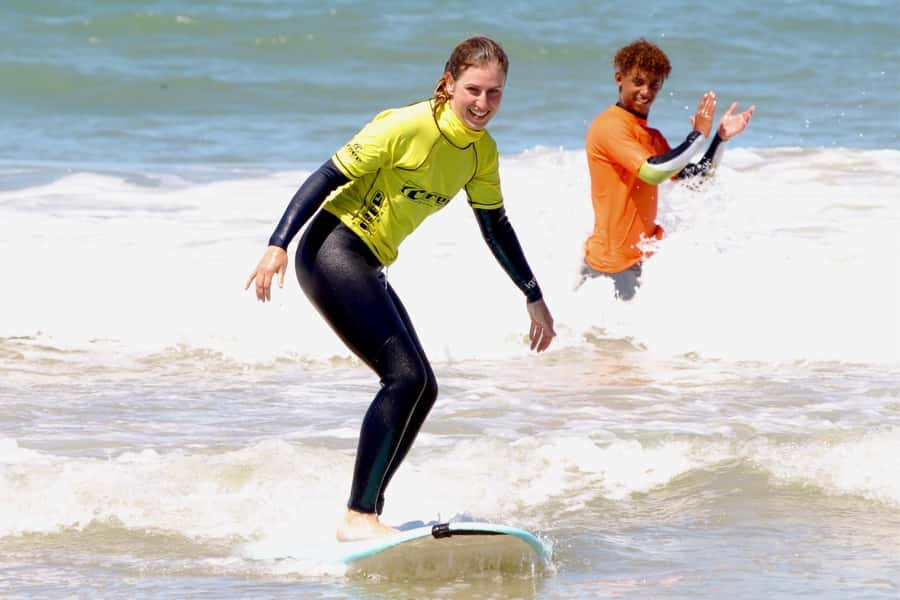
The high point comes when you catch a wave and attempt to stand. Your coach teaches the movement on the beach first, then helps you apply it in the water. The target is to stand on the board and ride toward the beach, even if the ride lasts only a short time.
This is where the private setup has its strongest value. You can focus on your own stance and receive immediate advice after each attempt. The lesson is not simply about being pushed into waves. You are learning the basic technique that lets you continue practicing later.
A useful mindset is to treat the first ride as a success even if it is brief. Standing up for a moment, keeping the board pointed toward shore, and staying balanced long enough to move forward are real beginner milestones. The lesson is designed to help you reach that first taste of control.
The supplied feedback includes two very strong accounts of this part of the experience. Alessa described getting clear instructions and several satisfying moments of success, while Pien specifically credited Ernie with helping the group stand by the end. Those details point to a lesson that can produce a visible result within two hours, though no coach can promise that every participant will stand successfully in every set of ocean conditions.
Other things to learn to make in South Africa:
- Cape Town: Malay Cooking Class and Lunch in Bo-Kaap
★ 4.8 · 515 reviews - Cape Town: Cape Malay Cooking Class in Bo-Kaap
★ 4.8 · 120 reviews - Cape Town: Bo-Kapp Walking Tour and Malay Cooking Class
★ 4.7 · 105 reviews - Private Surf Lesson
★ 5.0 · 53 reviews
What the photographs add
Photographs are taken throughout the session. That is a useful extra for a first surf lesson, since you are unlikely to photograph yourself while paddling or trying to stand.
The pictures turn the activity into more than a short attempt in the water. You can use them as a record of your first board, first wave, and first effort to stand. If you are visiting Jeffreys Bay as part of a larger South Africa trip, they also provide a clear memory of doing something active at this famous surf destination.
The photographs should not be the reason you book. The quality and number of images are not specified, so you should think of them as included souvenirs rather than a professional photo package. The main value remains the instruction and water time.
What the $43 price really covers
At $43 per person, the price is reasonable if you want a guided introduction without buying or renting the basic equipment separately. You receive two hours of instruction, a surfboard, a wetsuit, access to changing rooms, safe storage, and photographs.
The private format adds value for a beginner because mistakes can be corrected quickly. A cheaper group class might suit you if you mainly want a casual beach activity, but direct coaching is more useful if your goal is to stand up and learn a technique you can repeat.
You should also count the items not included. Food and drinks are your responsibility, and you need to bring swimwear, a towel, sandals, and sunscreen. Since card facilities are available, payment at the school should be straightforward, but the experience itself does not include a meal or refreshment stop.
The two-hour length is long enough to cover beach instruction and water practice without turning the lesson into a full-day commitment. That makes it a good fit for a morning or afternoon in Jeffreys Bay. Check the available start times before planning other activities, since the schedule depends on current availability and ocean conditions.
Who will enjoy this lesson most
This lesson suits a first-time surfer who wants personal coaching and a clear introduction to the sport. It is also a good choice if you are traveling with a small private group and want to learn together without being placed in a large public class.
You do not need to bring a board or wetsuit. You do need to be comfortable in the water and able to swim. The lesson is specifically not suitable for non-swimmers, and it is not suitable for wheelchair users.
I would choose this experience if standing on a board is one of your Jeffreys Bay goals. It is less suitable if you want a relaxed beach outing with no physical challenge, or if you need a guaranteed start time regardless of wind and wave conditions.
The activity also asks for a little patience. Surfing has a steep first learning curve. You might spend part of the session falling, paddling back into position, and listening to the same correction again. That is not wasted time. Those repetitions are how the basic movement begins to feel natural.
Practical preparation before you arrive
Wear swimwear under the wetsuit and bring a towel for afterward. Sandals are useful around the beach and changing area, while sunscreen remains important even on a cooler day.
Leave unnecessary valuables behind when possible. Safe storage is provided, but keeping your belongings simple makes changing faster and lets you focus on the lesson.
Do not book this as the final fixed item before an airport transfer or another activity that cannot move. The ocean may require a reschedule or cancellation, and the timing can change with conditions. Free cancellation is available up to 24 hours before the activity for a full refund, and you can reserve now and pay later if you want to keep your plans flexible.
Because the lesson is in English, you should be comfortable following spoken instructions in English. The coach needs to explain safety, body position, and timing clearly, especially once you are in the water.
Should you book the Jeffreys Bay lesson?
Book it if you want a practical, private introduction to surfing with equipment included and a real chance to attempt your first ride. The strongest reasons are the direct coaching, the beach-to-water teaching plan, and the focus on standing up rather than simply sitting on a board near shore.
I would be especially inclined to book if you have two hours free in Jeffreys Bay and want an activity that gives you a skill to practice afterward. The photographs are a pleasant extra, and coaches such as Ernie appear to put clear instruction and beginner success first.
Think twice if you cannot swim, need wheelchair access, or have no flexibility for weather changes. Also keep your expectations sensible: you may stand and ride a wave, but surfing ability does not arrive in one lesson. For a first step at $43, with the board, wetsuit, coaching, facilities, storage, and photos included, this is a fair-value choice for an active beginner.
FAQ
How long is the surfing lesson?
The lesson lasts two hours, including instruction on the beach and practice in waist-deep water.
Is the lesson private?
Yes. The activity is offered as a private group experience.
Is a surfboard included?
Yes. A surfboard and wetsuit are included in the price.
Are instructors qualified?
Yes. The lesson is taught by qualified professional instructors. English is the listed teaching language.
Can non-swimmers take part?
No. The activity is not suitable for non-swimmers.
What should I bring?
Bring swimwear, a towel, sandals, and sunscreen. Food and drinks are not included.
Can the lesson be canceled because of ocean conditions?
Yes. The lesson depends on weather and ocean conditions and may be rescheduled or canceled. You can also cancel up to 24 hours in advance for a full refund.
Just added in South Africa
- Wine Tasting in Cape’s Top Three Winelands Private Tour★ 4.5 · 17 reviews
- Private Tour to Aquila Game Reserve in Cape Town – see the Big5★ 5.0 · 5 reviews
- Private Tour:Cape of Good Hop>Seal island>Chapman’speak &Penguins★ 5.0 · 7 reviews
- Full Day Big 5 Aquila Safari Private Transfers Including Park Fee From Cape Town★ 4.5 · 54 reviews
- Robben Island and Table Mountain Cableway with Bo-Kaap Day Tour★ 5.0 · 8 reviews
- Private Half DayTour:Cape Winelands, Stellenbosch from Cape Town★ 5.0 · 18 reviews
- Private Full Day Cape Town City Scenic and Table Mountain Tour.★ 5.0 · 3 reviews
- Private Tour: Cape Winelands to Stellenbosch & Franschhoek★ 5.0 · 3 reviews
Surfing, Kayaking & Paddling, compared.
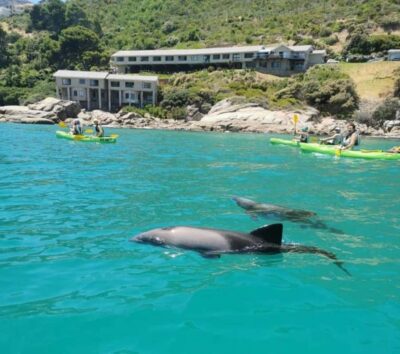
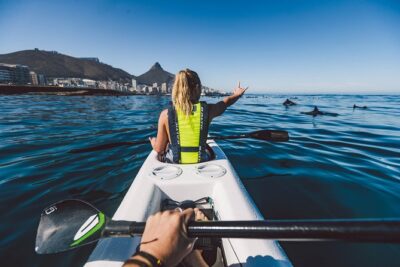
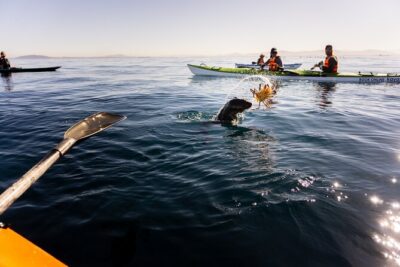
Cape Town Kayak Adventure in Table Mountain Marine Reserve
Read our review →
Browse the lists this tour appears in