
Reviewed · SOWETO & TOWNSHIP TOURS
Bicycle Township Tour in Cape Town
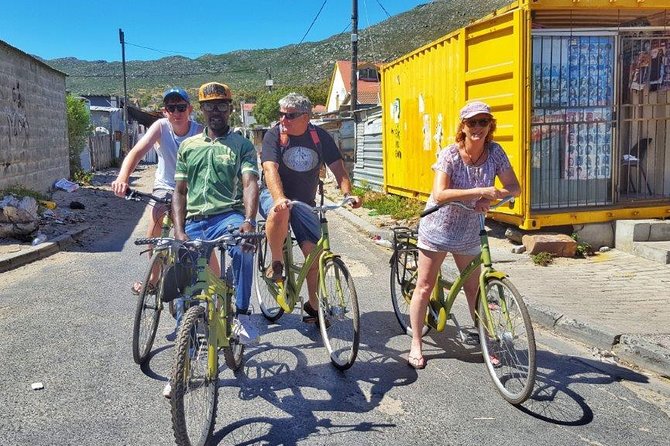
The most worthwhile part of this tour is the chance to enter Masiphumelele township by bicycle, rather than simply passing it from a tour vehicle. Local guides such as Lutho, Shaun, and William live in or near the community and can explain its apartheid-era beginnings, present-day life, churches, schools, library, computer center, and local projects.
I like the relaxed cycling pace and the personal contact it allows. I also like that lunch, a visit to a traditional healer, and a stop at community projects give the tour more substance than a quick photo stop. The main consideration is that this is not a sightseeing ride through polished Cape Town. Expect uneven surfaces, modest facilities, and a serious look at poverty and inequality.
Key points at a glance
- Cycle through Masiphumelele: See the township at street level, with time to stop, talk, and look around.
- Local guides lead the way: Lutho, Shaun, William, and other AWOL guides bring personal knowledge of the area and its customs.
- Community stops add meaning: Depending on the day, you may visit a library, school, church, computer center, or Masicorp project.
- Meet people respectfully: The tour may include interaction with children at a daycare, plus a visit to a sangoma, or traditional healer.
- Lunch is included: A local restaurant meal gives you a chance to try South African food in a community setting.
- Practical setup: The tour lasts about 3 to 4 hours, costs $86.27 per person, and can include hotel pickup and drop-off if you select that option.
Why Masiphumelele is worth seeing by bicycle
Cape Town’s postcard image is easy to find: Table Mountain, the waterfront, beaches, and scenic drives. Masiphumelele offers a different view of the city. The township began as an informal settlement during apartheid and has grown into a working community with homes, churches, schools, small businesses, civic projects, and social organizations.
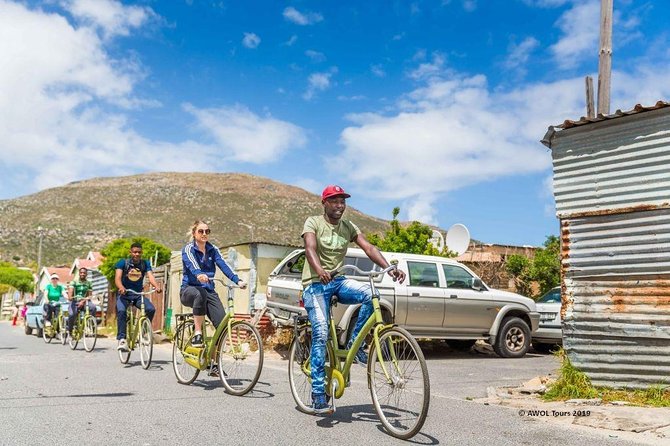
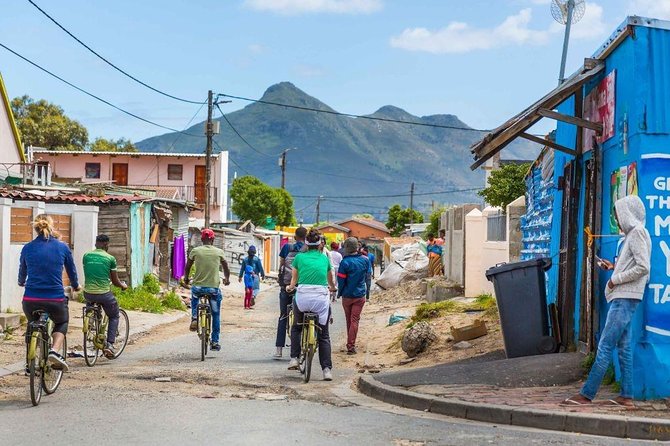
That context matters. You are not visiting a museum or a staged village. You are entering a real residential area where people work, study, worship, shop, and raise families. A bicycle is a useful way to move through it because you travel slowly enough to notice daily life, yet cover more ground than you would on foot.
The ride also helps avoid the fixed viewpoint of a bus window. You may greet people as you pass, stop near a community project, or walk through a narrow section of the informal settlement. Your guide manages the pace and explains when it is appropriate to pause or take photographs.
This kind of visit requires good manners. Do not hand out sweets or money to local people or children. If you want to help, the tour directs donations toward local organizations working in education and housing.
More Township Tours in Cape Town
- Half-Day Tour Through Cape Town’s Townships
★ 4.8 · 979 reviews - Cape Town: Guided Township Tour with Hotel Pickup
★ 4.4 · 536 reviews - Cape Town: Nathi Langa Township Walking Tour
★ 4.9 · 493 reviews
Meeting local guides such as Lutho and Shaun

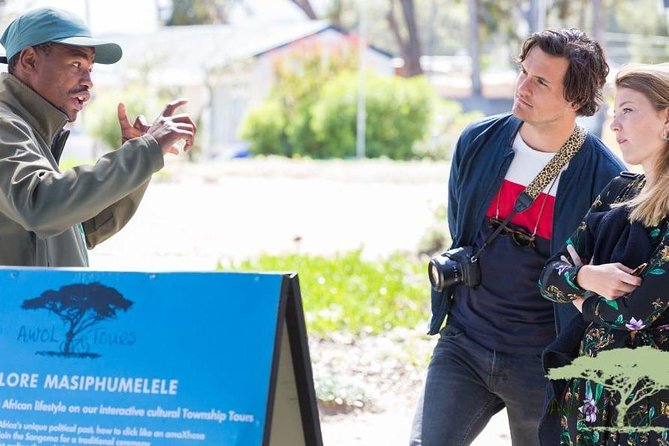
The guide is central to this experience. AWOL uses local guides including Lutho, Shaun, and William, and the schedule may determine who leads your outing. Their local connection allows them to explain the township as a home, not just as a place of hardship.
Lutho is particularly associated with the Masiphumelele tours. He has guided visitors through churches, schools, local facilities, and the informal settlement, and he is known for explaining local customs and teaching a few words of Xhosa. Shaun is involved in projects for children and residents and can offer a close view of community development work.
You may also meet William or another AWOL guide. The exact guide is not guaranteed, so book this tour for the nature of the experience rather than for one specific person. The common thread is a local perspective, a safety-conscious approach, and an effort to present the township with dignity.
The best conversations are likely to come from asking open questions. You can ask how the area has changed, how community programs operate, or what customs visitors should understand. Keep in mind that this is a short tour, so it cannot explain every part of South Africa’s past or present.
Starting at Chasmay Road and getting there
The stated meeting point is on Chasmay Road in Masiphumelele, at Chasmay Road, Cape Town, 7975. The activity ends back at the meeting point.
If you select the transport option, hotel pickup and drop-off are included, along with transport by private vehicle. That is the easiest choice if you are unfamiliar with the southern suburbs or prefer not to arrange your own way to the township.
The drive to the starting point may include Chapman’s Peak or Ou Kaapse Weg. These are scenic routes, but the exact road depends on the day’s plan and conditions. If you arrange your own transport, confirm the meeting details carefully and allow time to arrive before the cycling begins.
The tour is often booked about five days ahead. That is a useful planning clue, especially if you want a particular morning or afternoon. Confirmation is normally provided when you book, though reservations made within one day of departure are confirmed as soon as possible and remain subject to availability.
The bicycle ride through Masiphumelele
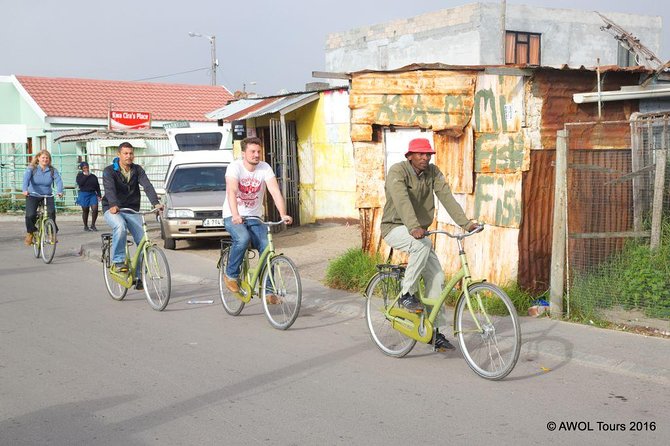
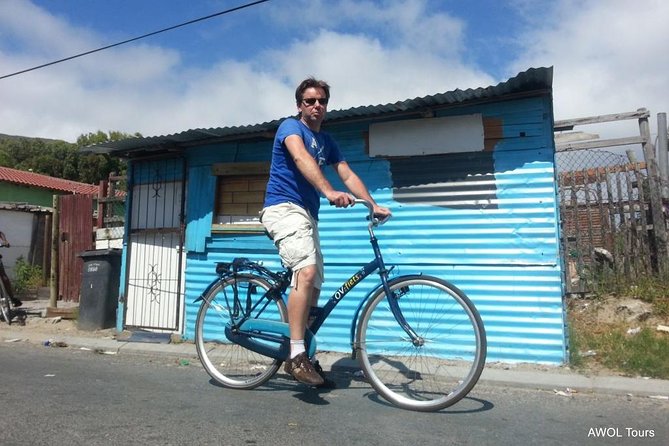
At the start, you receive a bicycle and helmet before setting off with the guide. The ride lasts roughly three to four hours overall, including stops, walking sections, conversation, and lunch. This is not a fast road ride or a fitness challenge.
The most appealing feature is the pace. You can make eye contact with people, greet residents, and take in the details of the area without rushing from one stop to another. Some sections may be more comfortable on foot, particularly when you pass through narrow corridors or informal housing areas.
You may see or visit facilities such as a school, library, computer center, or church. These places show the township as more than a collection of homes. A library or computer center, for example, points to education and opportunity. A church can reveal the social role that worship plays in community life.
The exact sequence can vary. This flexibility is useful because the guide can respond to local activity and available time. It also means you should not expect every stop listed in a promotional description on every departure.
You need a moderate level of physical fitness. You should be comfortable cycling for several hours and moving between the bicycle and walking portions. Wear casual clothes and avoid excessive jewelry. That advice is practical for comfort and discretion, not fashion.
Other township visits from Cape Town:
- Cape Town: Robben Island Ferry Ticket and Townships Tour
★ 4.5 · 400 reviews - Cape Town: Langa Township Walking Tour
★ 4.8 · 272 reviews - Cape Town: Half-Day Guided Township Tour
★ 4.6 · 237 reviews - Cape Town Township Private Tour
★ 5.0 · 158 reviews
Meeting children at the daycare
On weekdays, the tour can include a visit to a daycare, sometimes called a creche. This is one of the more memorable parts of the outing, but it also calls for care.
You may meet children and teachers, see how the facility operates, and learn about the role of early education in the township. The stop can help you understand the community from a family and school perspective rather than only through housing conditions.
The daycare visit is available on weekdays only, so do not assume it will happen on a weekend or public holiday. Children must be accompanied by an adult, and the tour’s advice about not giving sweets or money is especially important here. Follow your guide’s instructions about photographs and interaction.
For me, the value of this stop depends on your attitude. If you treat it as a chance to meet people respectfully and learn about local education, it can be meaningful. If you see it as a photo opportunity, it risks becoming intrusive.
Masicorp, local projects, and practical support
The tour has a connection with Masicorp, an organization working to help township residents build their own opportunities. Some visits begin at or include the Masicorp headquarters, where projects such as sewing and computer classes are available.
This gives the tour a useful economic and social angle. You are not only seeing what the township lacks. You are also seeing what residents and local organizations are doing to improve education, housing, skills, and employment prospects.
A portion of the tour proceeds goes directly to Masicorp. That does not turn a sightseeing activity into a full development program, but it does give your booking a clear local benefit. If you want to contribute more, donate through an established local NGO rather than handing cash to individuals.
The presence of these projects also helps answer a common concern: how can a visitor enter a low-income community without treating it like a display? Meeting through local programs, following a community-based route, and paying for a service led by local people are all better choices than wandering around alone.
The sangoma visit and local culture
Another scheduled element is a visit to a sangoma, a traditional healer. This introduces an important part of South African cultural life that you would not encounter on a standard city tour.
Your guide can provide the setting and explain the role of the sangoma. The experience may be especially interesting if you approach it with curiosity rather than expecting a performance or a simple explanation of traditional medicine.
As with the daycare visit, listen carefully and follow local guidance. Cultural practices should be approached with respect. The tour gives you an introduction, not a complete study of traditional healing, spirituality, or Xhosa culture.
The township also offers chances to hear about local customs, churches, food, and language. Lutho has taught visitors some Xhosa, which can be a friendly way to connect. A few polite words, used correctly and with guidance, can make a greeting feel more personal.
Lunch at a local restaurant
Lunch is included, and the meal takes place at a local restaurant. This is more than a convenient break. Sitting down to eat gives the group time to talk with the guide and process what you have seen.
South African food may include familiar ingredients prepared in unfamiliar ways. One local dish mentioned in connection with the tour is chakalaka, a spicy vegetable relish often served as part of a meal. Vegetarian options may be available, but food preferences and drinks are not fully detailed, so tell the operator about dietary needs when booking.
The listed price includes lunch, but the general food and drinks note says items are not included unless specified. Read that distinction carefully. Lunch is covered, while extra drinks or additional food may cost more.
A local restaurant also supports the community directly. It is a small but useful way to make the visit a two-way exchange rather than a one-sided look at local life.
What $86.27 represents
At $86.27 per person, this is not the cheapest way to spend half a day in Cape Town. The value rests in what is bundled into the experience: a local guide, bicycle and helmet, lunch, and, if selected, private transport with hotel pickup and drop-off.
The price makes more sense if you want a guided introduction to township life and prefer a structured visit. Transport can remove a major planning headache, and the guide provides context that you would not get from cycling independently.
It is less suitable if your main goal is a low-cost bicycle ride or a quick view of Cape Town’s famous sights. The tour is about social history, culture, and community projects, not Table Mountain viewpoints or waterfront architecture.
Group discounts may be available. The maximum group size is 20 people, though the experience is described as a private two-wheel tour. Confirm the exact arrangement at booking if group size and privacy matter to you.
Who should book this experience
I would choose this tour if you want to understand Cape Town beyond the central tourist districts. It suits adults and families with older children who can cycle comfortably and behave respectfully in a residential community.
It is also a good fit if you have worried that a township tour might feel voyeuristic. The local guide, community facilities, lunch, and support for Masicorp create a more responsible framework. You still need to bring sensitivity, but you are not simply driving past homes and taking pictures.
You may want a different activity if you dislike uneven cycling conditions, find discussions of poverty difficult, or want a tightly fixed schedule. The route includes spontaneous conversations and several possible stops, so flexibility is part of the experience.
Wear comfortable casual clothing, keep valuables discreet, and avoid excessive jewelry. Children must be with an adult, and everyone should be prepared for moderate physical activity.
Booking, cancellations, and timing
Free cancellation is available if you cancel at least 24 hours before the local start time. Cancellations or changes made within 24 hours are not refunded or accepted.
The activity requires a minimum number of participants. If the operator cancels because that minimum is not reached, you can receive a full refund or choose another date or experience.
Because the daycare visit operates on weekdays only, choose your date with that detail in mind. If the daycare is important to you, ask for confirmation before booking rather than assuming it is part of every departure.
Should you book the Masiphumelele bicycle tour?
Book it if you want a personal, community-based view of Cape Town and are ready to listen as much as you look. The bicycle format, local guides, lunch, cultural stops, and support for Masicorp make this a thoughtful use of half a day.
Do not book it for polished attractions, fast cycling, or guaranteed access to every listed stop. The strongest reason to go is the chance to see Masiphumelele through local eyes, meet people in an appropriate setting, and leave with a fuller understanding of the city.
FAQ
How long does the bicycle township tour last?
The experience lasts approximately 3 to 4 hours, including cycling, community visits, cultural stops, and lunch.
Where does the tour start and end?
It starts on Chasmay Road in Masiphumelele, Cape Town. The activity ends back at the meeting point.
Is hotel pickup available?
Hotel pickup and drop-off are included if you select that option when booking. Private vehicle transport is also included with the transport option.
What does the price include?
The listed price is $86.27 per person. It includes a local guide, bicycle, helmet, and lunch. Hotel transport is included only if that option is selected.
Is the daycare visit available every day?
No. The creche or daycare visit is available on weekdays only.
Do children need to be accompanied?
Yes. Children must be accompanied by an adult.
What level of fitness is required?
You should have a moderate level of physical fitness and be comfortable cycling for part of a 3 to 4-hour activity.
What happens if I need to cancel?
You can receive a full refund if you cancel at least 24 hours before the experience’s local start time. Cancellations or changes within 24 hours are not refunded.
Just added in Cape Town
- Private Tour to Aquila Game Reserve in Cape Town – see the Big5★ 5.0 · 5 reviews
- Wine Tasting in Cape’s Top Three Winelands Private Tour★ 4.5 · 17 reviews
- Private Tour:Cape of Good Hop>Seal island>Chapman’speak &Penguins★ 5.0 · 7 reviews
- Full Day Big 5 Aquila Safari Private Transfers Including Park Fee From Cape Town★ 4.5 · 54 reviews
- Robben Island and Table Mountain Cableway with Bo-Kaap Day Tour★ 5.0 · 8 reviews
- Private Full Day Cape Town City Scenic and Table Mountain Tour.★ 5.0 · 3 reviews
- Private Half DayTour:Cape Winelands, Stellenbosch from Cape Town★ 5.0 · 18 reviews
- Private Tour: Cape Winelands to Stellenbosch & Franschhoek★ 5.0 · 3 reviews
Soweto & Township Tours, compared.

Johannesburg Hop-On Hop-Off City Tour with Soweto Option
Read our review →


Jo’berg in 1 Day: Soweto, Apartheid Museum & City Tour
Read our review →
Full-Day Tour with Soweto and Apartheid Museum
Read our review →Browse the lists this tour appears in