
Reviewed · TOURS IN CAPE TOWN
Cape Town: Cultural Cycling Tour
Masiphumelele is best understood from a bicycle seat. On this four-hour tour, you ride with a local Xhosa guide through the township, stopping at community projects, small businesses, a Sangoma, and local food spots. It is a direct encounter with daily life, not a sightseeing loop built around grand monuments.
I like the small group of eight and the chance to ask honest questions as you ride. I also like that part of your $106 fee supports Masicorp and the Songezo Youth Cycling Academy, including work linked to Songezo Jim, South Africa’s first Black South African cyclist. The main consideration is that this is a serious look at unequal living conditions, not light entertainment.
You should also expect some variation. The crèche operates during school terms, and a Sunday outing may include a gospel church. Lunch can be at an African restaurant or in a local woman’s home, so the exact route depends on the day. Wear comfortable shoes, leave jewelry at home, and do not hand sweets to children.
Key points to know before you book
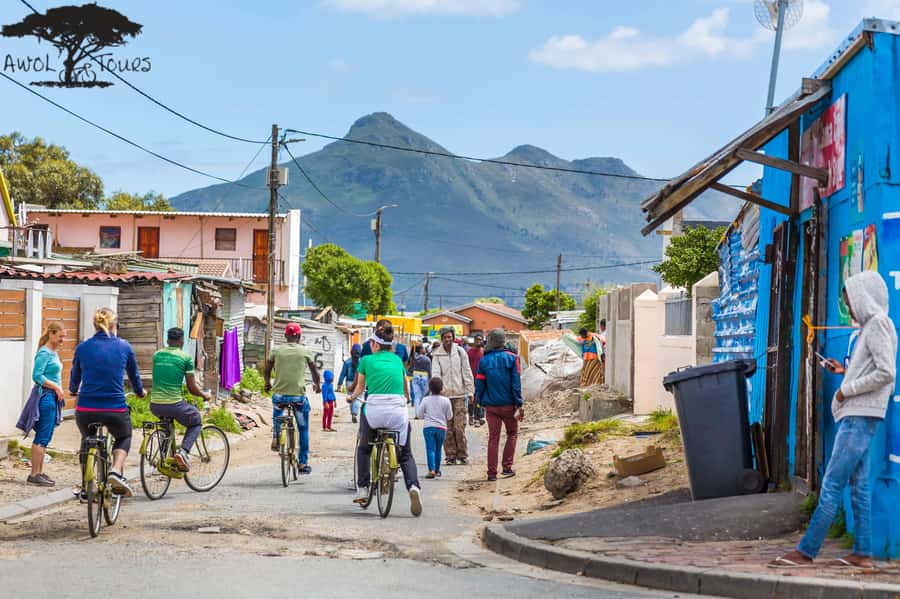
- Cycle with a local Xhosa guide: You see Masiphumelele through local knowledge rather than from a passing vehicle.
- Meet the Sangoma: Traditional healers explain a part of Xhosa culture that is rarely included in standard Cape Town tours.
- Share African food: Lunch is served at a local restaurant or in the home of a woman who regularly prepares tea or a meal for visiting groups.
- Visit community projects: The route can include a library, entrepreneurs, small businesses, and a crèche during school terms.
- Support local work: Ten percent of the tour proceeds goes directly to Masicorp, while the departure point is shared with the Songezo Youth Cycling Academy.
- Keep the group small: A maximum of eight people gives you more room to talk, ask questions, and follow the guide’s pace.
Starting at Masicorp and the Songezo cycling workshop
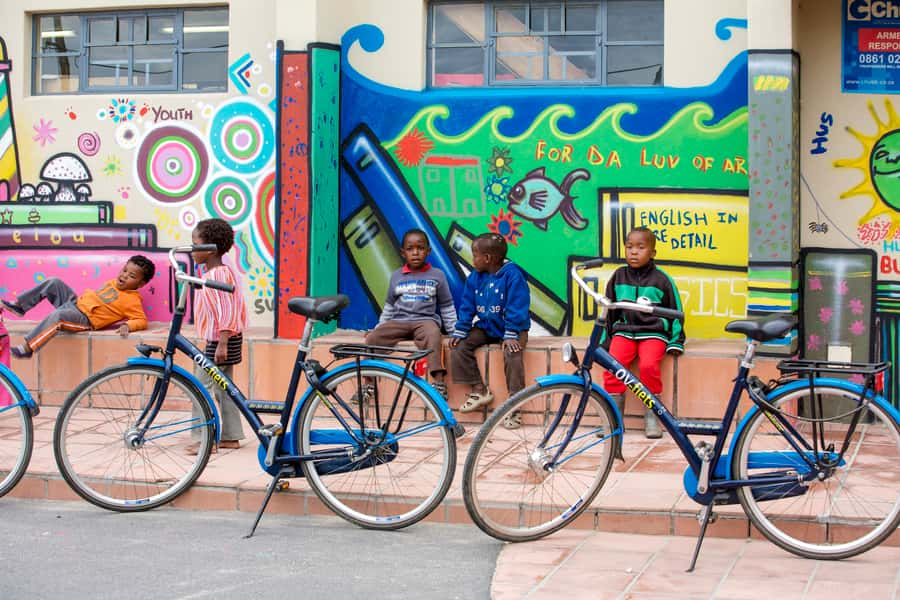
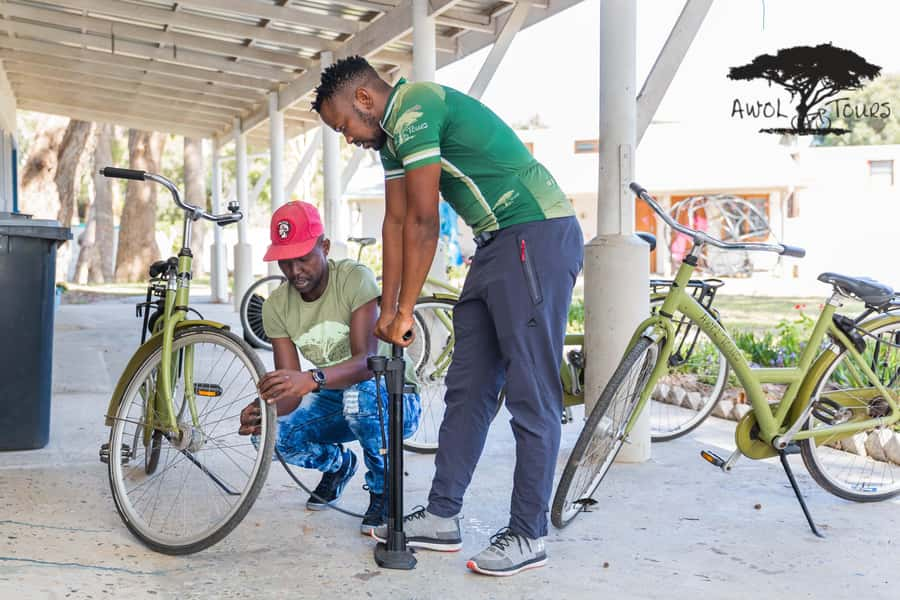
The tour begins at the Masicorp Chasmay Road Campus, which also serves as Masicorp’s head office. The campus shares a workshop with the Songezo Youth Cycling Academy, so you might see young cyclists from the community training before you set off.
That starting point gives the tour a useful frame. You are not simply arriving in a township, taking photographs, and leaving. You begin at a place connected to education and youth development, then see how cycling can become a source of confidence and opportunity.
Songezo Jim is South Africa’s first Black South African cyclist, and his work now encourages young people in the community to take up the sport. The connection between the workshop and the tour feels practical: you are riding on a Dutch bicycle while supporting a program that helps local youth learn the same skill.
Transport to the campus is not included, though it can be arranged on request. Confirm this before booking, especially if you are not already making your way through the Masiphumelele area. The four-hour duration includes the cycling and visits, so allow extra time for getting to and from the meeting point.
Other rides around Cape Town:
- Cape Town City Cycling Tour
★ 5.0 · 199 reviews - Cape Town: Guided Bike Tour
★ 4.9 · 193 reviews - Cape Town: E-Bike City Tour
★ 4.8 · 76 reviews
Riding through Masiphumelele with a local guide
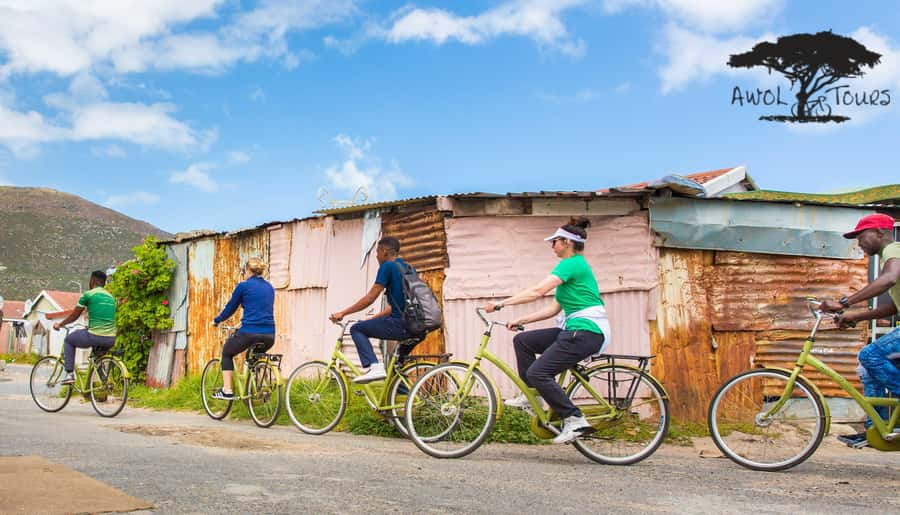
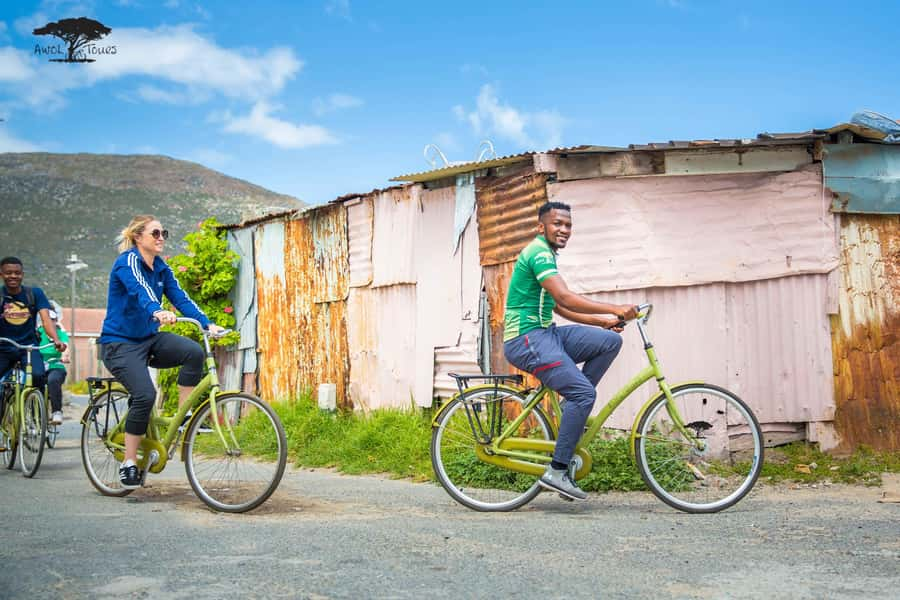
Your guide leads the route by bicycle and explains local Xhosa customs along the way. The old-fashioned Dutch bicycles are part of the appeal, but you should not expect a performance cycling outing. The focus is conversation, observation, and meeting people.
A local guide changes the tone of the visit. You can ask about customs, family life, education, local businesses, and the places you pass. The guide also helps explain what you are seeing, which matters in a township where a visitor could easily make quick assumptions from appearances alone.
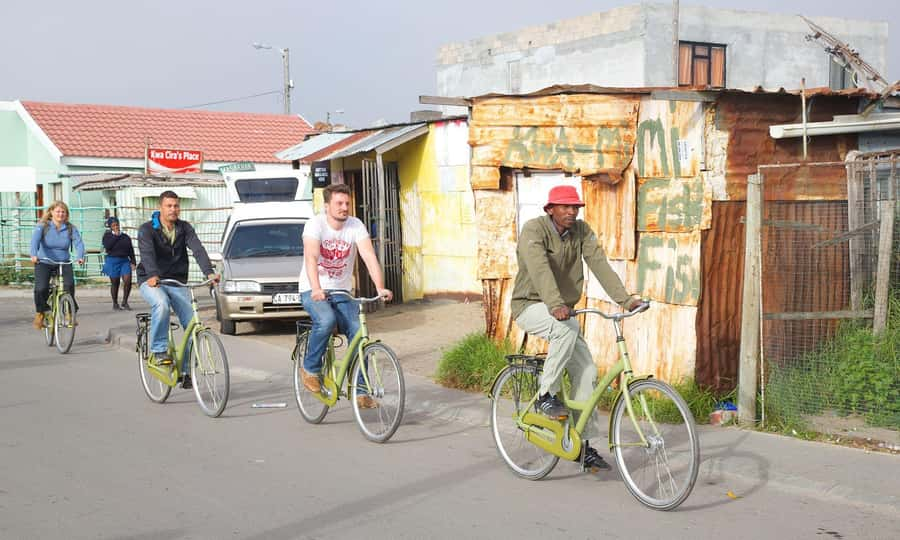
The ride brings you into contact with ordinary community spaces rather than a carefully staged collection of attractions. You visit a local library and see entrepreneurs and small businesses. These stops show effort and initiative, but they also make clear how much work is done with limited resources.
That contrast can feel uncomfortable. One part of the tour shows people creating opportunities for themselves and their children. Another may remind you how unevenly money and services are shared. I think that discomfort is part of the value, but you should be ready to listen with respect rather than expect a carefree bicycle ride.
The group limit helps here. With no more than eight people, you have a better chance to speak directly with the guide and avoid the crowded feeling of a large coach tour. It also keeps the outing personal without making it private.
Meeting a Sangoma and learning about Xhosa customs
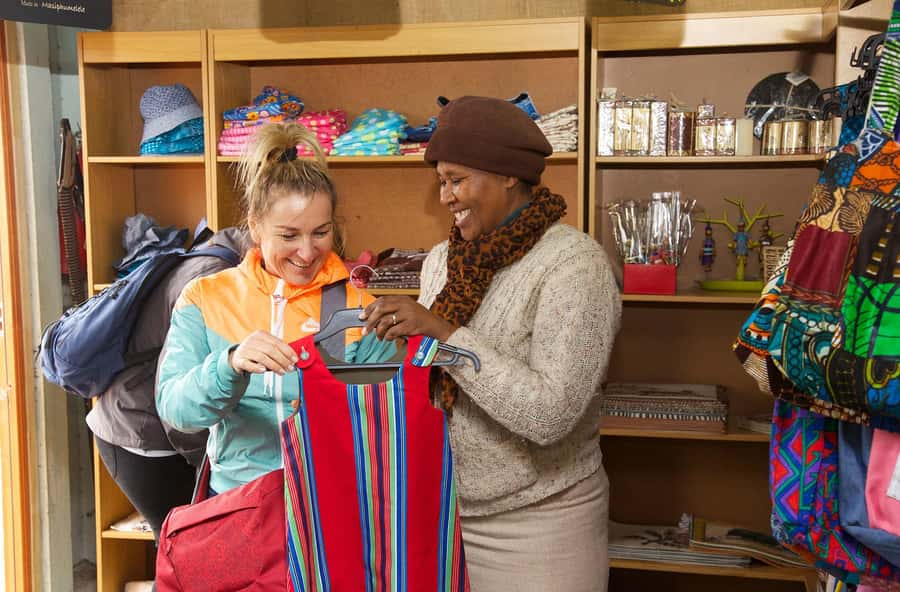
The Sangoma visit is one of the tour’s more unusual stops. A Sangoma is a traditional healer, and the visit gives you a chance to learn about a living part of local culture rather than only seeing cultural objects in a museum.
The program includes dancing with the Sangomas. Take part with good humor, but follow the lead of the people hosting you. This is not a performance to consume from the sidelines. It is a cultural meeting, and your attitude matters as much as your camera or bicycle.
The guide provides the setting for questions about Xhosa customs. You may find this section especially useful if you want more than a quick look at township streets. At the same time, the available information does not promise a fixed lecture or a detailed religious lesson, so expect an introduction rather than a full course in traditional healing.
This stop also helps explain why a local guide is important. Without context, a visit to a traditional healer could seem like an isolated novelty. With a guide who can connect it to local customs, it becomes part of a wider picture of community life.
The library, small businesses, and local initiative
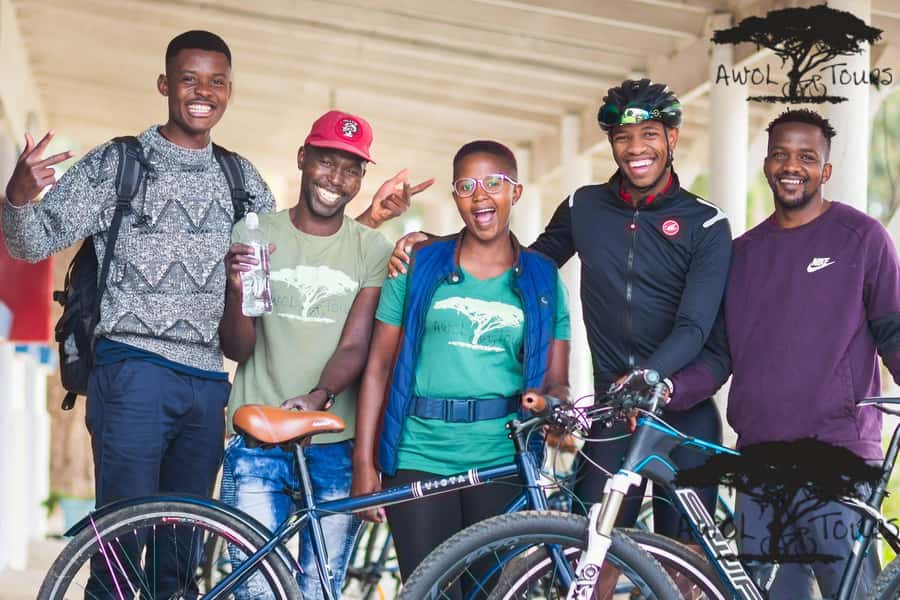
The route includes a visit to a local library, along with stops involving entrepreneurs and small businesses. These are modest places, but they offer some of the clearest insight into how a community functions day to day.
A library can represent far more than books. In this setting, it points to education, access, and a place where young people can find support. The tour’s link with Masicorp makes that theme especially clear. Ten percent of all tour proceeds goes directly to the non-profit organization, which supports education in the community.
The small business visits add another layer. You see people working to provide services and earn a living in their own neighborhood. The experience does not pretend that these efforts solve every problem. Instead, it lets you see both the limits and the determination involved.
I appreciate that these stops give you something useful to think about after the ride. You are not only shown hardship. You are also shown local work, skill, and the desire to create better choices for children and families.
Same base, a different kind of day out:
- Wine Tour: Paarl, Franschhoek & Stellenbosch incl 3 wineries
★ 5.0 · 3,940 reviews - Cape Town: Hop-On Hop-Off Bus Tour with Optional Cruise
★ 4.8 · 3,929 reviews - Cape Town: Cape of Good Hope & Penguins Day Tour with Pickup
★ 4.7 · 3,362 reviews - Zipline Cape Town – From Foot of Table Mountain Reserve
★ 5.0 · 3,179 reviews
The crèche visit and what changes during school holidays
During school terms, the tour visits a local crèche. The crèche operates under difficult conditions, and part of the tour proceeds helps improve its facilities.
This stop may be one of the most affecting parts of the morning. A crèche is a place for young children, yet the teachers work with limited resources. Seeing that setting makes education funding feel concrete rather than abstract.
The crèche is closed on weekends and school holidays, so it is not available on every departure. If this visit matters to you, check the date before booking. The route has other stops, but you should not assume that every listed part takes place every day.
There is also an important courtesy rule. Do not bring sweets or treats for children. The local partner prefers visitors to support registered charities instead. That may seem like a small point, but it reflects a better approach to community visits. Give through the organizations that already work there rather than handing out items during a tour.
Lunch with African flavors and local hospitality
Lunch is included, and you will either eat at an African restaurant or visit the home of a local woman who regularly hosts tour groups. She prepares an authentic African tea or lunch for the visit.
The home setting offers a more personal meeting. You are sharing food in a place connected to ordinary daily life, not simply sitting in a restaurant designed for sightseeing. The restaurant option may be more predictable, but both choices are meant to connect the meal with local food traditions.
The exact meal is not specified, so do not book this expecting a named dish or a fixed menu. If you have dietary needs, ask the operator before going. Food is included, but the available information does not state how special diets are handled.
The meal also gives you time to talk. After cycling and visits, sitting down over food lets you ask follow-up questions and process what you have seen. It is one of the reasons the four-hour schedule feels fuller than a short ride around town.
Food is not the only point. The way lunch is arranged encourages a direct exchange between you and the people who live and work in Masiphumelele. Approach it with appreciation, not as a chance to judge the home, the meal, or the surroundings.
Sunday church and changing tour routes
On Sundays, the tour may include a visit to a local gospel church. This is an optional part of the route rather than a guaranteed stop on every departure.
A church service can add a strong sense of community and music to the morning. One recent outing found the church visit to be the best part, while also noting that some other planned points were missing. That is useful advice: the Sunday route may feel especially memorable, but it may not include every possible stop.
The changing schedule is not necessarily a flaw. Community activities have their own hours, and a school, church, or small business cannot always operate around a sightseeing timetable. Still, you should book with the right expectation. This is a locally connected tour, so the day’s rhythm matters.
If you want the crèche, look at school-term dates. If you want the church, choose a Sunday and confirm that it is planned for your departure. If you want the widest mix of stops, ask what is operating on your chosen day.
What the $106 price includes
At $106 per person, this is not the cheapest way to spend four hours in Cape Town. You are paying for a local guide, bicycle use, lunch, the Sangoma visit, and a small-group format. The price also includes a direct contribution to community work, with 10 percent going to Masicorp.
I see the value in the combination. A standard bicycle rental would not provide the guide, food, cultural introduction, or access to community organizations. A larger bus tour might cover more ground, but it would likely offer less time for questions and personal exchange.
The price makes most sense if you value direct community contact and want your spending to support local education and youth cycling. It makes less sense if you only want a scenic ride, a polished cultural show, or a tightly fixed itinerary.
Transport is extra, though it can be arranged on request. Add that cost to your budget before deciding. Free cancellation is available up to 24 hours before departure, and you can reserve now and pay later, which helps if your Cape Town schedule is still shifting.
Who should book this cycling tour?
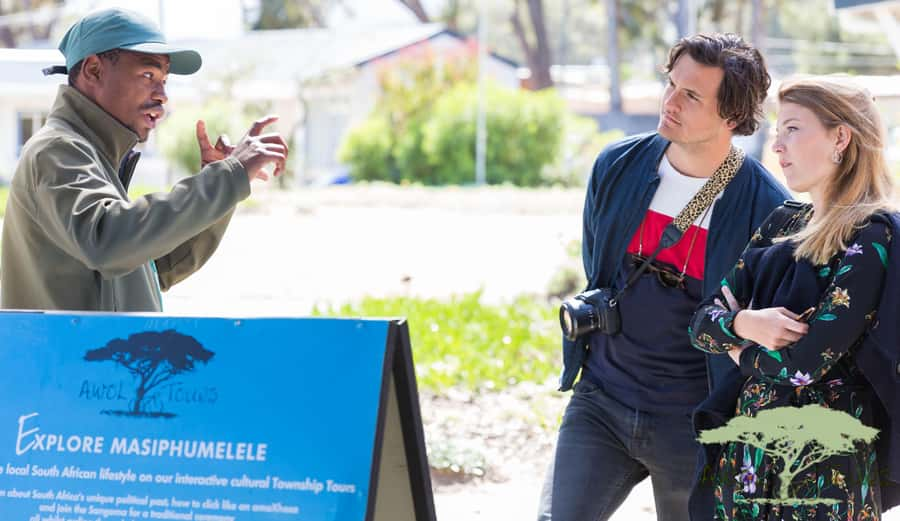
I would recommend it to curious adults, older children who can cycle comfortably, and anyone who wants to understand more about Cape Town beyond its famous waterfront and mountains. It suits people who ask questions, listen well, and can handle moments that feel emotionally difficult.
It is not suitable for wheelchair users or people with mobility impairments. High-heeled shoes are not allowed, and comfortable shoes are the sensible choice. Jewelry is also discouraged, so keep valuables to a minimum.
This is not a race. You do not need a sporty attitude, but you do need to be comfortable on a bicycle for several hours. The old-fashioned Dutch bikes may feel different from a modern rental bike, so mention any concern when arranging your place.
The tour also suits anyone who wants a more responsible way to visit a township. That does not remove the ethical questions around community tourism, but the local guide, education donation, youth cycling link, and rule against handing sweets to children show an effort to direct the visit in a more respectful way.
Should you book the Masiphumelele bicycle tour?
Book it if you want a small, personal outing built around conversation, local food, Xhosa customs, and community projects. The Sangoma visit, possible church stop, and meal in a local home give the tour a character you will not get from simply riding past the township by car.
Skip it if you want a polished sightseeing product with a fixed sequence of stops. The crèche may be closed, the Sunday church visit is not guaranteed, and the route can change with local schedules. You should also be comfortable facing poverty and inequality without turning those realities into a spectacle.
For the best fit, ask about the exact departure date, the lunch setting, the available stops, and transport before paying. If those details suit your plans, the $106 fee buys more than a bicycle ride. It supports local work and gives you time to meet people through a guide who can help you understand what you see.
FAQ
Where does the bicycle township tour begin?
The tour begins at the Masicorp Chasmay Road Campus, which is also the Masicorp head office.
How long does the tour last?
The tour lasts four hours.
How much does the tour cost?
The price is $106 per person.
Is transport to the meeting point included?
No. Transport is not included, but it can be arranged on request.
What language does the guide speak?
The live tour guide speaks English.
How many people can join the tour?
The group is limited to eight participants.
Is lunch included?
Yes. African lunch is included. You may eat at an African restaurant or in the home of a local woman who regularly hosts tour groups.
Does the tour include a Sangoma visit?
Yes. A Sangoma visit is included, along with an opportunity to dance with the traditional healers.
Can the tour visit a local crèche?
The tour visits a local crèche during school terms. The crèche is closed on weekends and school holidays.
Is the tour suitable for wheelchair users?
No. The tour is not suitable for wheelchair users or people with mobility impairments.
Just added in Cape Town
- Wine Tasting in Cape’s Top Three Winelands Private Tour★ 4.5 · 17 reviews
- Private Tour to Aquila Game Reserve in Cape Town – see the Big5★ 5.0 · 5 reviews
- Private Tour:Cape of Good Hop>Seal island>Chapman’speak &Penguins★ 5.0 · 7 reviews
- Full Day Big 5 Aquila Safari Private Transfers Including Park Fee From Cape Town★ 4.5 · 54 reviews
- Robben Island and Table Mountain Cableway with Bo-Kaap Day Tour★ 5.0 · 8 reviews
- Private Full Day Cape Town City Scenic and Table Mountain Tour.★ 5.0 · 3 reviews
- Private Half DayTour:Cape Winelands, Stellenbosch from Cape Town★ 5.0 · 18 reviews
- Private Tour: Cape Winelands to Stellenbosch & Franschhoek★ 5.0 · 3 reviews
Tours in Cape Town, compared.

Wine Tour: Paarl, Franschhoek & Stellenbosch incl 3 wineries
Read our review →
Cape of Good Hope & Penguins Day Tour with Pickup
Read our review →
Zipline Cape Town – From Foot of Table Mountain Reserve
Read our review →
Table Mountain Cable Car, Hop-On Hop-Off Bus Tour
Read our review →
Cape Point and Boulder’s Penguins Full Day Tour
Read our review →

Browse the lists this tour appears in