
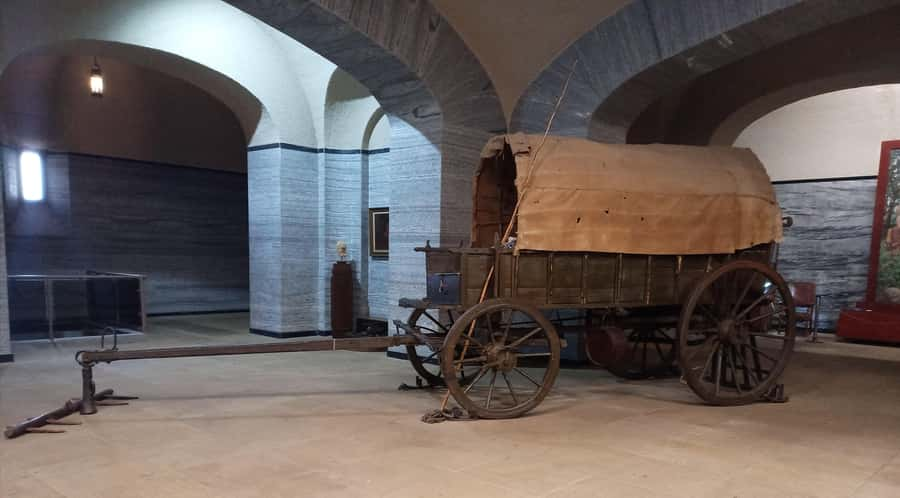
Reviewed · TOURS IN PRETORIA
Pretoria half day tour
Pretoria gives you a quick lesson in South Africa’s political past, from the Voortrekkers and Paul Kruger to the modern government. In four hours, you visit the Voortrekker Monument, Kruger House, Church Square, and the Union Buildings, while passing through the city center.
I like the route for two clear reasons: it connects major sights instead of leaving you to piece Pretoria together, and it brings history close to everyday city streets. I also like the hotel pickup, which saves time on a short visit. The main concern is transport reliability, since one reported outing involved an old vehicle, a spare tyre, wrong turns, and missed opening hours.
Key points to know before booking
- Four major stops in four hours: The route covers the Voortrekker Monument, Kruger House, Church Square, the CBD, and the Union Buildings.
- A history-led city tour: You move from Afrikaner migration and Boer politics to the seat of South Africa’s present government.
- Guide quality matters: Albert has been praised for his clear and engaging explanation of South Africa’s difficult past.
- Hotel pickup and drop-off are included: This is useful if you have limited time or do not want to arrange city transport.
- The price is $86 per person: That can be fair for a private or small-group outing with transport, but the vehicle and timing are important factors.
- Bring identification, not luggage: A passport or copy is required, and large bags are not allowed.
Pretoria in Four Hours: What This Tour Is Really About
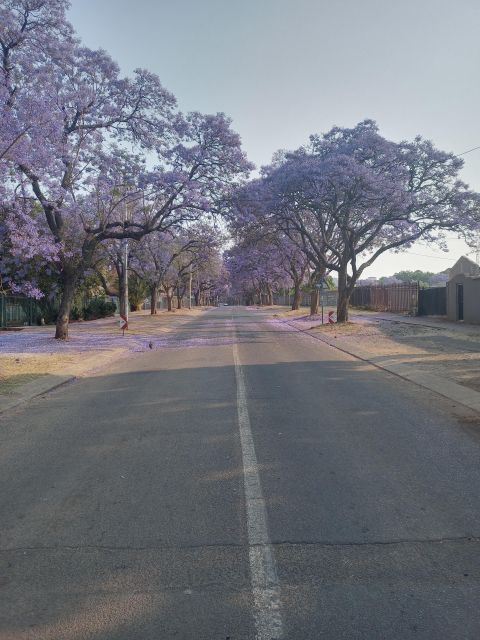
Pretoria is South Africa’s administrative capital. The executive branch of government works here, and foreign embassies are based in the city. It is also known as the Jacaranda City, thanks to the thousands of jacaranda trees planted along its roads, in parks, and around gardens.
This tour is less about entertainment in the usual sightseeing sense and more about putting Pretoria’s political story in order. You begin with the Voortrekkers, move into the era of Paul Kruger and the Boer republic, pass through the old civic center, and finish at the Union Buildings, where the national government operates today.
That sequence gives the morning or afternoon a useful shape. You are not simply ticking off buildings. You are seeing how different groups and political periods left their mark on the same city.
The outing lasts about four hours. That is enough time for an overview, but not enough for a slow visit at every stop. You should expect a fairly brisk schedule, especially if traffic or delays affect the route.
Other trips people book in Pretoria:
- Soweto Half Day Tour
★ 5.0 · 231 reviews - Johannesburg and Soweto tour
★ 5.0 · 231 reviews - Ultimate Johannesburg Tour
★ 5.0 · 200 reviews
Starting at the Voortrekker Monument
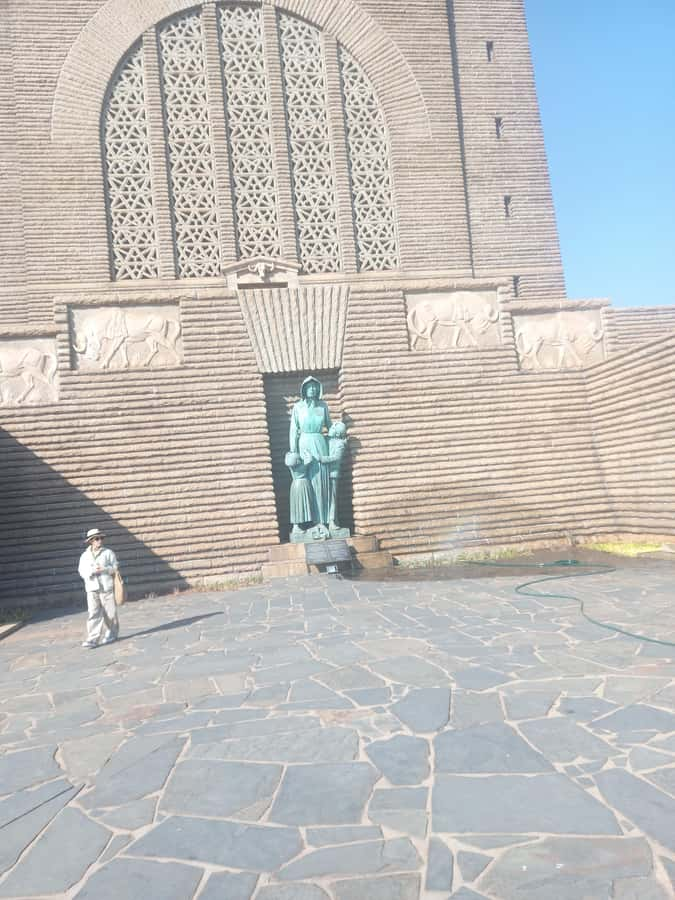
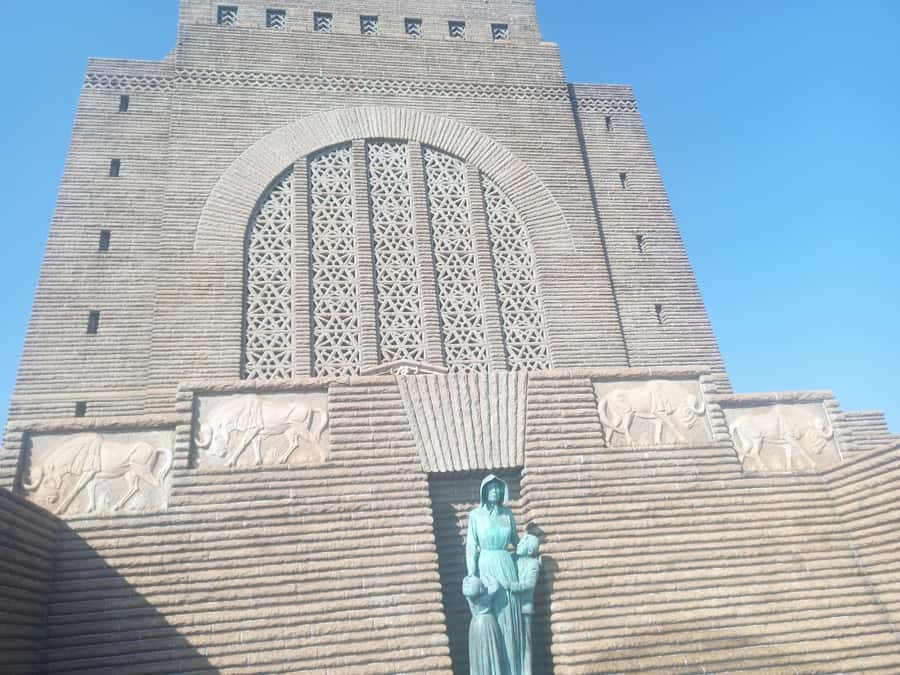
The Voortrekker Monument sits on a hill just south of Pretoria. Its granite walls and high position make it one of the city’s most imposing sights, even before you know the story behind it.
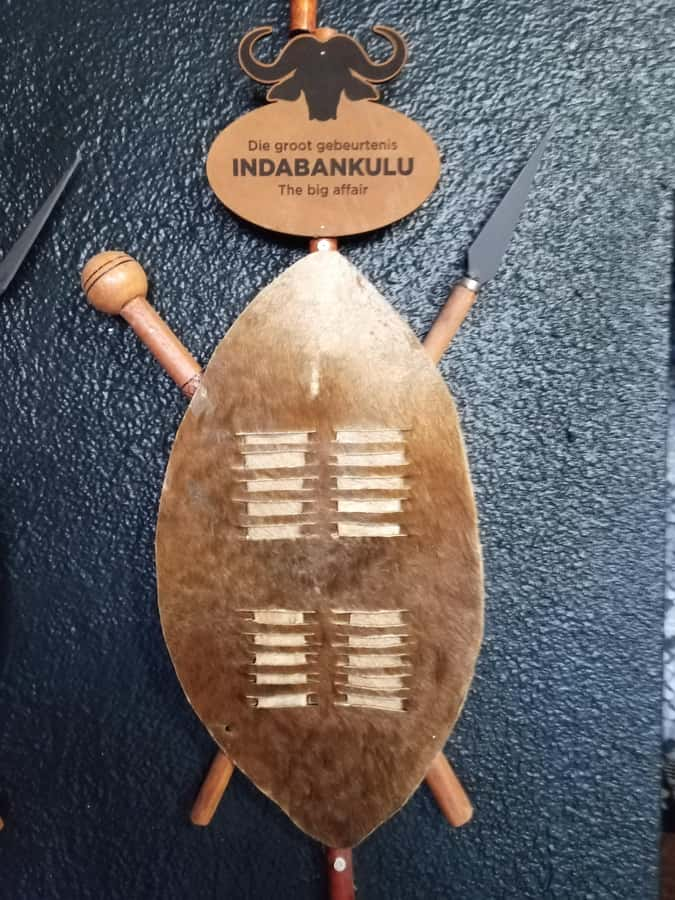
The monument commemorates the Voortrekkers, Dutch-speaking settlers who left the Cape Colony between 1835 and 1854. Architect Gerard Moerdijk designed the building. The monument is closely tied to Afrikaner identity, so the guide’s explanation matters here. A good guide can explain what the monument celebrates while also placing it within South Africa’s wider and often painful past.
This is one of the places where the tour’s historical focus pays off. You are not only looking at a large stone structure. You are being introduced to the people, migration, and political ideas that shaped later conflicts in the country.
The hilltop setting also gives the stop a strong visual quality. The tour information does not promise a specific viewpoint or a long visit, so do not plan on spending hours here. Think of it as the first major chapter in Pretoria’s story.
If you have limited time in Gauteng, this stop helps explain why Pretoria developed as it did. It also gives you a point of reference for the Boer political history you will encounter again at Kruger House and Church Square.
Paul Kruger’s House and the Details of Daily Life
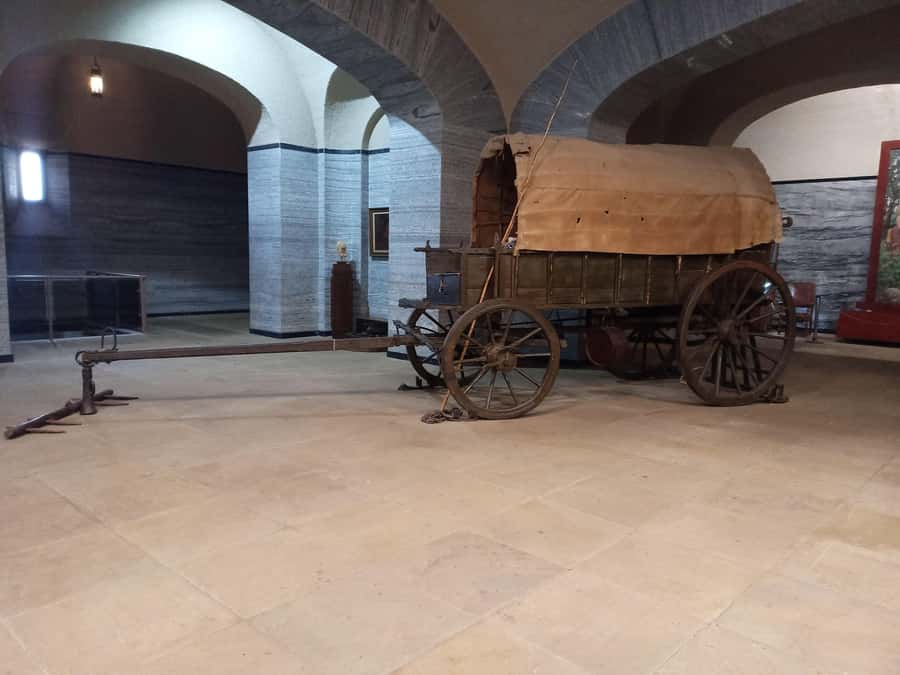
Kruger House was the Pretoria home of Paul Kruger, the Boer leader and president of the South African Republic. The house was built in 1884 by architect Tom Claridge and builder Charles Clark.
The small details make this stop more memorable than a simple political biography. Milk was used instead of water in the cement because the available cement was considered poor quality. The home was also among the first in Pretoria to receive electricity.
Inside, you can expect original furnishings or objects from the same period, along with gifts presented to Kruger and other personal memorabilia. These items bring the political story down to household scale. You get a sense of the man as a resident, leader, and public figure, not just as a name in a textbook.
The stop is particularly useful after the Voortrekker Monument. The monument gives you a broad account of Afrikaner migration and identity. Kruger House narrows the focus to one influential leader and the world in which he lived.
The quality of your visit depends heavily on the guide. Albert, one of the named guides associated with this experience, has been praised for giving a clear account of South Africa’s turbulent past. His style is exactly what this kind of tour needs: enough background to make the rooms meaningful, without turning every object into a lecture.
Keep your expectations realistic. This is a historic residence, not a huge museum complex. Its value is in the personal details and the connection to Pretoria’s political past.
Church Square and the Old Civic Center
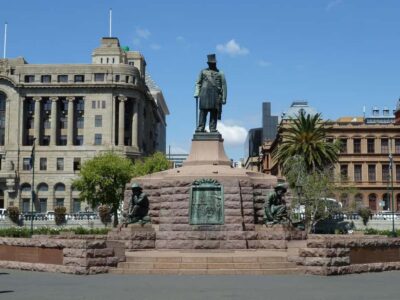
Church Square, originally called Market Square, is the historic center of Pretoria. Marthinus Pretorius, the city’s founder, intended the square to serve as both a market and a churchyard.
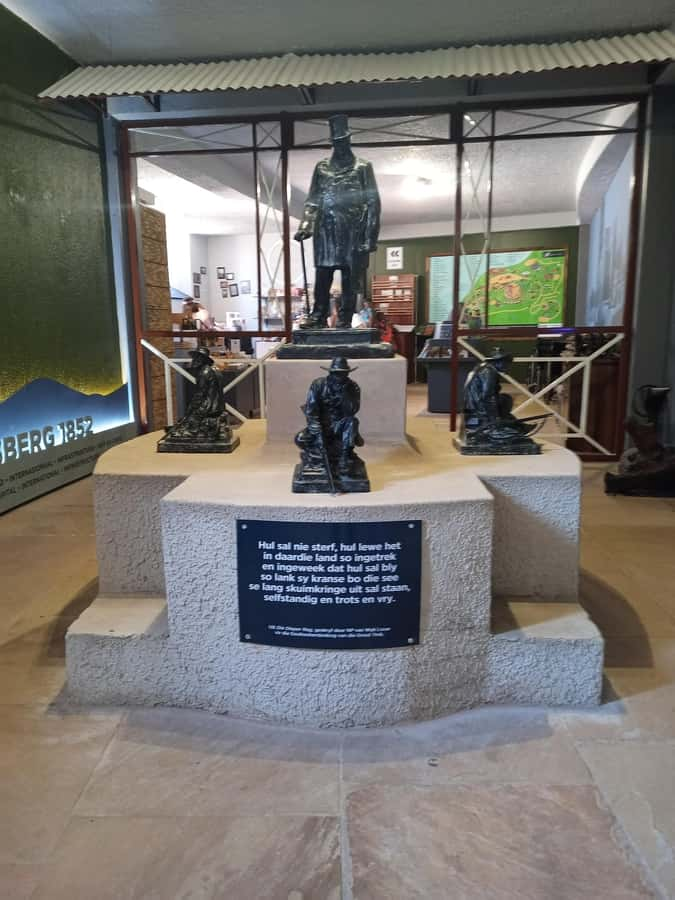
The name changed because church buildings stood at the center of the square from 1856 to 1905. Since 1954, the most prominent feature has been the statue of Paul Kruger. Four statues of unnamed Boer citizen-soldiers surround him on a lower level of the plinth.
This is an important public space because it brings together the city’s founding, religious life, commerce, and Boer political memory. You can read Pretoria’s older civic identity in the layout of the square, even during a short stop.
The tour also passes through Pretoria’s central business district. That matters because it gives you a sense of the city beyond its monuments. The CBD links the historic center with the modern administrative capital, and the change from old square to working city helps keep the tour grounded.
Church Square is best understood with some explanation. Without a guide, you might notice the statue and the old buildings but miss why this location carried so much weight. With a clear account, the square becomes a meeting point for several stages of Pretoria’s development.
The schedule may allow only a brief visit. If you want plenty of time for photographs, architecture, or quiet observation, four hours can feel tight. Still, the square is a valuable stop because it connects the earlier parts of the tour to the final government district.
Same base, a different kind of day out:
- Johannesburg: Pretoria and Cullinan Diamond Mine Tour
★ 4.7 · 165 reviews - Taste of Africa Food tasting Experience
★ 4.5 · 138 reviews - Harties Cableway Experience Ticket
★ 4.5 · 119 reviews - Johannesburg Full-Day Tour(Soweto/Jo-Burg & Apartheid Museum)
★ 5.0 · 110 reviews
Passing Through Pretoria’s CBD
The drive through the city center is not likely to be the headline stop, but it helps you see Pretoria as a living capital rather than a collection of historic sites.
The CBD provides a transition between the older civic center and the Union Buildings. You may find the drive useful for getting your bearings, especially if you have never visited Pretoria before. It also gives the guide a chance to explain how the city functions today and how its government district relates to the older center.
There is no detailed promise of a walking tour through the CBD, so expect to view this part mainly from the vehicle. That is appropriate for a half-day outing. A longer city walk would require more time and would probably mean dropping one of the main historic stops.
This is also where transport problems can have the biggest effect. One poor experience involved an old vehicle running on an emergency spare tyre, a part falling off on the motorway, and two wrong turns that extended a 35-minute drive to more than an hour. That account is unusually serious and should not be ignored when you compare this tour with other options.
The practical lesson is simple: confirm the pickup details and allow some flexibility in your schedule. The company is Pure Diamond Tours and Safari, and the tour includes transport, but vehicle condition and route planning can shape the day as much as the sights do.
Finishing at the Union Buildings
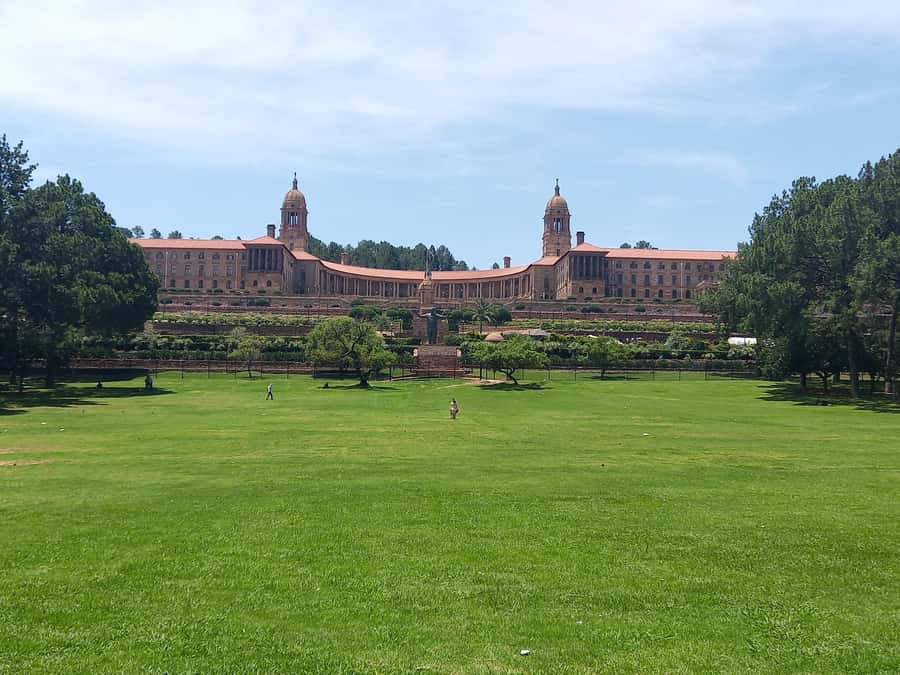
The Union Buildings are the official seat of the South African Government and house the offices of the President. They occupy the highest point of Pretoria on Meintjeskop, at the northern end of Arcadia, close to Church Square.
This is the natural final stop. After seeing the Voortrekker Monument, Kruger House, and the old civic center, you arrive at the place where South Africa’s current national government works.
The buildings are imposing and important, but the significance goes beyond architecture. The Union Buildings represent the modern state, while the earlier stops show the political groups and leaders who helped shape it. Ending here gives the tour a forward-looking finish rather than leaving you in the nineteenth century.
The Union Buildings are also a South African national heritage site. You should expect an exterior-focused visit unless your guide tells you otherwise. The supplied tour details do not promise interior access, so do not book this outing expecting a full government-building tour.
This stop often works best for photographs and for a final explanation from the guide. You can use the setting to ask questions about Pretoria’s role as the administrative capital and how it differs from South Africa’s legislative and judicial centers, though the tour description does not specify how much time is set aside for discussion.
What the Guide Can Add
The guide is the most important variable in this experience. The route is strong, but the stops are much more rewarding when someone explains the political and social context behind them.
English and French are offered. Albert is specifically named and has received praise for being friendly, helpful, and well informed about South Africa’s turbulent history. Two separate five-star accounts also describe the guide as exceptionally helpful and the tour as very interesting.
That positive pattern is worth taking seriously. On a history-heavy tour, a good guide can help you handle difficult subjects without flattening them into simple heroes and villains. You should expect an explanation of the Voortrekker story, Paul Kruger’s role, Pretoria’s civic center, and the government district.
At the same time, do not assume every departure will be identical. The guide’s name is not guaranteed in the supplied details, and one very poor outing had major transport and timing failures. Ask who will guide you if that matters, especially if you want the tour in French.
Is $86 Per Person Good Value?
At $86 per person, this tour is not the cheapest way to see Pretoria. Its value depends on what you need.
The price includes hotel pickup and drop-off, a four-hour guided route, and bottled water. For a visitor without a car, that convenience can be worthwhile. You avoid arranging separate transport between a hilltop monument, a historic house, Church Square, and the Union Buildings.
The price also makes more sense if your guide gives the history the attention it deserves. The tour covers several politically important sites in one outing, and the route would be difficult to understand fully without context.
Value drops quickly if the vehicle is poorly maintained, if the driver loses time on the route, or if attractions are reached after closing. One reported experience ended with two of the three attractions already closed, which would make $86 poor value regardless of the guide’s ability.
I would book this tour when transport convenience and historical explanation matter more to you than finding the absolute lowest price. I would also keep the rest of the day flexible, since the four-hour estimate may be affected by traffic or operational problems.
Practical Details Before You Go
Bring your passport or a copy. Large bags and luggage are not allowed, and all visitors must pass through airport security systems. The instructions also say the tour is not suitable for pregnant women.
Food and drinks are not included, including alcohol. A bottle of water is provided, so plan separately if you need a meal or other refreshments before or after the tour.
Hotel pickup and drop-off are included, but you should provide accurate accommodation details when booking. A clear pickup arrangement is especially important because this is a short tour, and delays can reduce time at the sights.
You can reserve now and pay later, which is useful if your plans are still changing. Cancellation is allowed up to 24 hours before the experience for a full refund.
Who Should Book This Pretoria Tour?
I would recommend it to a first-time visitor who wants a compact introduction to Pretoria’s political history. It suits you if you prefer a guide and vehicle rather than trying to connect several sites on your own.
It is also a good match for anyone interested in the Voortrekkers, Paul Kruger, Boer political history, and the modern South African government. The route gives you a clear framework for understanding the city.
I would be more cautious if you have only a narrow window before a flight, meeting, or onward transfer. The tour can be completed in four hours, but the poor transport account shows why you should not build an important connection immediately afterward.
Should You Book It?
Book this Pretoria half-day tour if you want the major historic and government sights in one organized route, and if a strong guide such as Albert is available. The combination of the Voortrekker Monument, Kruger House, Church Square, the CBD, and the Union Buildings offers a useful introduction to the city.
Before paying, confirm the pickup time, language, guide, and vehicle arrangements. The historical content has real value, but transport reliability is the deciding issue. For a flexible schedule and an interest in South African history, this can be a worthwhile four-hour outing. For a tight schedule, choose only if the operator confirms that the day’s logistics are firmly in place.
FAQ
How long does the Pretoria tour last?
The tour lasts about four hours.
What sights are included?
The route includes the Voortrekker Monument, Kruger House, Church Square, a pass through Pretoria’s CBD, and the Union Buildings.
Is hotel pickup included?
Yes. Hotel pickup and drop-off are included.
What languages are available?
The tour is offered in English and French.
How much does the tour cost?
The listed price is $86 per person.
Is bottled water included?
Yes. A bottle of water is included.
Is food included?
No. Food and drinks are not included, and alcohol is also excluded.
What should I bring?
Bring your passport, or a copy of your passport.
Can I bring luggage or a large bag?
No. Luggage and large bags are not allowed.
Can I cancel for a full refund?
Yes. You can cancel up to 24 hours in advance for a full refund.
Just added in Pretoria
- Pretoria: Pretoria City and Lion Park Tour★ 4.8 · 41 reviews
- Pretoria: Half-Day City Tour with Hotel Pickup★ 4.2 · 6 reviews
- Pretoria Tour-Voortrekker Monument, Town, Union Buildings★ 5.0 · 3 reviews
- Pretoria: Pretoria City Tour and Cullinan Diamond Mine Tour★ 4.9 · 24 reviews
- Pretoria Soweto And Johannesburg★ 3.8 · 13 reviews
- Half day Pretoria city tour★ 4.5 · 4 reviews
- From South Africa Joburg: Pretoria City Half Day Tour★ 4.3 · 4 reviews
- From Pretoria: E-Bike in the wild with game near Jo’burg★ 5.0 · 6 reviews
Tours in Pretoria, compared.

Johannesburg Full-Day Tour(Soweto/Jo-Burg & Apartheid Museum)
Read our review →
Hartbeespoort Dam: The Luxury Alba Boat Cruise with Food
Read our review →Browse the lists this tour appears in