
Reviewed · KRUGER NATIONAL PARK SAFARIS
Kruger Park Scheduled Full day Safari Drive from Hoedspruit
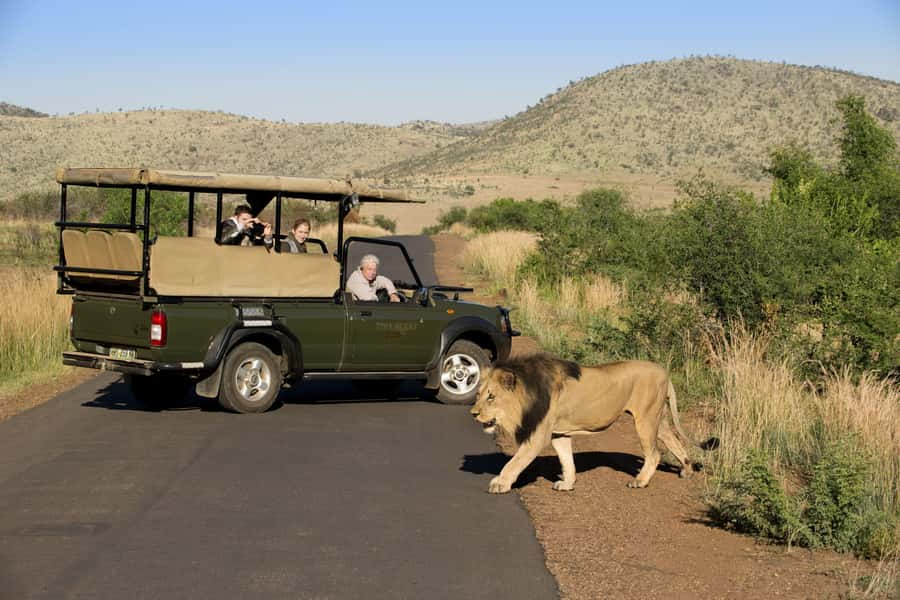
Kruger begins before sunrise here, with an open vehicle rolling out from Hoedspruit toward Orpen Gate while the bush is still cool and quiet. That early start gives you a useful chance to find active wildlife, including nocturnal animals and big cats, before the day heats up.
I like the high seating and open sides, which give you a broad view for animal spotting and photography. I also like the full-day schedule, with time for waterholes, viewpoints, rivers, and a proper lunch stop rather than a rushed morning outing.
The main catch is the cold. The first drive can be surprisingly chilly, and one morning pickup reportedly lost time collecting people. Wear a warm windbreaker, and understand that wildlife is never guaranteed, even when your guide works hard to find it.
Key points to know before booking
- Pickup before sunrise: Collection is available from hotels and addresses in or near Hoedspruit, with pickup starting around 5:00 and scheduled departures commonly falling between 5:30 and 6:00.
- Orpen Gate access: The day focuses on the Kruger areas near Orpen, known for open savannah grasslands and frequent wildlife sightings.
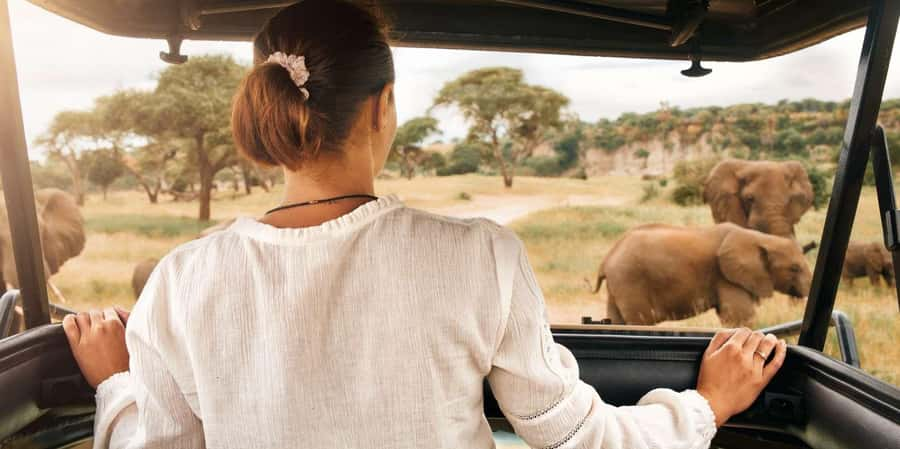
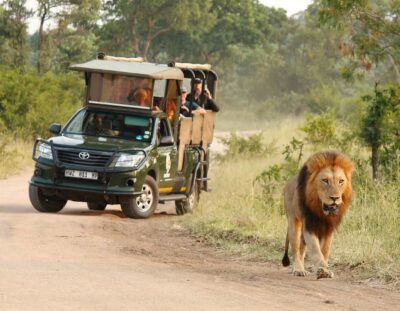
- Open safari vehicle: You ride above a standard car with wide, unobstructed views in every direction.
- Lunch at a rest camp: Stop around 13:00 to 14:00 for food, a leg stretch, souvenir shopping, and a look around the camp.
- FGASA-certified guiding: Your English-speaking guide explains animal behavior, plants, and natural events while helping search for the Big Five.
- Price and flexibility: The cost is $130 per person, with park and conservation fees included, plus free cancellation up to 24 hours before departure.
Leaving Hoedspruit before sunrise
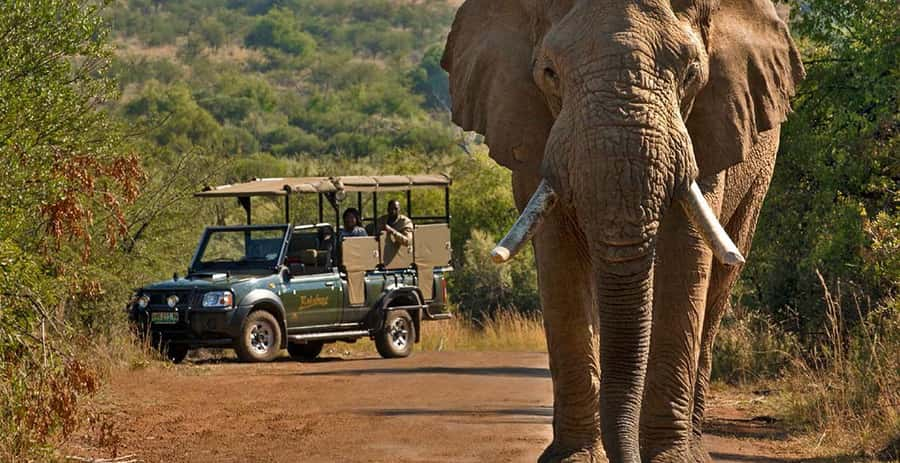
This is a long safari day, not a quick animal-spotting outing. You leave Hoedspruit early, collect any other passengers at nearby accommodation, and travel toward Orpen Gate in a specially designed open safari vehicle.
The exact pickup time matters. The published information says collection starts at 5:00, with the usual entry plan around 5:30 to 6:00. Confirm your personal pickup time when you book, then be ready outside with warm clothing and anything you need for several hours in the open air.
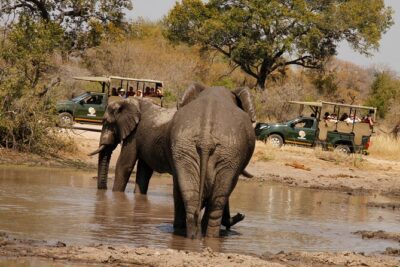
The vehicle gives you a higher viewpoint than a normal car. That helps when animals are partly hidden in grass, and the open sides make it easier to scan both sides of the road. You can also hear more of the bush than you would through closed windows, though that openness means you feel the morning cold.
I would not dress for the afternoon temperature. Wear layers, a warm outer jacket, comfortable trousers, sunglasses, a hat, and sunscreen. By midday, the sun can be strong, so the smart approach is to remove layers as the day warms rather than start underdressed.
Other Kruger trips from Hoedspruit:
- Hoedspruit: Evening Safari In Greater Kruger Private Reserve
★ 5.0 · 9 reviews - Kruger National Park: 3 Day Safari Tour
★ 5.0 · 7 reviews - Hoedspruit: Sunrise Safari in Greater Kruger Private Reserve
★ 5.0 · 6 reviews
Entering Kruger through Orpen Gate
The safari enters Kruger National Park at Orpen Gate, placing you in the park’s central western section. The areas near Orpen are described as open savannah grasslands, a setting that can make animal spotting easier because you often have long sightlines across the vegetation.
Your guide has two jobs. First, the guide drives and watches for movement, tracks, shapes, and animal behavior. Second, the guide helps you understand what you are seeing. A good sighting is not only a photograph of a lion or elephant. It is also knowing why an animal is using a waterhole, why a herd is moving, or why a predator is resting at a certain time of day.
The guides are FGASA-certified, and the experience is conducted in English. Guides named in feedback include Lemon Juice, Eddy, Lambs, Senior Lamas, and Ewance. You are not promised a particular guide, but these names give you an idea of the personal style you may encounter: friendly, humorous, attentive, and eager to help you find animals.
Keep expectations sensible. The Big Five are the main goal, but Kruger is a living park, not a zoo. You may see a great deal of wildlife without seeing every famous animal. On different days, visitors have had chances to see elephants, buffalo, lions, leopards, wild dogs, and other species, while a rhino sighting has remained elusive.
The morning drive near Orpen
The first major drive takes place during the most useful part of the day for many animal sightings. Temperatures are lower, and the plan specifically allows for the possibility of nocturnal animals still moving and big cats beginning or ending their night activity.
This is when patience pays. Your guide may slow down, stop, scan the roadside, and use distant movement or a cluster of parked vehicles to work out where something is hiding. You should be ready to look through grass, beneath trees, and along the road rather than expect every animal to appear in the open.
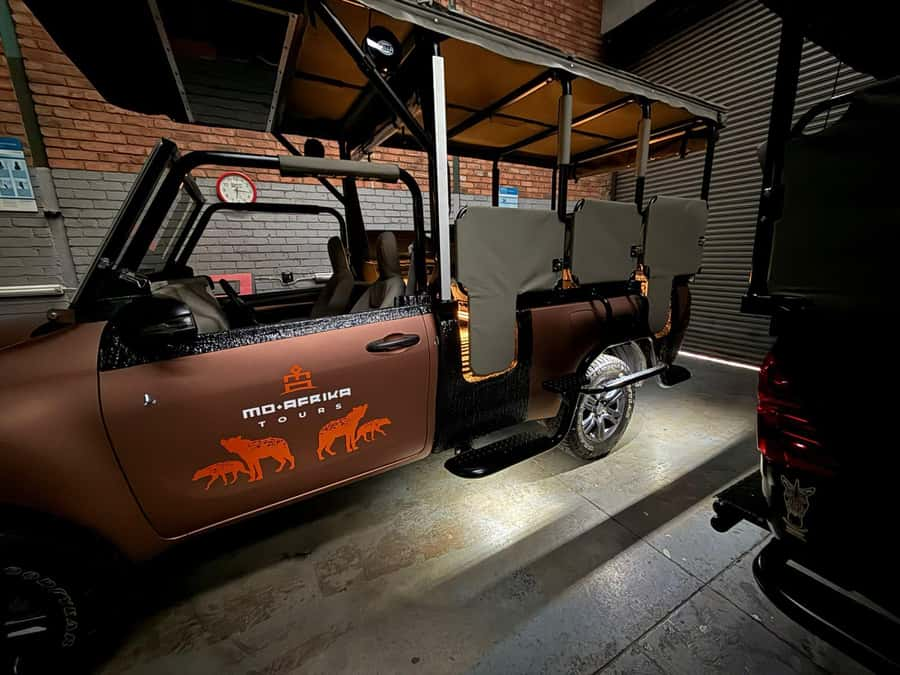
The open vehicle helps here. Each person gets a wide view, and the raised seating position can make a difference when animals are close to the road or partly screened by vegetation. Still, do not assume every stop produces a dramatic sighting. Some of the best parts of a safari are quiet stretches when your attention shifts to tracks, birds, plants, or distant movement.
The guides are praised for making time for photographs instead of hurrying away at the first glimpse. That matters if you use a phone or camera and need a few seconds to focus. It also lets you watch behavior rather than simply collect a checklist.
A particularly strong guide can make an ordinary sighting interesting. An elephant herd, for example, becomes more meaningful when you understand its behavior and position in the surrounding bush. The supplied information promises explanations of natural events, animal behavior, flora, and fauna, so ask questions as you go.
Waterholes, rivers, and lookout stops
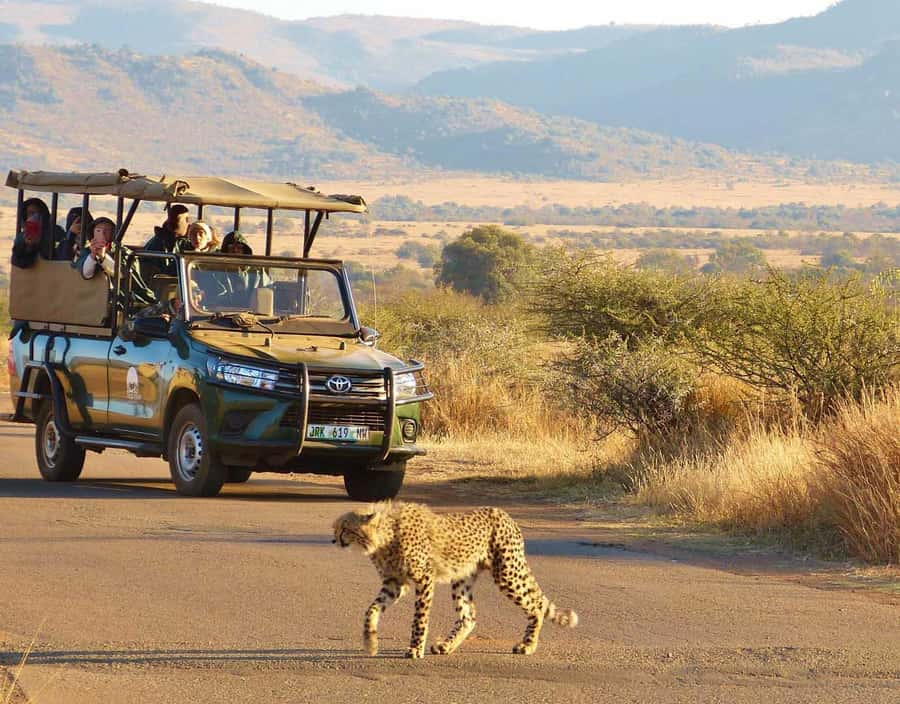
Waterholes are important places to pause because animals need water, especially as the day warms. The schedule includes several waterhole stops, along with viewpoints and rivers, giving you a change of setting and a better chance to see different kinds of wildlife.
These stops also break up the driving. A full day in a safari vehicle can be tiring, even when the viewing is excellent. Short pauses at scenic points give you time to stretch slightly, take photographs, and absorb the wider surroundings.
Do not judge the day only by the number of large animals. Kruger’s value comes from the mix of open grassland, water, trees, wildlife, and changing light. Your guide’s explanations can help you notice smaller details that you would miss on your own.
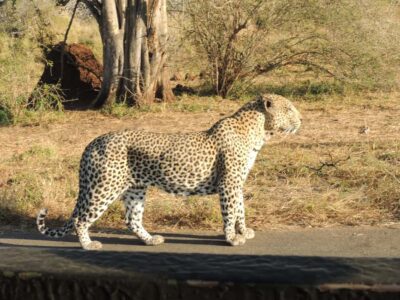
The timing of stops is flexible in spirit, since animal sightings influence the day. If a guide finds a leopard, wild dog, or a predator with prey, the group may spend longer watching. One guide was praised for finding a leopard with its prey and wild dogs, while another made a strong effort to search for the full Big Five. These sightings are possible, not promised, but the guide’s persistence can improve your chances.
Other game drives within reach of Hoedspruit:
- Big 5 Safari Am or Pm
★ 4.4 · 30 reviews - Hoedspruit: Dinner in the Bush & Safari Game Drive
★ 4.9 · 7 reviews - Kruger Park Full Day Safari From Hoedspruit
★ 5.0 · 4 reviews - From Cape Town: Big Five Game Reserve with Lunch
★ 4.6 · 2,409 reviews
Lunch at a Kruger rest camp
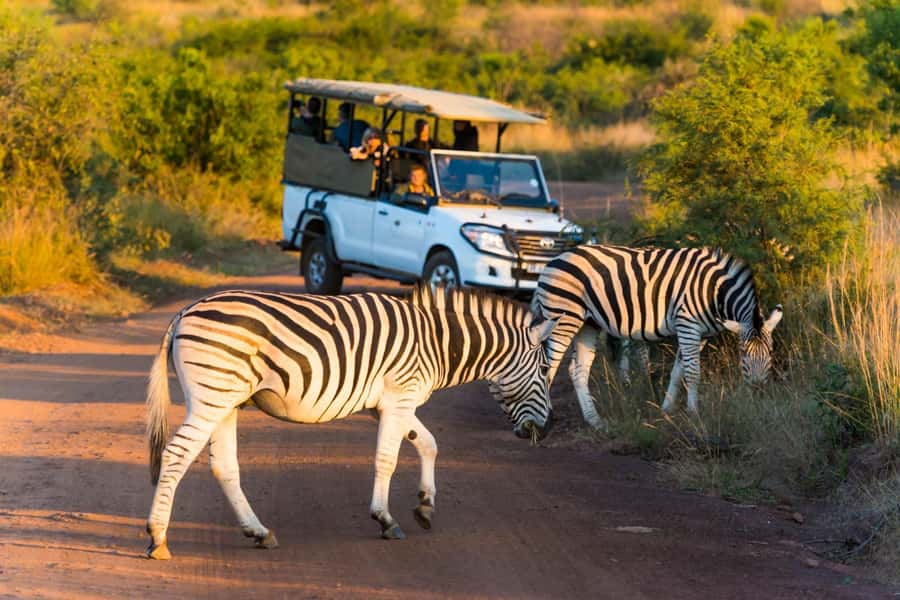
Around 13:00 to 14:00, you stop at one of Kruger’s rest camps for lunch. Food and drinks are not included, so bring money for your meal and any personal purchases. The camps offer local and international dishes, giving you a more substantial break than eating a packed snack in the vehicle.
This is also your chance to stretch your legs, use the facilities, browse for souvenirs, and take in the camp surroundings. After several hours of watching from a fixed seat, that pause has real value.
The lunch stop does add a fixed break to a wildlife day. If an excellent sighting is developing just before lunch, you may have to balance time in the bush against the need to stop. On the other hand, skipping a proper break would make the afternoon less comfortable, so the rest-camp pause is a sensible part of a full-day outing.
Plan for lunch as an extra cost. Bottled water is included, but food, drinks, and personal purchases are not. If you have special dietary needs, the available information does not confirm specific options, so ask before departure rather than relying on the camp menu.
The afternoon drive and return to Hoedspruit
After lunch, the safari continues through the afternoon until roughly 15:00. This gives you another chance to search near water, follow animal movement, and revisit the changing bush as the day begins to cool.
Afternoon viewing can feel different from the morning. The light changes, animals may move toward water, and the pace may become more relaxed after lunch. You may also appreciate the views more once you have learned how to read the area from your guide.
The group then heads back to Orpen Gate and exits the park. Drop-off in or near Hoedspruit is expected around 16:00. That makes this a full day from the moment you leave your accommodation, so avoid scheduling an evening activity that requires a strict arrival time.
One practical issue is collection time. If several pickups are involved, the route to the gate may take longer than expected. A GPS was suggested as a way to reduce lost time during one morning of collections. I would treat this as a possible inconvenience rather than a fixed feature of every departure, but it is worth keeping your schedule flexible.
What the $130 price covers
At $130 per person, this is not the cheapest way to look for wildlife, but the price includes several costs that can quickly add up. The park entrance fee and conservation fee are included, as is the full-day open vehicle and a qualified guide.
That makes the price easier to judge. You are paying for roughly eight to nine hours inside Kruger, not simply transport to the gate. You also avoid arranging park entry yourself, choosing a vehicle, and finding your own route through the Orpen area.
The open vehicle is a major part of the value. A private car may offer more control over stops, but you would need to handle the driving, navigation, park fees, and animal spotting yourself. Here, the guide’s experience and search skills are part of the service.
The tradeoff is that this is a scheduled group experience. Pickup delays are possible, and you may not control every stop or the exact length of each sighting. If you want complete privacy or a custom pace, a private safari may suit you better, but that would normally cost more.
How the guides shape the day
The strongest element of this experience is the guide. Several guides have been praised for being funny, friendly, patient, and determined to find wildlife. Eddy, for example, was described as making a serious effort to locate the Big Five and explain sightings in detail. Ewance was praised for clear wildlife explanations and for helping people feel at ease.
Lemon Juice was remembered for creating a personal, friendly atmosphere and putting effort into finding as much as possible. Senior Lamas was described as both warm and humorous, while Lambs was praised for choosing good viewing spots and timing stops well.
You should still remember that guiding cannot control nature. A guide can know the park, read signs, and communicate with other vehicles, but no one can order a leopard onto the road. The best guide will also help you enjoy the quieter moments, not just chase the biggest animal.
Ask questions. Find out what your guide is watching, why the vehicle has stopped, and how the animal is behaving. You will get more from the day if you take part in the search instead of treating the safari as a drive-by photo session.
Who will enjoy this safari most
This trip suits you if you are staying in Hoedspruit and want a full Kruger day without arranging your own transport or park entry. It is especially useful for first-time visitors who want an English-speaking guide to explain what they see.
Photographers should appreciate the open vehicle and the time allowed at sightings. The wide view is helpful, though the vehicle may move before you get a perfect shot, and morning chill can make camera handling less pleasant if your hands are cold.
Families and mixed-age groups may like the clear structure, included bottled water, and rest-camp lunch break. Still, eight to nine hours is a long day, especially for young children, and the early departure requires everyone to wake before sunrise.
This is less suitable if you need a guaranteed Big Five checklist, dislike early mornings, or want a private vehicle. It is also not ideal for anyone who prefers a short, low-effort excursion. The day asks for patience, warm clothing, and a willingness to accept nature on its own terms.
Practical preparation for a better day
Bring sunglasses, a hat, sunscreen, a camera, and warm layers. Neutral-colored clothing is recommended so you fit quietly into the setting, though comfort matters more than assembling a special safari wardrobe.
Pack or budget for food and drinks beyond the included bottled water. Lunch is available at a rest camp, but it is at your own expense. Keep personal purchases separate from your meal budget if you want souvenirs.
Follow the guide’s instructions at all times. Keep a safe distance from animals, do not feed them, and never tease or try to attract them. These rules protect you and help preserve normal animal behavior.
The booking terms are useful if your plans may change. You can reserve and pay later, and cancellation is allowed up to 24 hours before departure for a full refund. The experience is offered in English, with pickup from any hotel or address in or near Hoedspruit.
Should you book the Kruger day safari?
I would book this if you want a full-value Kruger day from Hoedspruit, especially when park fees, transport, guiding, and an open vehicle are all important to you. The early start, long hours, and guide-led searching give you a real chance at excellent sightings, while the rest-camp lunch keeps the day manageable.
I would hesitate only if you need a private itinerary, cannot handle a cold pre-dawn ride, or have a tight evening schedule. For most first-time Kruger visitors based in Hoedspruit, the combination of time in the park, strong guide attention, and included entrance costs makes the $130 price reasonable.
FAQ
Where does pickup take place?
Pickup is available from any hotel or address in or near Hoedspruit.
What time does pickup begin?
Pickup starts around 5:00, with the planned departure and park entry period generally falling between 5:30 and 6:00. Confirm your exact pickup time for your address.
How long is the safari?
The full experience lasts about eight to nine hours, with drop-off in or near Hoedspruit expected around 16:00.
Which park gate does the safari use?
The safari enters Kruger National Park through Orpen Gate.
Is lunch included?
No. Lunch is taken at a Kruger rest camp around 13:00 to 14:00, but food and drinks are at your own expense. Bottled water is included.
What is included in the price?
The $130 price includes bottled water, Kruger Park entrance and conservation fees, the full-day open vehicle safari, and a qualified English-speaking guide.
Just added in Hoedspruit
- Panorama Route★ 5.0 · 3 reviews
- Moholoholo Rehabilitation Centre★ 4.5 · 11 reviews
- Kruger National Park: 3 Day Safari Tour★ 5.0 · 7 reviews
- Kruger Park Full Day Safari From Hoedspruit★ 5.0 · 4 reviews
- Hoedspruit: Sunrise Safari in Greater Kruger Private Reserve★ 5.0 · 6 reviews
- Hoedspruit: Full Day in ICONIC Kruger National Park★ 4.7 · 6 reviews
- Hoedspruit: HALF Day in the Iconic Kruger National Park!★ 5.0 · 3 reviews
- Hoedspruit: Evening Safari In Greater Kruger Private Reserve★ 5.0 · 9 reviews
Kruger National Park Safaris, compared.
Kruger National Park sunrise Morning Private safari
Read our review →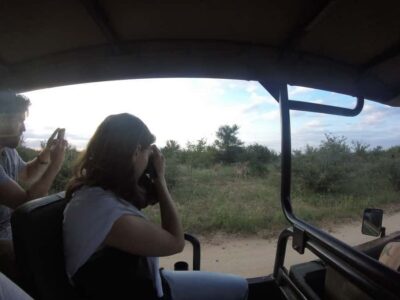
Marloth Park: Kruger National Park Safari Game Drives
Read our review →
Browse the lists this tour appears in