
Reviewed · WHALE WATCHING
Hermanus: Boat Based Whale Watching Experience
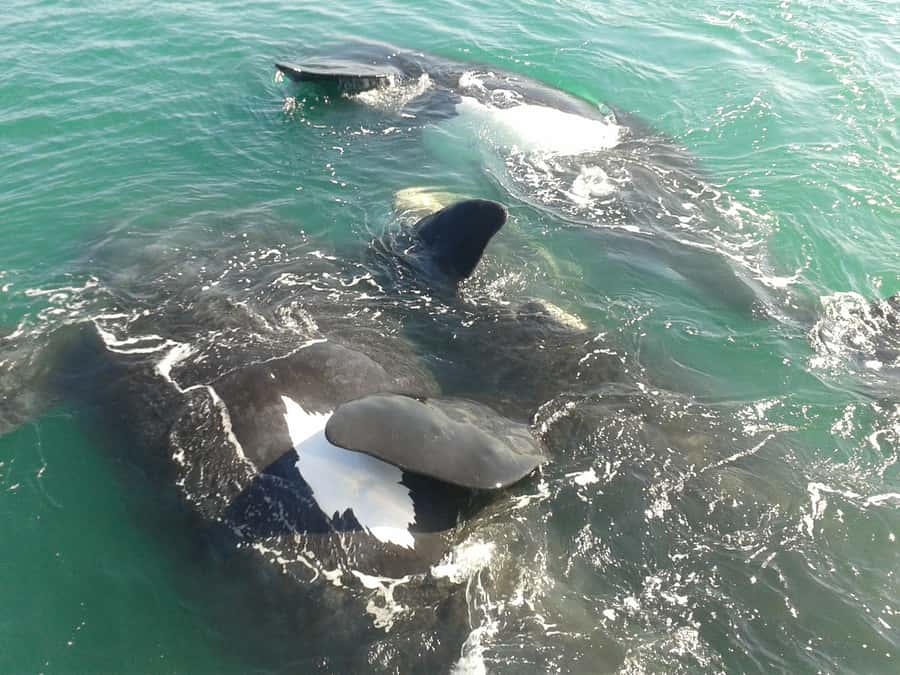
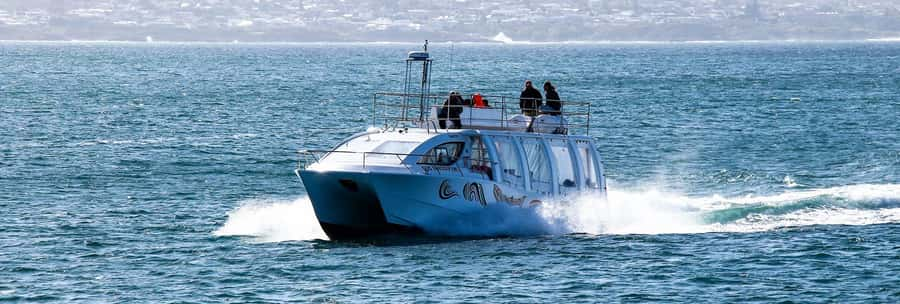
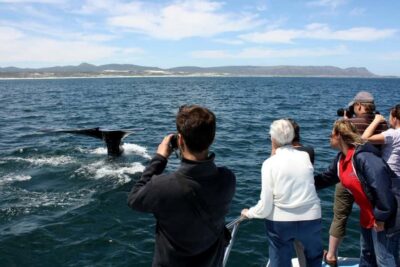
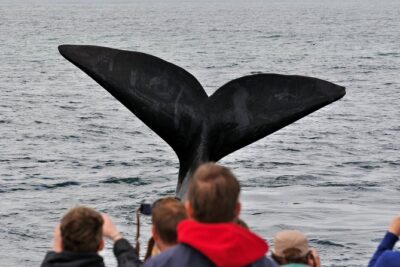
The best part of this Hermanus outing is the moment the engines go quiet and a whale surfaces nearby. You are not watching from a distant cliff. You are on the water, with Walker Bay opening around you and the Western Cape behind you. The crew may spot southern right whales, dolphins, seals, and seabirds, sometimes including mothers with calves.
I like the respectful approach to wildlife, with the boat stopping and disengaging its engines near whales. I also like the open upper deck, which gives you a far better view than a standard row of seats when the weather allows. The main caution is simple: rough seas can bring seasickness, and whale sightings can never be guaranteed.
Key points to know before you go
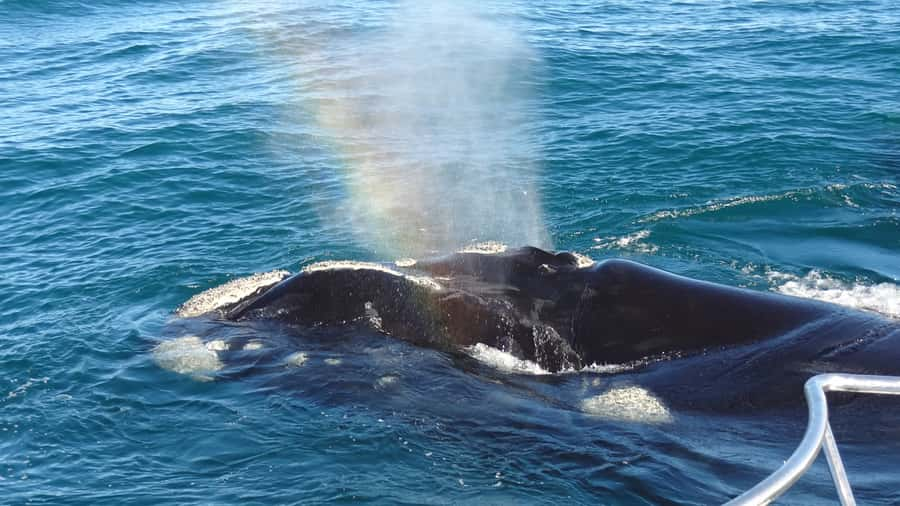
- Whales are the main event: The crew focuses on finding whales, with dolphins, seals, and seabirds as welcome extras.
- Upper-deck views matter: In good weather, you may go upstairs before departure. In rougher conditions, access may come after whales are found.
- The crew adds real value: Guides such as Philip and Peter are praised for clear explanations and sharp animal spotting.
- Expect a fast-moving sea trip: The cruise is listed as 90 minutes, though the outing may last 1.5 to 2 hours.
- Plan for cold and wind: Bring warm layers, a windbreaker, a hat, sunscreen, and flat shoes.
- The season affects your odds: August through October is a stronger period for whale sightings, while late November and December can be quieter.
Why Hermanus is a strong place for whale watching
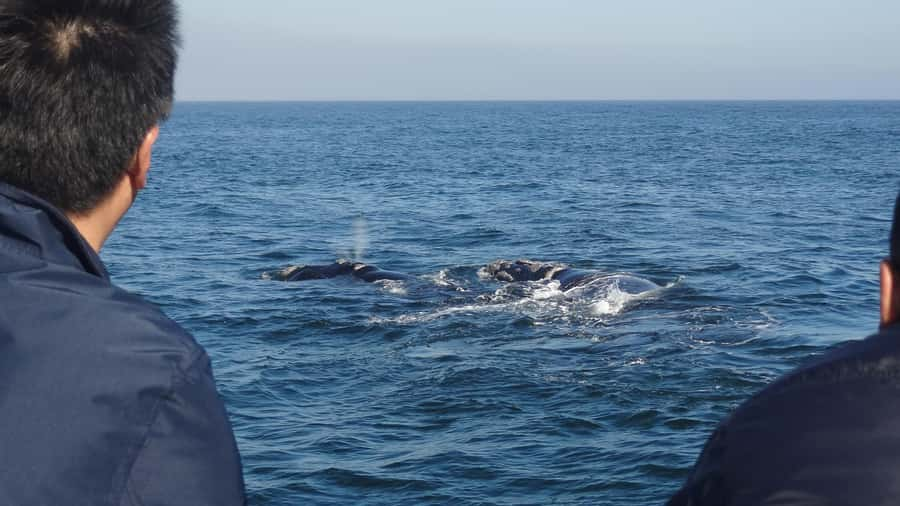
Hermanus is known around the world for whale watching, and the reason becomes clear once your boat leaves the harbor. Walker Bay gives you a broad stretch of ocean to scan, while the town and Western Cape hills create a memorable backdrop.
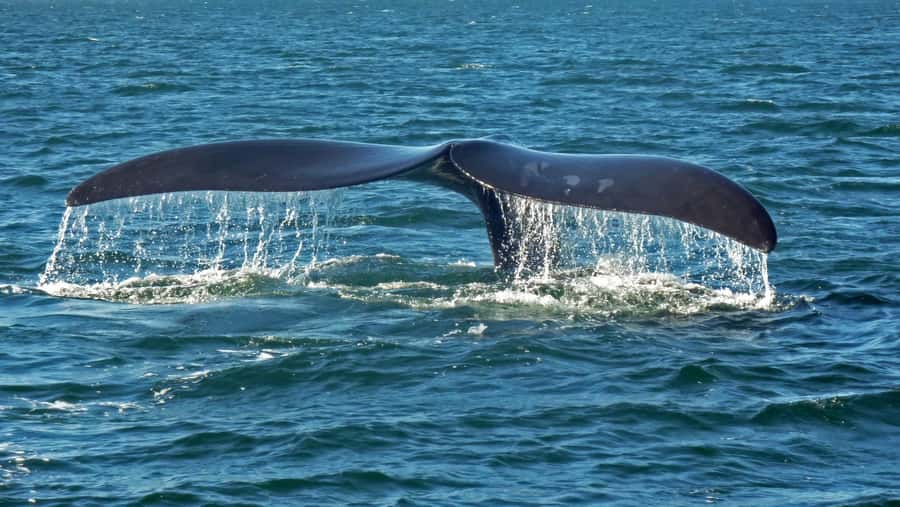
You are not simply taking a sightseeing cruise along the shore. The crew is actively searching for animals and reading the water for signs of activity. A blow, a dark back, a raised tail, or a cluster of seabirds can all point toward life below the surface.
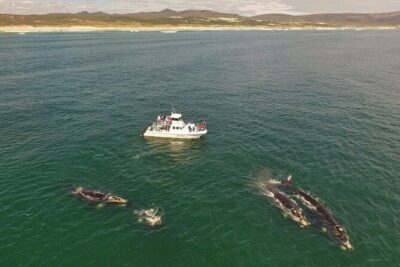
The sightings can vary widely. You might see a single whale surfacing at a distance, or several animals moving around the boat. The strongest experiences described from this trip include mother and calf pairs, breaching whales, dolphins moving in large groups, and seals near the vessel.
That variety is important. If whales are elusive on your departure, dolphins and seals can still make the trip worthwhile. One outing recorded a huge group of dolphins, while another included a rare sunfish near the boat. These encounters are never promised, but the bay offers more than one reason to keep watching.
Other boats out to see whales from Hermanus:
- Hermanus: Whale and Dolphin Watching Boat Trip
★ 4.6 · 807 reviews - Boat Based Whale Watching from Hermanus
★ 4.5 · 205 reviews - Whale Watching Walking Tours (Land-Based) – from JUNE 2025
★ 5.0 · 88 reviews
From Hermanus New Harbour to open water
You meet at the Hermanus New Harbour, inside the orange building on the right after entering the harbor. Arrive about 30 minutes before departure. The harbor entrance costs R5, payable separately, so keep a small amount ready.
Your physical ticket is supplied when you arrive. This is a useful detail if you are used to showing a phone voucher at a gate, as you need to allow time for the check-in process rather than walking straight to the boat.
Before departure, the crew gives a safety briefing. It covers the basic rules for moving around the vessel and helps you understand how the boat behaves once it reaches open water. The guide also explains what animals you might see and how the crew will approach them.
The upper deck is weather dependent. On a calm, clear day, you may be allowed upstairs before leaving the harbor, giving you unobstructed views as the vessel heads out. If wind or sea conditions are less comfortable, the crew may keep you below until whales have been located.
This arrangement is sensible, though it means your first choice of viewing position is not always guaranteed. If you care most about a high, open viewpoint, arrive early and listen carefully to the crew’s instructions.
The 90-minute cruise and what you see
The advertised duration is 90 minutes, while the full trip is also described as lasting 1.5 to 2 hours. In practice, you should keep at least two hours free around the activity for check-in, boarding, the cruise, and the return to the harbor.
The first part of the trip gives you scenic views of Hermanus from the water. The town looks different from offshore, and the changing angle helps you understand why this is such a popular coastal setting. You can also use this time to settle into the boat and get your camera ready.
Once the crew begins searching seriously, keep your eyes moving. A whale may surface only briefly, and the guide may point toward it before you have spotted it yourself. Multiple crew members may help scan the bay and direct you to animals on different sides of the boat.
When whales are found, the vessel is allowed to move closer under local operating rules. The boat then stops and the engines are disengaged to reduce the risk of injury from the propellers. This quiet pause is one of the most powerful parts of the experience. You hear the water, wait for the next breath, and watch the animal on its own terms.
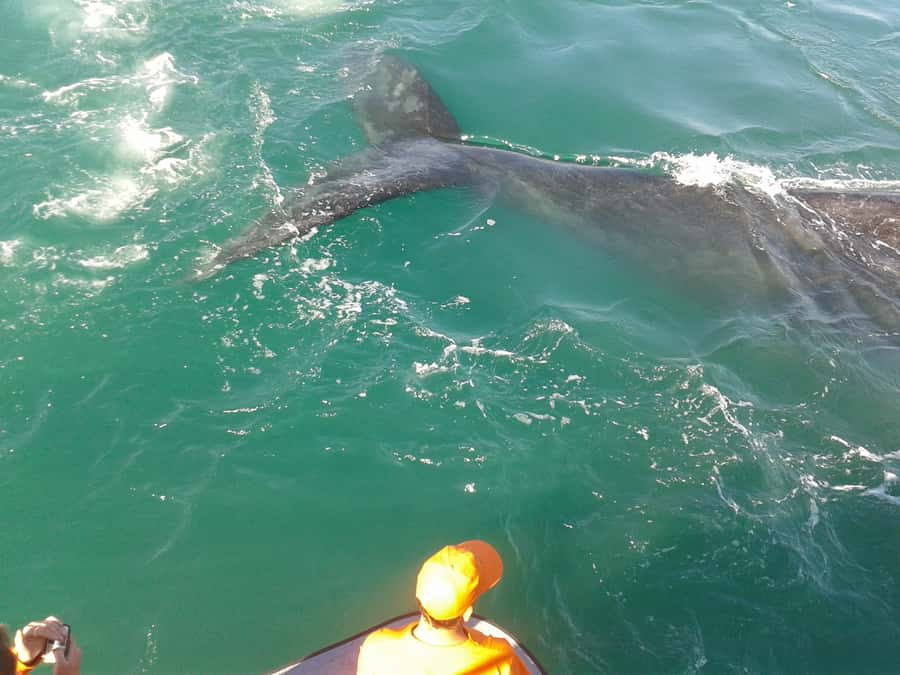
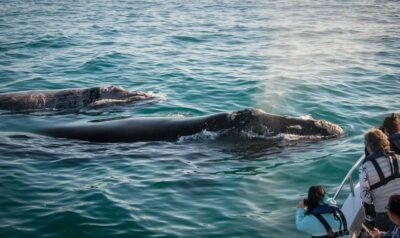
Whales are curious creatures, so one may approach the vessel for a closer look. That can produce excellent views, but you should not expect a staged encounter. The boat does not make the animal perform, and the crew’s job is to observe without harassing it.
The most memorable sightings can include a whale surfacing beside the boat, a mother and calf traveling together, or a breach farther away. A white calf has also been seen in the bay, though such sightings are rare and cannot be planned.
What makes the guides useful
The guide is more than a person who points at a whale. A good explanation helps you understand the animal’s size, movement, and behavior instead of simply trying to collect a photograph.
Philip and Peter are among the crew members singled out for their clear, friendly explanations. The team is also praised for spotting whales from a distance, which matters because trained eyes can notice a blow or a small movement long before you do.
You can ask questions during the trip, and the guide explains what type of whale you are seeing when possible. The crew also discusses dolphins, seals, and other marine life encountered along the route.
The information is especially useful for families and first-time whale watchers. Younger children may become restless during the search, but the guide’s commentary gives them something specific to look for. You can turn the trip into a shared search rather than waiting passively for an animal to appear.
The tone of the operation also matters. The crew is repeatedly praised for keeping a respectful distance and allowing whales to approach instead of chasing them. That approach makes the sighting feel more genuine and gives you a better understanding of wild behavior.
Same base, a different kind of day out:
- Aquila Private Game Reserve: Sunset Safari with Entry Fee
★ 4.4 · 158 reviews - Shark Cage Diving and Viewing with transport from Hermanus
★ 4.0 · 81 reviews - Marine Big 5 Safari with transport from Hermanus
★ 5.0 · 64 reviews - Cape Town: Cape Aghullas Van Tour with Hotel Pickup
★ 5.0 · 42 reviews
Upper-deck views, boat comfort, and sea conditions
The upper deck is one of the boat’s practical strengths. It gives you a wider field of view and makes it easier to follow animals moving across the bay. It is also the best place for photographs when the sea is calm and visibility is good.
The upper deck can be windy even on a pleasant day, so bring more clothing than you think you need. A warm layer, windbreaker, jacket, and sun hat all have a purpose. Sunscreen is also important, since reflected light from the water can catch you even when the air feels cool.
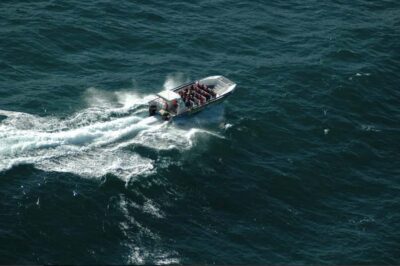
The boats are described as comfortable and spacious, with one vessel offering a large upper deck. Some boats use tables rather than tightly packed rows, which can work well for families and groups who want to sit together.
Space may vary by departure. A quieter trip gives you room to move around and find a clear sightline, while a fuller boat can make it harder to change sides quickly. This is worth considering if photography is a priority.
Flat shoes are required in the practical sense. A moving boat, wet surfaces, and stairs are not a good match for sandals with little grip or high heels.
Sea conditions are the main comfort concern. The bay can become rougher later in the day, and high waves may make photography difficult. If you are prone to seasickness, take that seriously when choosing this activity. You may find the boat trip much less enjoyable if you spend the cruise focused on keeping your stomach settled.
Whale season and the odds of seeing animals
The experience operates in a marine environment, not an aquarium. No crew can promise a whale sighting, and the time of year changes what you are likely to see.
The strongest reports from this outing cluster around August, September, and October. Those months produced many close sightings, including several mother and calf pairs and, in some cases, all three whale types expected in the area.
Late November can still be rewarding. Whales have been found at the end of the season, including mothers with calves, but the crew may need more time to locate them. By December, some whales may already have migrated, so dolphins may become the main attraction.
That seasonal pattern should shape your expectations. If whales are the only reason you are booking, aim for the stronger whale period when your schedule allows. If you are visiting later in the year, the trip can still offer dolphins, seals, seabirds, and a valuable view of the bay, but you should accept a greater chance of fewer whales.
The crew will tell you what conditions look like at the start. One guide warned that many whales had already left the area and that sightings might be limited, yet the boat still found dolphins and worked hard to locate remaining whales. That honesty is useful. It lets you judge the outing fairly instead of assuming every departure will produce a spectacular breach.
Is $93 good value?
At $93 per person, this is not a cheap harbor cruise. The price pays for a specialized wildlife trip, a boat, a trained crew, onboard water, coffee on arrival, and about 90 minutes to two hours on the bay.
The value depends heavily on your priorities. If you want a simple scenic boat ride, you can find less expensive ways to enjoy a waterfront. If you want a serious attempt to see whales in their natural setting, the price is easier to justify because the crew is actively searching, explaining what you see, and following a careful approach around the animals.
The guided element is important. You are not left to guess at every dark shape on the water. The crew helps identify species, explains behavior, and points out animals that you might otherwise miss.
Coffee on arrival and water onboard are modest inclusions, but they are useful. The real value comes from the time on the water, the quality of the boat, and the chance to see whales close enough to observe without a zoom lens.
You should still budget the R5 harbor entrance fee. It is small, but it is not included in the advertised price.
Who should book this trip?
This outing suits adults, older children, families, couples, and anyone who wants a close look at marine life without committing to a full-day expedition. It is suitable for all ages, and the short duration makes it easier to fit into a wider Hermanus or Western Cape schedule.
You will get the most from it if you enjoy patient wildlife watching. The sea does not run on a timetable, and some departures may require a longer search before the first sighting.
It is less suitable if you become seasick easily, dislike cold wind, or need a guaranteed animal encounter. It is also not the best choice if you want a quiet, slow cruise with no rough movement.
For photography, bring a camera with a fast shutter setting if you have one, but do not spend the whole trip looking through a screen. Whales may surface in an unexpected place, and the best view can last only a few seconds.
Practical booking advice
Book with the season in mind and check the departure time carefully. The advertised activity lasts 90 minutes, but allow up to two hours for the full outing.
Arrive 30 minutes early at Hermanus New Harbour and look for the orange building on the right after entering. Wear warm layers and flat shoes, even if the weather looks mild from town.
The trip runs only when conditions allow. You can cancel up to 24 hours before departure for a full refund, and the reserve-now, pay-later option gives you some flexibility while finalizing your plans.
English is the tour language. If you need a toilet onboard, ask before boarding, as it is not listed among the included facilities.
Should you book Hermanus Whale Watchers?
Yes, if you want a well-run whale search with a strong chance of seeing more than one kind of marine life. The careful engine-off approach, large upper-deck viewing area, and clear crew commentary give this trip more substance than a quick ride around the harbor.
Book it during August through October if whales are your main goal. For late November or December, go with a more open mind and enjoy dolphins, seals, seabirds, and the bay itself as part of the experience.
I would skip it only if rough water is a serious problem for you or if a whale sighting is non-negotiable. For everyone else, this is a worthwhile way to meet Hermanus from the water, with the added chance of seeing one of the ocean’s most remarkable animals close by.
FAQ
Where does the whale-watching trip leave from?
The trip leaves from Hermanus New Harbour. After entering the harbor, go to the orange building on the right-hand side.
How early should I arrive?
Arrive 30 minutes before the scheduled departure. Your physical ticket is provided on arrival.
How long does the boat trip last?
The activity is advertised as 90 minutes. The trip information also describes the boat outing as lasting 1.5 to 2 hours, so allow up to two hours in your schedule.
What marine life might I see?
You may see whales, dolphins, seals, and seabirds. Whale sightings are not guaranteed because trips depend on natural conditions and animal movements.
What should I wear?
Wear warm clothing, a windbreaker or jacket, a sun hat, sunscreen, and flat shoes. Dress for the weather and expect wind on the water.
Can I cancel the booking?
Yes. You can cancel up to 24 hours before the trip for a full refund. You can also reserve now and pay later.
Just added in Hermanus
- Shark & Whale Trip Combo★ 4.8 · 12 reviews
- Private Tour: Cape Town to Cape Agulhas where 2 Oceans Meet★ 5.0 · 3 reviews
- Hermanus: Whale Watching and Wine Testing★ 3.7 · 5 reviews
- From Cape Town: Full Day Hermanus Whale Watching Tour★ 3.6 · 20 reviews
- Cape Town: Hermanus Whale Watching Shared Boat & Penguins★ 3.3 · 6 reviews
- Cape Town: Cape Agulhas and Stony Point Penguin Tour★ 5.0 · 5 reviews
- Cape Town: Cape Aghullas Van Tour with Hotel Pickup★ 5.0 · 42 reviews
- Cape Agulhas: Private Day Tour to Africa’s Southernmost Tip.★ 5.0 · 5 reviews
Whale Watching, compared.
Browse the lists this tour appears in